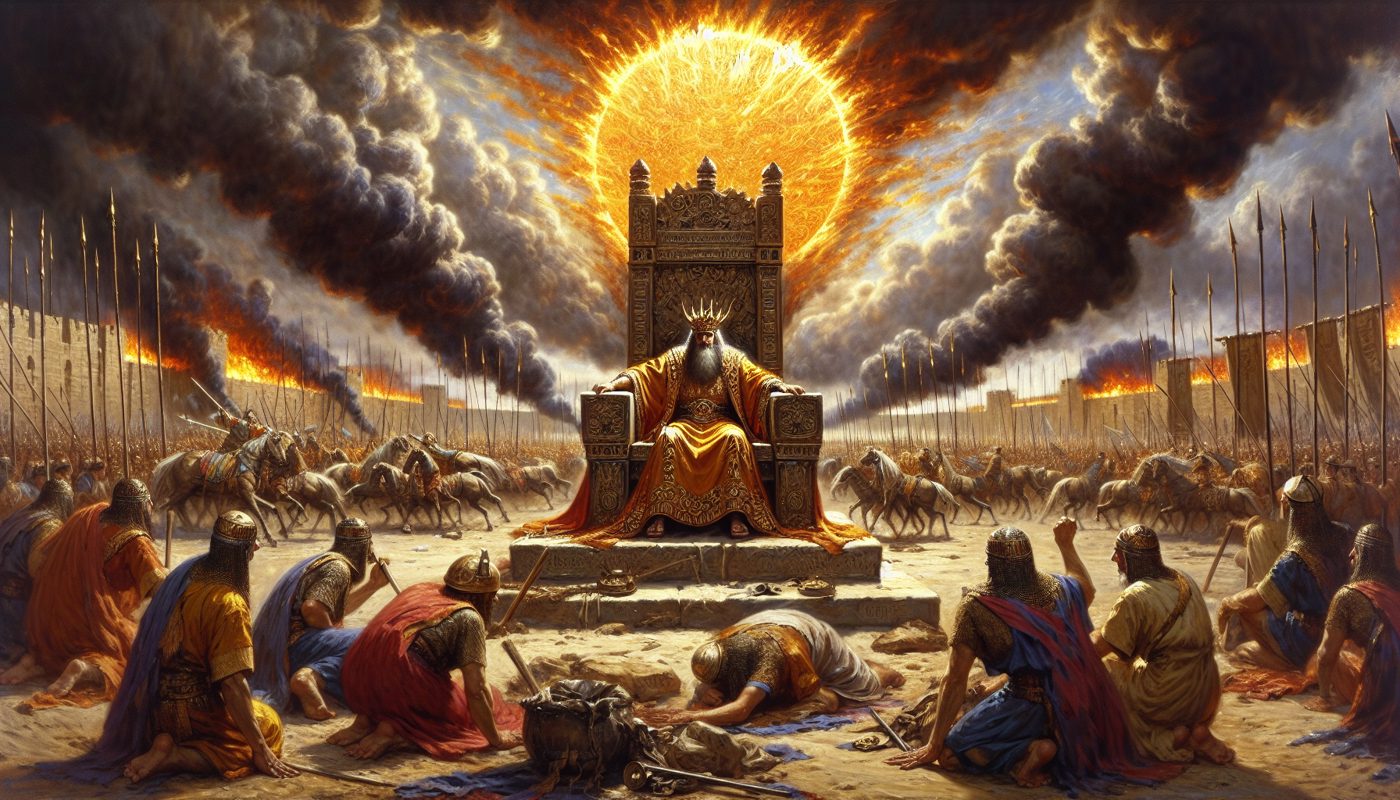
The Lord spoke to Moses on Mount Sinai with instructions that bound the land itself into the covenant. The land was to keep a Sabbath to the Lord—six years of sowing and pruning, then a seventh year of solemn rest. No sowing, no pruning, no reaping of what grew of itself. The Sabbath of the land was not waste; it was food for the owner, for servants, for hired workers, for the stranger who sojourned with them, and for the cattle and wild beasts. The Lord commanded that the sixth year would yield enough for three years, so that the people would not fear when they did not sow in the seventh.
Beyond the Sabbath year, the Lord commanded a cycle of seven Sabbaths of years—forty-nine years. On the Day of Atonement in the forty-ninth year, the trumpet was to sound throughout all the land. The fiftieth year was to be hallowed as a jubilee. Liberty was to be proclaimed to all the inhabitants of the land. Every man was to return to his possession and to his family. In the jubilee year, there was to be no sowing, no reaping of what grew of itself, no gathering from the undressed vines. The increase of the field was to be eaten directly, for the year was holy.
The jubilee set the terms for every sale of land. When a man sold to his neighbor, he was not to wrong his neighbor. The price was to be set according to the number of years since the last jubilee—more years meant a higher price, fewer years meant a lower price, because what was being sold was the number of crops until the next jubilee. The Lord commanded the people to fear God and not wrong one another, and to keep His statutes and ordinances so that they would dwell in the land in safety and eat their fill.
The Lord declared that the land could not be sold in perpetuity, because the land was His. The people were strangers and sojourners with Him. In every possession, a redemption for the land was to be granted. If a brother became poor and sold some of his possession, his nearest kinsman was to come and redeem what his brother had sold. If a man had no kinsman to redeem it but later became rich enough, he was to reckon the years since the sale, restore the surplus to the buyer, and return to his possession. If he could not get it back, the land remained with the buyer until the jubilee, when it would go out and the man would return to his possession.
The rules for houses differed from those for fields. A house in a walled city could be redeemed within a full year after the sale; if not redeemed within that year, it became the buyer's permanent possession and did not go out in the jubilee. But houses in unwalled villages were reckoned with the fields of the country—they could be redeemed and would go out in the jubilee. The houses of the Levites in their cities could be redeemed at any time, and if not redeemed, they would go out in the jubilee. The field of the suburbs of the Levites' cities could not be sold at all, for it was their perpetual possession.
The Lord also gave commands for how to treat a brother who became poor. If his hand failed, the people were to uphold him as a stranger and a sojourner. They were to take no interest or increase from him, but to fear God so that the brother might live with them. They were not to give money or food on interest. The Lord reminded them that He had brought them out of Egypt to give them the land of Canaan and to be their God.
If a brother became poor and sold himself to another Israelite, he was not to be made to serve as a bondservant. He was to be treated as a hired servant and a sojourner, serving only until the year of jubilee. Then he and his children were to go out and return to his family and to the possession of his fathers. The Lord declared that the children of Israel were His servants, brought out of Egypt, and they were not to be sold as bondmen. The one who bought him was not to rule over him with rigor, but to fear God.
Bondmen and bondmaids could be bought from the nations around them and from the children of strangers who sojourned in the land. These could be held as a possession and passed down as an inheritance. But over their brothers, the children of Israel, they were not to rule with rigor.
If a stranger or sojourner became rich and an Israelite brother became poor and sold himself to that stranger, the brother could be redeemed. One of his brothers, his uncle, his uncle's son, or any near kinsman could redeem him. Or if he became rich himself, he could redeem himself. The price of redemption was to be reckoned from the year of his sale to the year of jubilee, according to the number of years, as with a hired servant. If many years remained, he was to give back a larger portion of the purchase price; if few years remained, a smaller portion. The buyer was not to rule over him with rigor. And if he was not redeemed by any of these means, he and his children would go out in the year of jubilee.
The Lord closed with the same declaration that opened the chapter: the children of Israel were His servants, brought out of Egypt. He is the Lord their God. The jubilee was not merely a law about land and debt; it was a rhythm that returned every man to his family and his possession, and it reminded the people that they did not own the land or each other. The land belonged to the Lord, and the people belonged to Him.
Comments
Comments 0
Read the discussion and add your voice.
Members only
Sign in to join the conversation
We keep comments tied to real accounts so the discussion stays clean and trustworthy.
No comments yet. Be the first to add one.