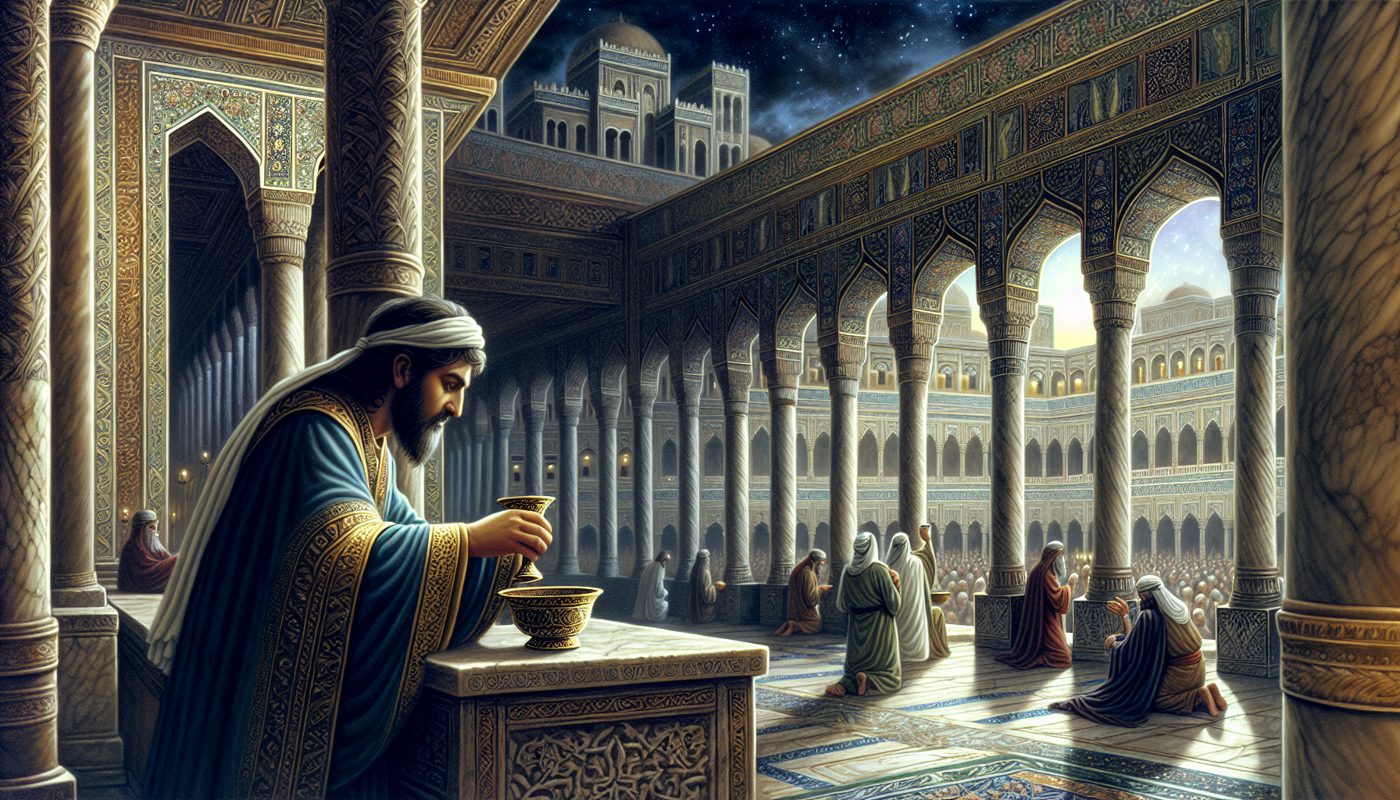
Habakkuk opens with a burden, a vision heavy enough to press a prophet into speech. He does not begin with a call or a commission but with a question aimed at the Lord Himself: how long must he cry out about violence and receive no answer? The chapter does not explain when or where this took place. It gives only the raw exchange.
The prophet’s complaint is specific. He sees iniquity, destruction, strife, and contention rising up in front of him. The law is slack, justice never goes forth, the wicked surround the righteous, and what passes for justice is perverted. He does not describe a foreign enemy or a distant threat. He describes the condition of his own people and the failure of their own institutions.
The Lord’s reply does not deny the charge. Instead, it tells Habakkuk to look among the nations and wonder. The Lord is working a work in their days that they would not believe if told. That work is the raising up of the Chaldeans, a bitter and hasty nation that marches through the breadth of the earth to seize dwellings not their own.
The description of the Chaldeans is relentless. They are terrible and dreadful. Their judgment and dignity come from themselves, not from any higher authority. Their horses are swifter than leopards, more fierce than evening wolves. Their horsemen press on proudly, coming from far, flying like an eagle that hastens to devour.
They come for violence. Their faces are set forward. They gather captives as the sand. They scoff at kings and deride princes. They laugh at strongholds because they heap up dust and take them. The Lord says this nation will sweep by like a wind and pass over, and be guilty, because its might is its god.
Habakkuk’s second speech shifts. He addresses the Lord as the everlasting God, his Holy One, and declares that they shall not die. He acknowledges that the Lord has ordained the Chaldeans for judgment and established them for correction. But then the question returns, sharper than before.
The Lord is of purer eyes than to behold evil and cannot look on perverseness. So why does He look on those who deal treacherously? Why does He hold His peace when the wicked swallows up the man more righteous than he? The prophet does not accuse the Lord of injustice. He asks how the Holy One can use a brutal instrument to correct His own people.
Habakkuk presses the image further. Men are made like fish of the sea, like creeping things with no ruler. The Chaldean takes them all up with a hook, catches them in his net, gathers them in his drag, and rejoices. He sacrifices to his net and burns incense to his drag because they give him his portion and his food.
The chapter ends with a question that hangs in the air. Shall the Chaldean empty his net and go on killing nations without end? The Lord has not yet answered that. The prophet has laid out the tension: a holy God using a proud, violent nation to judge His own people, and that nation worshiping its own tools of conquest.
Habakkuk does not resolve the tension in this chapter. He leaves it standing, waiting for the Lord’s next word. The burden is not lifted. It is only fully spoken.
Comments
Comments 0
Read the discussion and add your voice.
Members only
Sign in to join the conversation
We keep comments tied to real accounts so the discussion stays clean and trustworthy.
No comments yet. Be the first to add one.