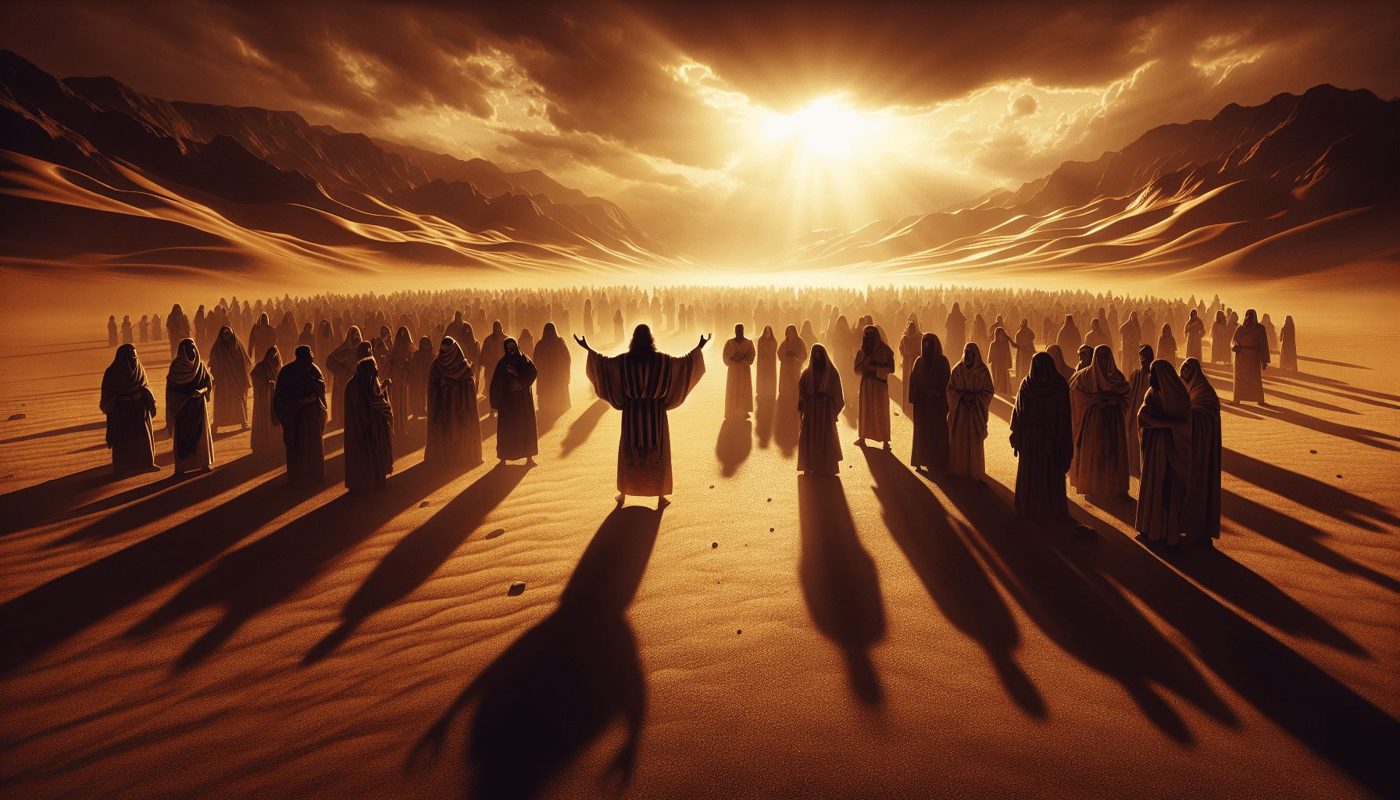
Isaiah the son of Amoz saw a burden, and he called it the burden of Babylon. The word came heavy, not as a prediction to be calmly studied, but as a weight that pressed on the prophet as he looked at what was coming. The Lord was not sending a message of comfort to Babylon. He was mustering an army.
The command went out to set up an ensign on a bare mountain, to lift up the voice, to wave the hand so that the warriors would enter the gates of the nobles. The Lord called his consecrated ones, his mighty men for his anger, his proudly exulting ones. These were not volunteers. They were summoned, commanded, set apart for a specific work of destruction.
The noise of a multitude filled the mountains, the sound of a great people, the tumult of kingdoms gathered together. The Lord of hosts was mustering the host for battle. They came from a far country, from the uttermost part of heaven, the Lord himself and the weapons of his indignation, to destroy the whole land. The scale was cosmic. The agent was human. The purpose was judgment.
The prophet did not soften the announcement. He told the people to wail, for the day of the Lord was at hand. It would come as destruction from the Almighty. Every hand would become feeble. Every heart would melt. Dismay would seize them. Pangs and sorrows would take hold like a woman in labor. They would look at one another in amazement, their faces burning like flames.
The day of the Lord was coming, cruel, with wrath and fierce anger, to make the land a desolation and to destroy the sinners out of it. The stars of heaven and their constellations would not give their light. The sun would be darkened in its going forth. The moon would not cause its light to shine. The created order itself would go dark as the Creator acted in judgment.
The Lord declared that he would punish the world for its evil and the wicked for their iniquity. He would cause the arrogancy of the proud to cease and lay low the haughtiness of the terrible. He would make a man more rare than fine gold, more scarce than the pure gold of Ophir. The heavens would tremble, and the earth would be shaken out of its place in the wrath of the Lord of hosts on the day of his fierce anger.
The people of Babylon would become like a chased roe, like sheep with no shepherd, each one turning to his own people, fleeing to his own land. But there would be no escape. Everyone found would be thrust through. Everyone taken would fall by the sword. Infants would be dashed in pieces before their eyes. Houses would be rifled. Wives would be ravished. The judgment was total and unsparing.
The Lord would stir up the Medes against Babylon. They would not regard silver. They would not delight in gold. Their bows would dash the young men in pieces. They would have no pity on the fruit of the womb. Their eye would not spare children. Babylon, the glory of kingdoms, the beauty of the Chaldeans' pride, would be as when God overthrew Sodom and Gomorrah.
Babylon would never be inhabited again. No one would dwell there from generation to generation. The Arabian would not pitch his tent there. Shepherds would not make their flocks lie down there. Wild beasts of the desert would lie there. The houses would be full of doleful creatures. Ostriches would dwell there. Wild goats would dance there. Wolves would cry in the castles. Jackals would howl in the pleasant palaces. The time was near. The days would not be prolonged.
Comments
Comments 0
Read the discussion and add your voice.
Members only
Sign in to join the conversation
We keep comments tied to real accounts so the discussion stays clean and trustworthy.
No comments yet. Be the first to add one.