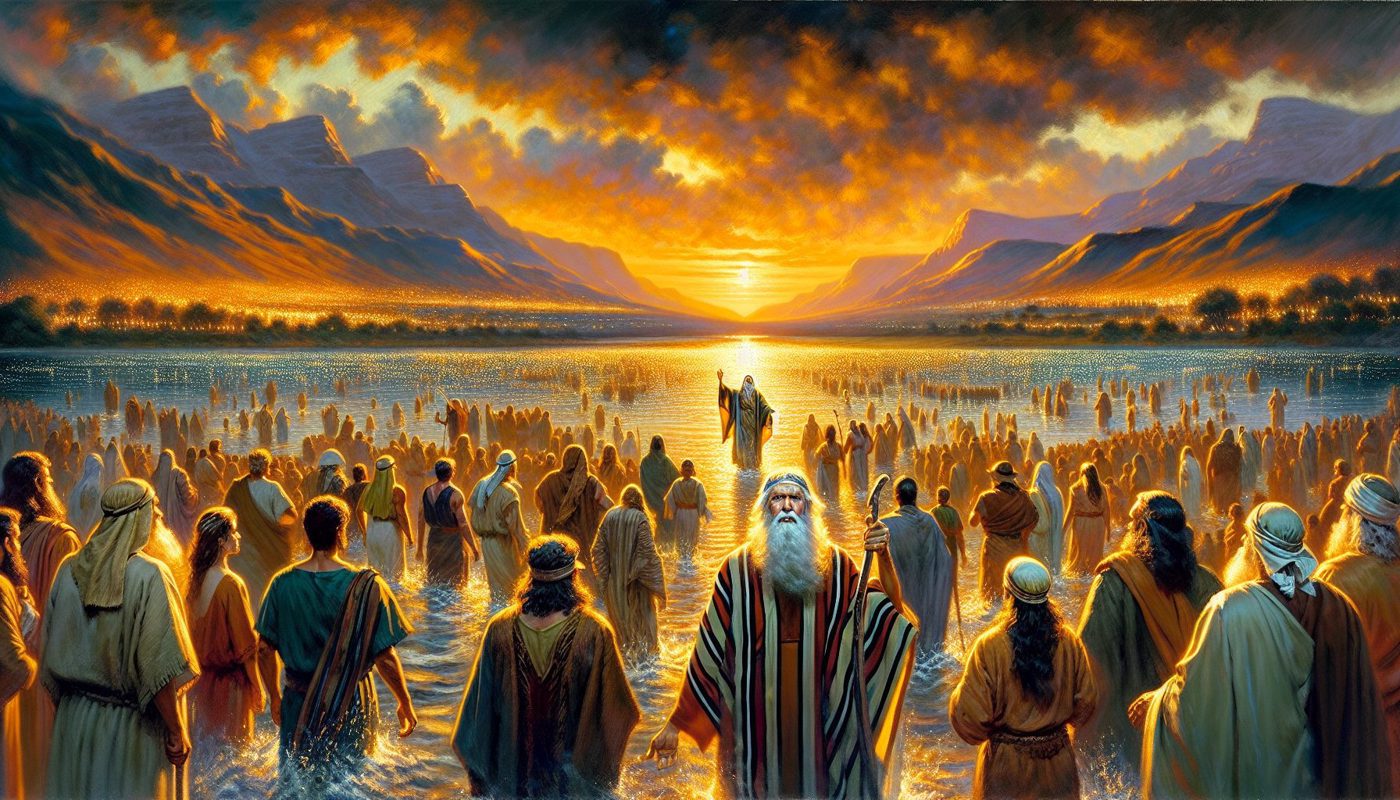
Moses and the elders of Israel gave the people a command that day on the plains of Moab. It was not a suggestion or a piece of advice. They were to keep every commandment the Lord had given them that day. The crossing of the Jordan was near, and the instruction was precise.
When they crossed into the land the Lord their God was giving them, they were to set up large stones and coat them with plaster. On those stones they were to write all the words of this law. The purpose was clear: so that they might enter the land flowing with milk and honey, as the Lord, the God of their fathers, had promised.
The location for these stones was specified. They were to set them up on Mount Ebal. There they would also build an altar to the Lord their God. The altar was to be made of uncut stones, with no iron tool lifted upon them. They were to offer burnt offerings and peace offerings on that altar, and they were to eat there and rejoice before the Lord their God.
Moses and the priests, the Levites, then spoke to all Israel. They told the people to keep silence and listen. This day, they said, you have become the people of the Lord your God. Therefore, they were to obey the voice of the Lord and do his commandments and statutes.
Moses then charged the people with a specific arrangement for the ceremony. Six tribes were to stand on Mount Gerizim to bless the people: Simeon, Levi, Judah, Issachar, Joseph, and Benjamin. The other six were to stand on Mount Ebal for the curse: Reuben, Gad, Asher, Zebulun, Dan, and Naphtali.
The Levites were to cry out with a loud voice to all the men of Israel. The first curse was against anyone who made a graven or molten image, an abomination to the Lord, the work of a craftsman, and set it up in secret. All the people were to answer, Amen.
Then came the curses against those who dishonored father or mother, who moved a neighbor's landmark, who led the blind astray, and who perverted justice for the sojourner, the fatherless, and the widow. Each curse was pronounced, and each time all the people answered, Amen.
The curses continued against those who committed sexual sins: lying with a father's wife, with any animal, with a sister, or with a mother-in-law. Each was named, and the people responded with Amen.
Further curses were pronounced against anyone who struck a neighbor in secret, who took a bribe to kill an innocent person, and who did not confirm all the words of this law to do them. Each curse ended with the people's Amen.
The chapter does not record the blessings. It only records the curses and the command to write the law plainly on stones. The ceremony on Mount Ebal was not a vague ritual. It was a public, audible, and binding act. Every tribe was positioned. Every curse was spoken. Every person answered. The law was written in stone, and the people bound themselves to its terms before they ever set foot in the land.
Comments
Comments 0
Read the discussion and add your voice.
Members only
Sign in to join the conversation
We keep comments tied to real accounts so the discussion stays clean and trustworthy.
No comments yet. Be the first to add one.