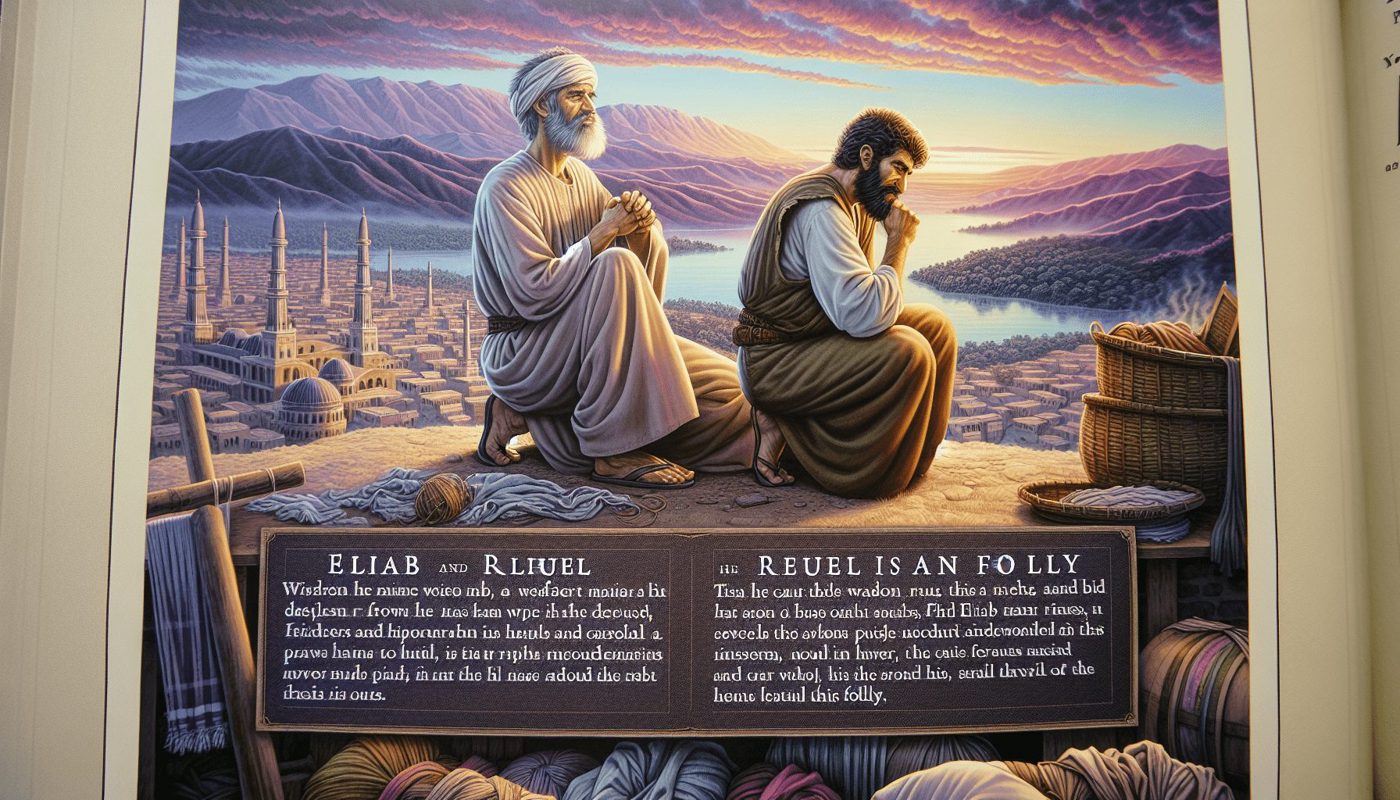
Proverbs 18 does not tell a story. It delivers a series of compressed observations about speech, pride, judgment, and human relationships. The chapter opens with a warning about the person who isolates himself: he follows his own desire and breaks out against all sound wisdom. This is not a commendation of solitude but a diagnosis of the self-willed heart that refuses counsel.
The fool, the chapter insists, does not want understanding. He wants only to display what is inside him. His words are not a search for truth but a performance of self. And because his mouth craves contention, it calls for blows. The fool's mouth is his ruin, and his lips are a trap for his own life. The chapter does not soften this. It presents the tongue as a weapon that turns back on its owner.
Gossip is treated with equal seriousness. The words of a whisperer are like dainty morsels that go down into the innermost parts of the body. The image is not trivial. It suggests that slander is consumed with pleasure but lodges deep, poisoning the one who receives it. The chapter does not excuse the listener. The one who delights in such talk shares in the damage.
Then comes the verse that stands as the chapter's most quoted line: the name of the Lord is a strong tower; the righteous runs into it and is safe. The contrast is immediate. The rich man's wealth is his strong city, and in his own imagination it is like a high wall. But the imagination is not reality. The tower of the Lord is not a metaphor for self-made security. It is a refuge that exists outside the self, and the righteous person runs toward it. The rich man stays inside his own walls and calls them sufficient.
Pride and humility are placed in direct sequence. Before destruction the heart of a man is haughty, and before honor comes humility. The chapter does not argue this. It states it as a law of human affairs. The proud man does not see the destruction coming because his heart is already full of itself. The humble man does not seek honor, but honor finds him.
The chapter also addresses the failure to listen. The one who answers before he hears is acting in folly and shame. This is not a minor social mistake. It is a sign that the speaker values his own voice more than the truth. The prudent heart acquires knowledge, and the ear of the wise seeks it. Knowledge is not something the wise already possess. They pursue it, and they do so by listening.
A gift opens doors and brings a person before great men. The chapter does not condemn this. It simply notes that access often comes through generosity. But it also warns that the first person to plead his case seems just, until the other party arrives and cross-examines him. The chapter respects the need for both sides to be heard. The lot, it says, settles disputes and separates the powerful. There is an acknowledgment that some conflicts require a decision beyond human persuasion.
The chapter turns to the cost of broken relationships. A brother who has been wronged is harder to win back than a strong city, and such contentions are like the bars of a fortress. This is not a call to avoid conflict at all costs. It is a recognition that once trust is shattered, the walls go up and they do not come down easily.
The tongue returns in the chapter's most sobering claim. Death and life are in the power of the tongue, and those who love it will eat its fruit. The tongue is not neutral. Every word carries weight, and the speaker consumes what he produces. A man's belly is filled with the fruit of his mouth. The chapter does not allow the speaker to escape the consequences of his speech.
The final verses shift to relationships. Finding a wife is finding a good thing and obtaining favor from the Lord. The poor man speaks with pleas, but the rich man answers harshly. The chapter does not romanticize poverty or wealth. It simply observes how each position shapes speech. And it closes with a warning and a promise: the man who makes many friends does so to his own destruction, but there is a friend who sticks closer than a brother. The chapter does not name that friend. It leaves the statement standing on its own, a final word about loyalty that exceeds blood ties.
Comments
Comments 0
Read the discussion and add your voice.
Members only
Sign in to join the conversation
We keep comments tied to real accounts so the discussion stays clean and trustworthy.
No comments yet. Be the first to add one.