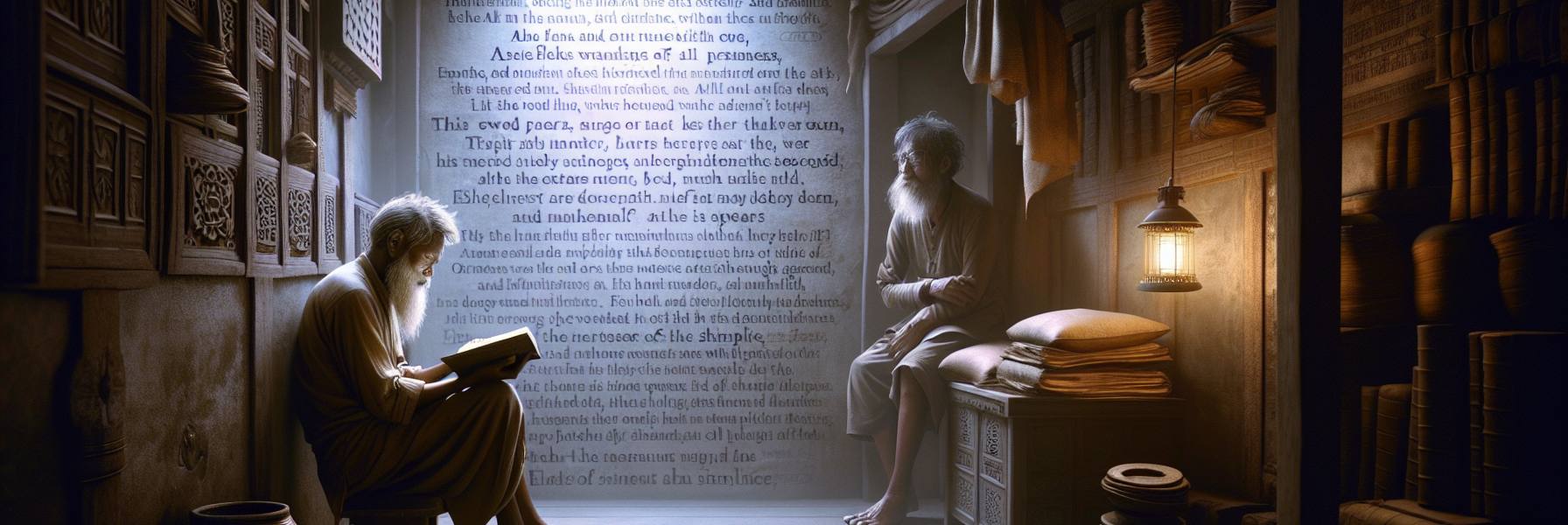

The lamplight in the room was poor, and the smell of dust and old parchment was a scent Ezra knew better than his own breath. He shifted on the stool, his bones complaining as they always did in the cool of the evening. Before him lay the text, just two lines, a mere whisper in the great chorus of the scrolls. *Praise the Lord, all you nations; extol him, all you peoples. For great is his love toward us, and the faithfulness of the Lord endures forever.*
Psalms 117. The shortest of them all.
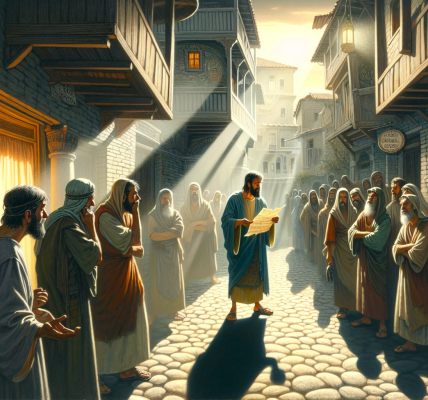
A younger man, perhaps, would have passed over it, his eyes hungry for the dramas of Genesis or the thunder of the prophets. But Ezra was old, and the small things held weight. He let the words sit in his mind, not studying them, but listening to the space around them. The chatter from the street below filtered up—Aramaic, Greek, a snatch of Latin from a soldier. *All you nations.*
He remembered his grandfather, a man bent not by age but by the memory of exile in Babylon. He’d spoken of the foreign faces, the strange songs, the terrible loneliness for the hills of Judea. And yet, in that same breath, he’d tell of the few, the curious ones, who had looked at the captives and seen not a broken people, but a stubborn flame of devotion. They had asked questions about the God who could be worshipped without an image, in a land not His own. “They were drawn to the edges of the light,” his grandfather would say, his voice a dry rustle. “Like moths to a lamp they could not explain.”
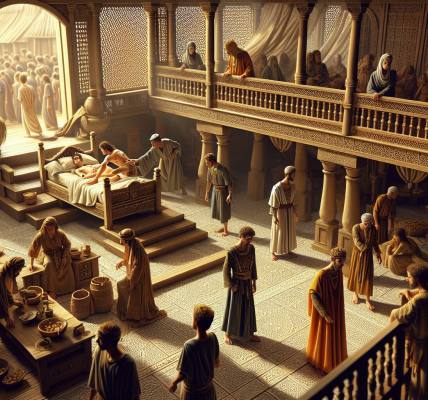
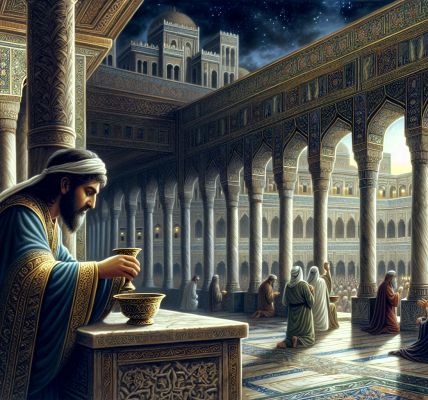
Ezra’s own life had been quieter, spent here in this room in Jerusalem, copying the sacred texts. His world was ink and vellum, the careful stroke of the reed pen. But the world had come to him. He’d seen the faces of pilgrims at the festivals—not just from the tribes, but from Egypt, from the islands, from the far-flung synagogues of the diaspora. Faces the color of old walnuts, of sun-bleached clay, of pale northern mist. They came with their strange accents, offering sacrifices, singing the psalms in halting Hebrew. He’d once seen a man from a place called Bithynia weep openly during the Hallel, his big, calloused hands pressed together as if holding something fragile.
*For great is his love toward us.* The word *hesed* pulsed on the page. Steadfast love. Covenantal loyalty. It was a love that had pursued them through rebellion and restoration, a love as relentless as the desert sun and as sheltering as the cleft of a rock. Ezra knew this love not as a theory, but as a narrative written in the scars of his people and in the quiet providence of his own life—the wife of his youth, now gone, the son who lived, the simple fact of waking each morning to a duty that mattered.
But the psalm did not let that love be a private treasure. It was the very reason for the global call. It was as if the psalmist saw a stone dropped into a pond. The *hesed* was the stone, striking the water of Israel. But the ripples… the ripples went out, and out, and out, until they licked at shores unseen. The faithfulness, the *emunah*, that endures forever—it wasn’t an heirloom to be locked away. It was a tree whose roots were deep in promise, and whose branches were meant for the birds of the air to nest in.
He dipped his pen, the ink black and sharp. He would copy this little psalm now. But as he began to form the letters, he did not see just words. He saw the Bithynian man’s tears. He saw his grandfather’s bewildered hope in a foreign land. He saw the endless caravan of humanity, in all its splendid and confusing variety, moving under a vast sky. And the call was not a shout, but an invitation issued from the very heart of a experienced truth: *Come and see. Come and hear. What holds us is too vast to be for us alone.*
The faithfulness *endures*. It was present tense. It was now, in this dusty room, with his aching hands. It was for the Greek merchant bargaining in the agora, for the Egyptian sailor on the night sea, for the Roman soldier homesick for his hills. The love that had carried a people was a love that sought all people.
Ezra finished the final word. *Forever.* He sat back. The little psalm no longer seemed small. It felt like a key, small and precise, fitted to the lock of a very large door. Outside, a bird called. The noise from the street rose in a brief, chaotic chorus of languages—a jumble of praise and complaint and ordinary life. And for a moment, Ezra heard it not as noise, but as the raw material for which his two simple lines were a refrain, waiting to be learned, waiting to be sung, by all the nations.