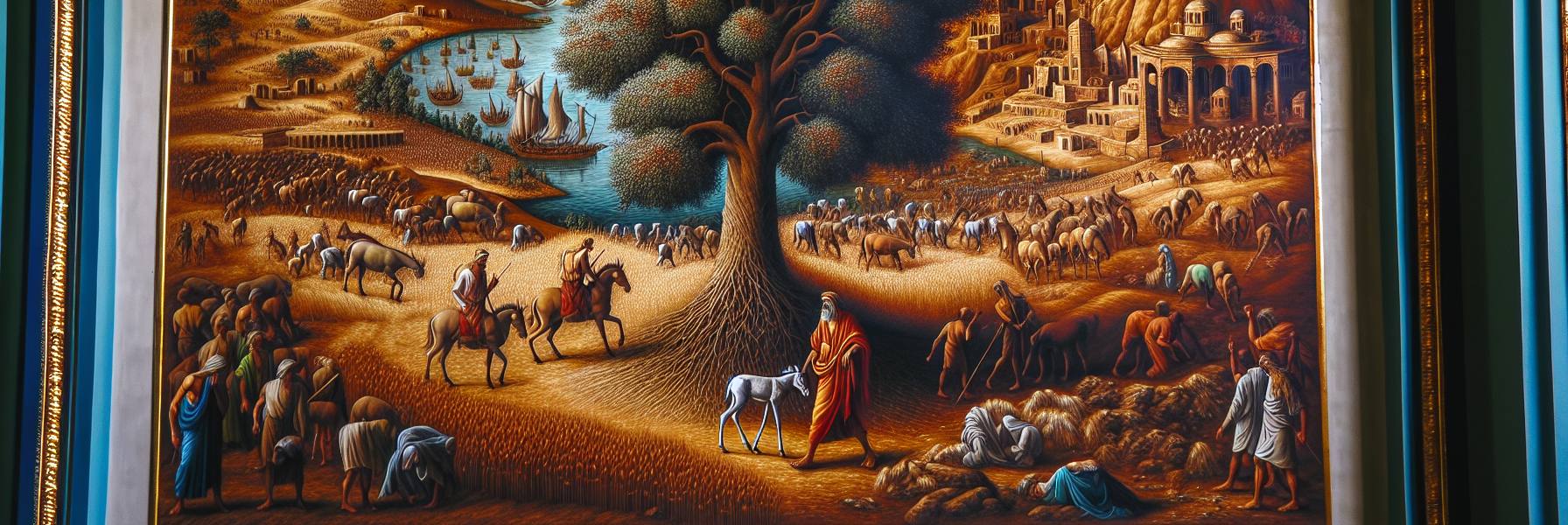

The years after Abimelech’s fire had burned out were heavy years, the kind where the memory of violence seeps into the soil and makes the wheat grow thin. For a time, a man named Tola rose from the bruised hills of Issachar. He was not a warrior. His judgment was the quiet kind, a settling of disputes between shepherds over wandering flocks, a word that kept a blood feud from igniting. He lived and died in the shade of a certain oak, and they buried him there. The peace he tended was shallow-rooted.
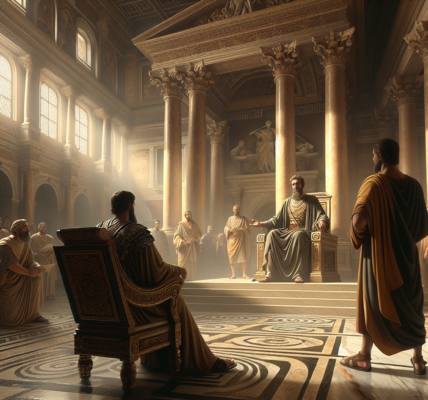
Then came Jair, from Gilead, east of the Jordan. His was a different sort of rule. He had wealth, measured in the ancient way: thirty sons who rode on thirty donkeys, a slow, clattering procession of pride and authority. They presided over thirty towns, clusters of stone and struggle that came to bear his name—Havvoth-Jair, the villages of Jair. For twenty-two years, his sons collected dues and settled quarrels from the backs of those donkeys. It was an administration, not a deliverance. The peace felt purchased, not given.
And in that long, administrative peace, Israel’s heart grew forgetful. It happened slowly, as it always does. A man would bury a stillborn child and, in his grief, think the local Baal might understand the cruelty of the earth better than the distant God who brought them out of Egypt. A woman, desperate for a harvest, would whisper the old prayers to Ashtoreth, just in case. The gods of the Amorites, the Sidonians, the Moabites, the Ammonites, the Philistines—they were there, in the small things. A figurine tucked in a niche for luck. A festival joined for the music and the food. They served the Baals and the Ashtoreths. They forgot the Lord. They did not trouble themselves with him.
So the anger of the Lord burned, not like a sudden wildfire, but like a slow furnace being stoked. He sold them into the hands of the Philistines, that relentless pressure from the coast, and the Ammonites, their cousins from the eastern wastes. That year, the Ammonites crossed the Jordan to fight Judah, Benjamin, and the house of Ephraim. The pressure was a vise. The Philistine raids came like a tide, stealing harvests from the west. The Ammonites camped in Gilead, Jair’s own country, and their forays were a rusted knife twisted in the land. They would take, and burn, and taunt. For eighteen years the oppression ground on, until the very idea of Israel seemed like a dream their grandfathers had foolishly believed.
Then, and only then, when the weight was too great to bear, Israel cried out to the Lord. “We have sinned against you,” they wailed, “forsaking our God and serving the Baals.”
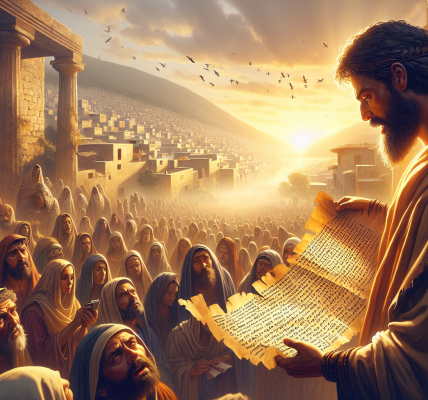
The Lord’s reply came through the prophets, and it was terrible in its clarity. He did not thunder. He reasoned with them, a weary father listing the betrayals. “When you cried to the Egyptians, did I not save you? When you groaned under the Amorites, the Ammonites, the Philistines, the Sidonians, the Amalekites, the Maonites—did I not deliver you from their grasp? Yet you have forsaken me and served other gods. Therefore, I will save you no more. Go and cry out to the gods you have chosen. Let them save you in your time of distress.”
It was a sentence. The silence that followed was the deepest terror of all.
But desperation makes a theologian of even the most faithless. Israel’s repentance, born of sheer agony, deepened. They did not just plead. They acted. They put away the foreign gods from among them—the little household idols, the stolen temple trinkets, all of it thrown into the dust. And they served the Lord. Not perfectly, not with pure hearts perhaps, but with a focused, aching need. The text says, “And he could bear Israel’s misery no longer.”
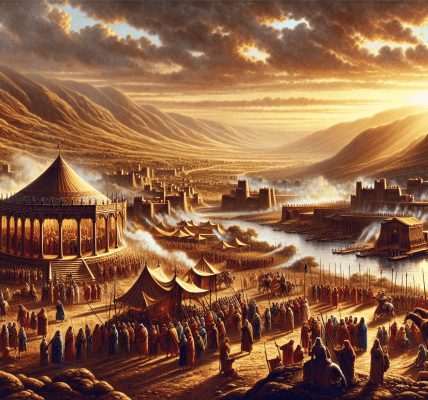
The Ammonites gathered for war, massing at Gilead. Israel’s own camp was a ragged, fearful assembly at Mizpah, a place of watching. The leaders of Gilead, voices tight with fear, turned on each other. “Who will begin the fight? Who will lead?” The question hung in the air, sour and urgent. They needed a head, a commander. And they made a vow, there on the stony ground: “The man who will take the lead and fight the Ammonites, he shall be head over all who live in Gilead.”
It was a promise born of utter helplessness, a casting of lot with their future as the stake. The story of Judges 10 ends here, on this cliff-edge of human failure and a reluctant, simmering divine mercy. The deliverer is not yet named. He is only a necessity, a vacant throne waiting for a man flawed and fierce enough to fill it. The air in Mizpah was thick with the smell of unwashed men, fear, and the faint, lingering scent of crushed herbs where their tents were pitched. Somewhere, a donkey that had once carried one of Jair’s sons brayed into the twilight, a hollow sound. They had put away the gods. They had cried until their throats were raw. Now they waited, not knowing if their cry had truly been heard, or if they were simply alone with their vow and the approaching rumble of the enemy’s camp. The ending is not an ending, but a held breath. The judge is coming. But not yet.