
## The Names We Carry
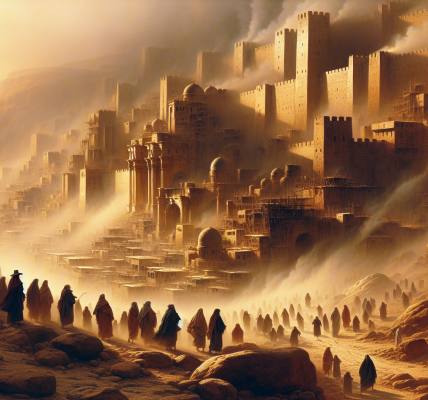
The dust of Babylon has a particular smell. It’s not like the dust of home—that was dry and chalky, carrying the scent of thyme and sun-baked limestone. This dust is heavier, silt-laden from the great rivers, and it smells of distant marshes and packed humanity. It gets into everything: the folds of my robe, the coarse barley bread, the cracks in my skin. Some days, I feel I am more of this foreign soil than of my own bones.
My name is Jamin. It means “right hand,” a name given for hope, not accuracy. Here, I am no one’s right hand. I mend irrigation channels for a Babylonian overseer whose gods have too many heads and whose tongue trips over the guttural beauty of my name. He calls me something else, a utilitarian label. I answer to it. We all do.
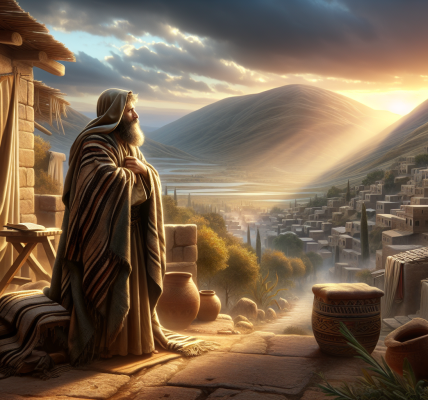
The remembering is the worst part. Not the forced labour, nor the strange food, nor the ever-present idols grinning down from every gate. It’s the remembering. In the stillness, just before sleep, Jerusalem comes. Not as a whole, but in fragments: the cool shadow of the Temple wall at noon, the sound of my mother’s voice singing a psalm while grinding grain, the particular golden light that would flood the Kidron Valley in the late afternoon. It’s a sweet, cruel torture. It’s the proof of what was, and therefore, the measure of what is lost.
Eliab, my friend whose cot is next to mine in the long, low barracks, has given up remembering. “It’s a poison, Jamin,” he mutters in the dark. “It eats you from the inside. Better to forget. Better to let this place become the only place.” He is learning the language faster than any of us. He says it’s practical. I see the way his eyes go vacant sometimes, and I know he is drowning memories on purpose.
Then, the words came.
They didn’t come from the sky, with thunder. They came through Baruch, the old scribe who somehow managed to bring a few precious scroll scraps with him in his mind. We gathered in a hidden corner of the brickyard, our backs against the warm bricks, as the sun bled out over the flat plain. His voice was a dry reed, but it carried.
“Thus says the Lord,” he whispered, and the ancient formula, heard a thousand times in a different world, made the air itself go still. “He who created you, O Jacob, he who formed you, O Israel…”
I closed my eyes. Jacob. Israel. Our ancestor-names, our nation-name. Not the labels our captors gave us. Our true names, spoken by the True Voice.
“Fear not, for I have redeemed you; I have called you by name, you are mine.”
A shiver went through me that had nothing to do with the evening chill. *Called you by name.* My mind shouted: *But I am Jamin, lost in Babylon!* And yet, in the deep place where truth settles, I knew it meant me. Not just the people, but the person. The one mending ditches, choking on foreign dust, aching for a lost light.
Baruch’s voice gathered strength, painting pictures with prophecy. “When you pass through the waters, I will be with you; and through the rivers, they shall not overwhelm you; when you walk through fire you shall not be burned, and the flame shall not consume you.”
Eliab shifted beside me. I knew his thoughts. *What waters? What fire? We are in a desert of despair.* But I saw it differently. The waters were the torrent of grief that had swept us from our homes. The rivers were the Euphrates and Tigris, symbols of this powerful, drowning empire. The fire was the shame, the constant, low-grade burning of subjugation. The promise wasn’t for a life without passage through these things. It was for passage *through*. Not around. With.
“For I am the Lord your God, the Holy One of Israel, your Savior.”
Holy One of Israel. The title was a lifeline. It tied the terrifying, consuming holiness of God directly to us. To *us*. The failed ones. The conquered ones. He was still *ours*.
The words continued, a torrent of impossible promises. God arguing with Himself, it seemed, declaring His own reasons for saving us. Not because we were worthy. We were not. We were blind, deaf, witnesses who failed to testify. But because *He* was God. “Besides me there is no savior.” It was about His character, His unchanging purpose. His love, stubborn as a rock in a flood.
Then, the most staggering thing of all. “Remember not the former things, nor consider the things of old. Behold, I am doing a new thing; now it springs forth, do you not perceive it?”
Eliab let out a soft, incredulous breath. Forget? Forget Jerusalem? Forget the Temple? It felt like a betrayal. But Baruch’s eyes gleamed in the fading light. “It is not a command to erase memory,” he murmured, more to himself than to us. “It is a command to stop looking for the salvation only in the past. He is not going to restore the old thing. He is going to do a *new* thing.”
The new thing. It was vague, mysterious. A way in the wilderness, rivers in the desert. Wild animals honouring Him. It was absurd. Beautiful, hopeful, and utterly absurd against the gritty reality of our Babylonian present.
That was a month ago. The words did not change our circumstances. The overseer still shouts. The dust still smells wrong. But something is different inside the vessel.
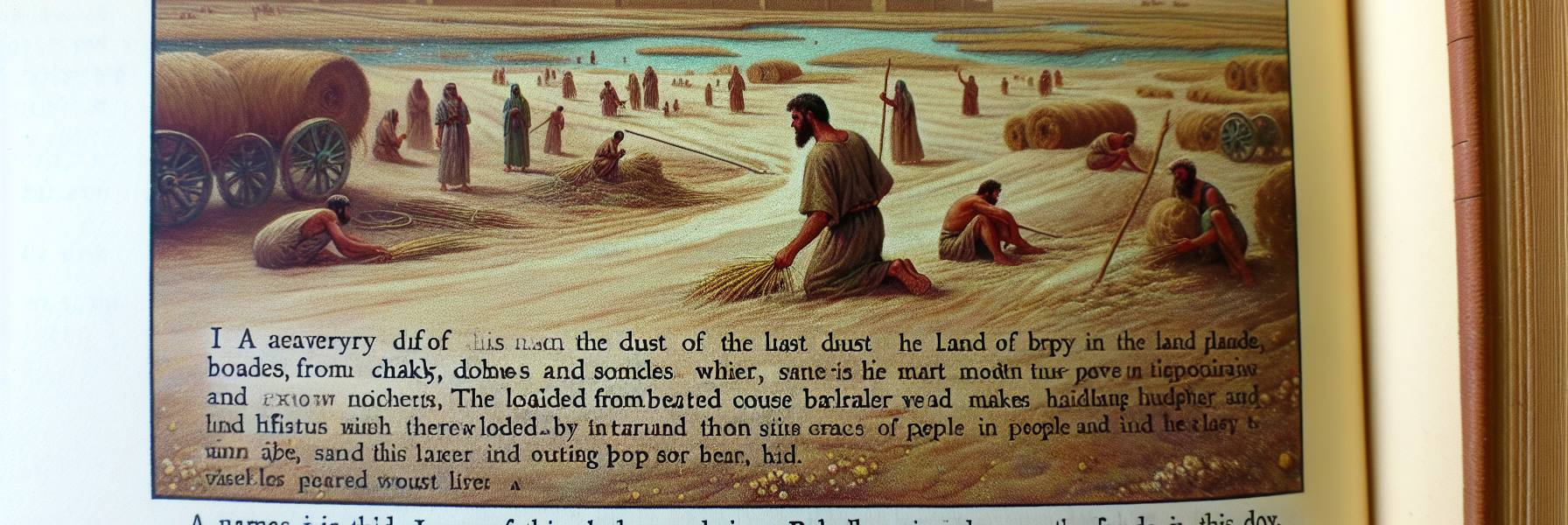
This morning, I was sent to clear a blocked channel on the far edge of the estate. The work was hard, muddy. As I dug, my mind wandered back to the words: “I give water in the wilderness, rivers in the desert, to give drink to my chosen people, the people whom I formed for myself that they might declare my praise.”
Sweat stung my eyes. I looked at the sluggish, muddy water in the channel I was cleaning. A gift of the Babylonian gods, they would say. And then, a thought arrived, quiet but clear: *What if the miracle isn’t the conjuring of water from nothing? What if the miracle is that my people, in this desert, will know Who the water is from?*
I stood up, back aching, and looked east. The wilderness stretched out, harsh and unyielding. But for the first time, I didn’t see only a barren wasteland separating me from home. I saw a space. A prepared space. A canvas. And the promise wasn’t that we would never traverse it, but that we would never traverse it alone. The One who called us by name would be the road, the river, and the companion.
I don’t know the shape of the new thing. I don’t know when it will spring forth. But I have decided, today, with mud on my hands and Babylon all around, to believe it is coming. Not because I am strong, but because He has spoken. And His words, it turns out, are stronger than empires, stronger than dust, stronger than memory.
I am Jamin. And I am called.