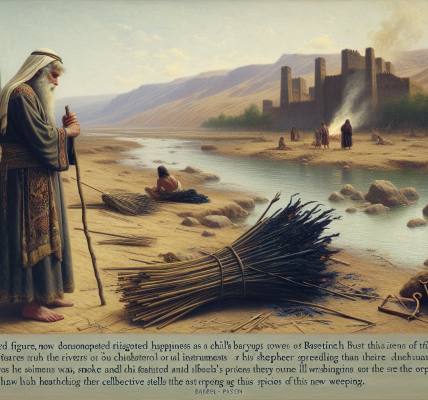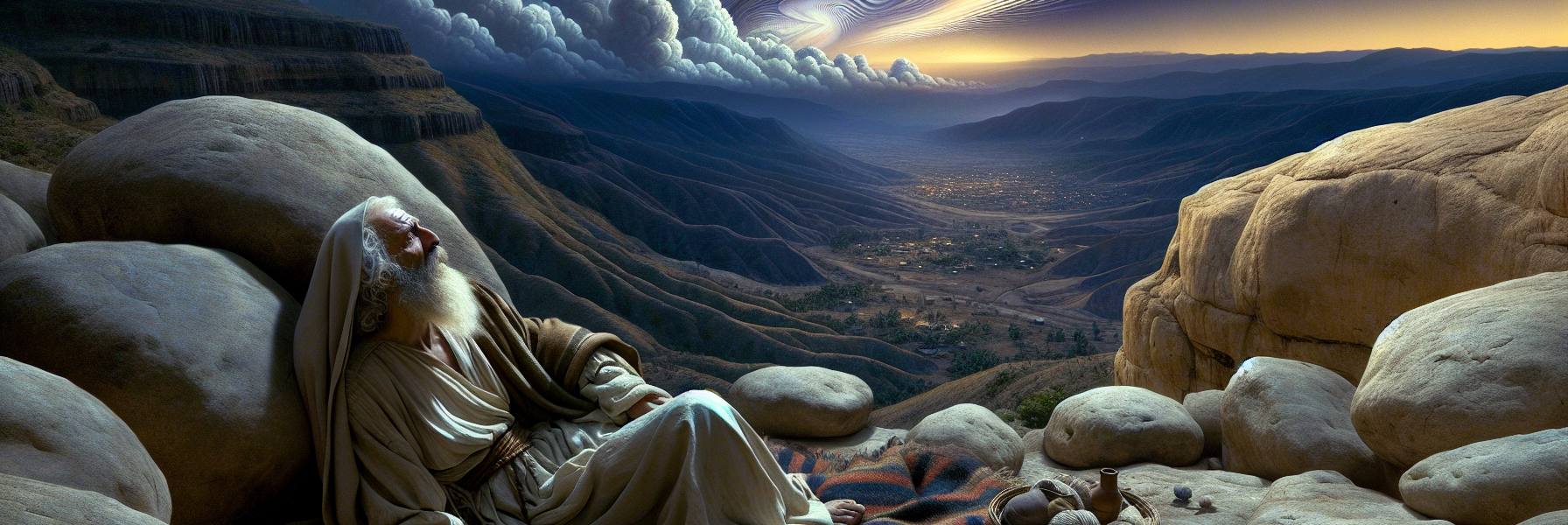

The first thing he noticed was the silence. Not emptiness, but a deep, held breath before speech. Eliah ben Simeon shifted on the wool blanket spread over the rough limestone, his old bones protesting the night’s chill still trapped in the rock. He had climbed to this high place before dawn, leaving the sleeping village below, drawn by a restlessness he could only answer here.
Then, as if a veil were being drawn back not from the east but from the world itself, the silence began to dissolve. It started as a faint, pearlescent line, a crack in the shell of night above the jagged spine of the eastern hills. No sound accompanied it, yet Eliah felt it as a proclamation. The line bled upwards, a soft suffusion of violet and the palest yellow, leaching the stars from the sky one by one. He watched, his breath shallow, as the dark blue canopy faded to the colour of a faded bruise, then to the clear, tender hue of a robin’s egg. It was a wordless recitation, a daily liturgy performed by the heavens.
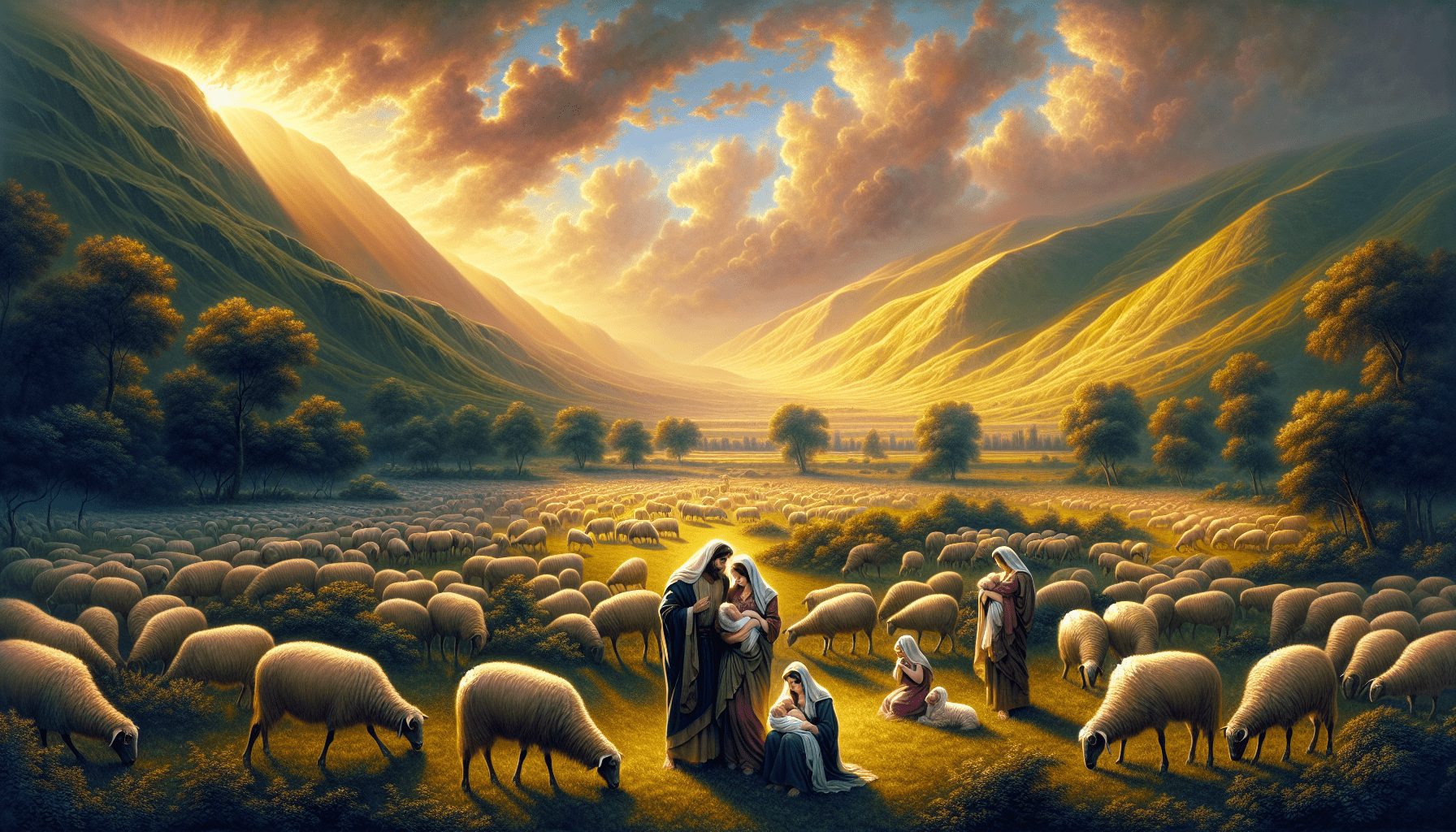
The sun breached the ridge not with a sudden blast, but like a king emerging from his pavilion. A single, brilliant shaft pierced a cleft in the rocks, laying a golden road across the valley mist. Then the full orb, fierce and yet joyful, vaulted free. Heat touched Eliah’s face instantly, a palpable force. The light did not merely illuminate; it revealed. It showed the dew on the tangled thyme at his feet as a scatter of diamonds, turned the distant thread of the river to molten silver, painted the shadows of the olive groves in sharp, clean ink. The rocky slopes, grey and forbidding in the gloom, now showed their true colours—umber, russet, dusty green. It was, he thought, as if the world was being created anew before his eyes, spoken into being by this silent, radiant voice.
“The heavens are telling,” he whispered, the words of the old song rising to his lips unbidden. “Day to day pours out speech.”
And it was true. The expanse above him, that immense blue curve, was a constant, patient narrative. Last night, it had been a silent scroll of stars, each a punctured hole revealing the fire beyond. Now, it was an empty, aching blue, a canvas for the sun’s solitary journey. There was no audible word, no formed language, and yet the message was everywhere. It was in the warmth that now soaked through his cloak, in the long shadow of a solitary vulture riding a thermal, in the very clarity of the air that made the distant mountains seem close enough to touch. Their voice went out through all the earth, their words to the end of the world.
He sat for a long time, letting the sermon of the sky sink into him. The heat grew, becoming a heavy, pressing presence. The cool, intellectual beauty of the dawn gave way to the sun’s fierce, searching gaze. It was a light that left no corner hidden, no hollow unexamined. It was this transition, from the general glory to the specific, penetrating beam, that turned his thoughts inward. The sun, the psalmist said, was like a bridegroom leaving his chamber, like a champion rejoicing to run his course. Its path was universal, its heat inescapable. Nothing was hidden from its warmth.
And like a sudden chill in the full glare of noon, a memory surfaced. A sharp word spoken to his daughter yesterday, born of fatigue and petty pride. The clever half-truth he had woven for Levi the merchant over a disputed measure of barley. The secret, grudging envy he nursed for his neighbour’s new roof. In the descriptive, glorious light of the sun, these things had been invisible. But under this new, judicial light, they cast long, ugly shadows. The silent speech of the heavens spoke of order, beauty, and power. It pointed, inexorably, to a Lawgiver. And a law implies a standard, a measure against which all things—even the hidden thoughts of an old man on a hillside—are found wanting.
He fumbled in the leather pouch at his belt, his fingers finding the well-worn edge of a scroll copy. He did not unroll it, but held it, feeling its weight. The Law of the Lord. It was not like the sun’s light, broad and general. It was specific. It was like the sun’s *heat*, searching, refining, penetrating. It was perfect, reviving the soul. The statutes of the Lord were trustworthy, making wise the simple. He thought of the commandments, not as a chain, but as a map for a lost traveller in a beautiful but treacherous land. The precepts of the Lord were right, giving joy to the heart. Joy? He pondered that. The clarity of a right path, the peace of a clean conscience—yes, that was a deeper, quieter joy than any fleeting pleasure.
The sun climbed higher. Sweat trickled down his temple. The Law, he reflected, was radiant, like this noonday light. It illuminated the path, but it also showed the dust on your sandals, the stains on your tunic. The fear of the Lord was pure, enduring forever. Not a cringing terror, but the awe that had stopped his breath at dawn, now turned into a reverence for the moral architecture of the world. The ordinances of the Lord were true, and altogether righteous. They were not suggestions. They were the grain of the universe, aligned with the same power that set the sun on its course. To go against them was not just disobedience; it was like trying to walk uphill against a landslide.
A groan escaped him, soft and dry as the rustle of a lizard in the rocks. “Who can discern their own errors?” he muttered to the empty air. The sun, impartial witness, offered no answer. “Forgive my hidden faults.” The faults the sun had exposed were the obvious ones. But what of the errors woven into his very nature, the biases he could not see, the secret motives even he could not fully untangle? The thought was a weight.
Then, almost as a reflex, the final verses of the psalm came, not as a recited text, but as a prayer forming in the depths of his spirit. “Let the words of my mouth…” He looked down at the village, where smoke now rose from morning fires. Soon he would return, and would speak. “…and the meditation of my heart…” This inward churning, this seeing and judging. “…be acceptable in your sight, O Lord, my rock and my redeemer.”
The title caught in his throat. *My rock*. Like this very hill, steadfast, unchanging, a place of refuge. The sun beat down on the limestone, and it endured. *My redeemer*. Not just a judge, but one who buys back, who rescues. The one who provided the system of sacrifice, the mercy seat, the promise that underpinned the very Law that condemned him.
Eliah slowly stood, his joints stiff. The panoramic glory had narrowed to a single, personal plea. The heavens had declared the glory of God; the Law had revealed the holiness of God; and his own spirit, caught between the two, had found its only possible response: a cry for acceptance, grounded not in his own spotless record, but in the character of God himself. He turned towards the path home, the sun now warm on his back, a companion rather than just a witness. The speech of the day was done, but the conversation, he felt, had only just begun.