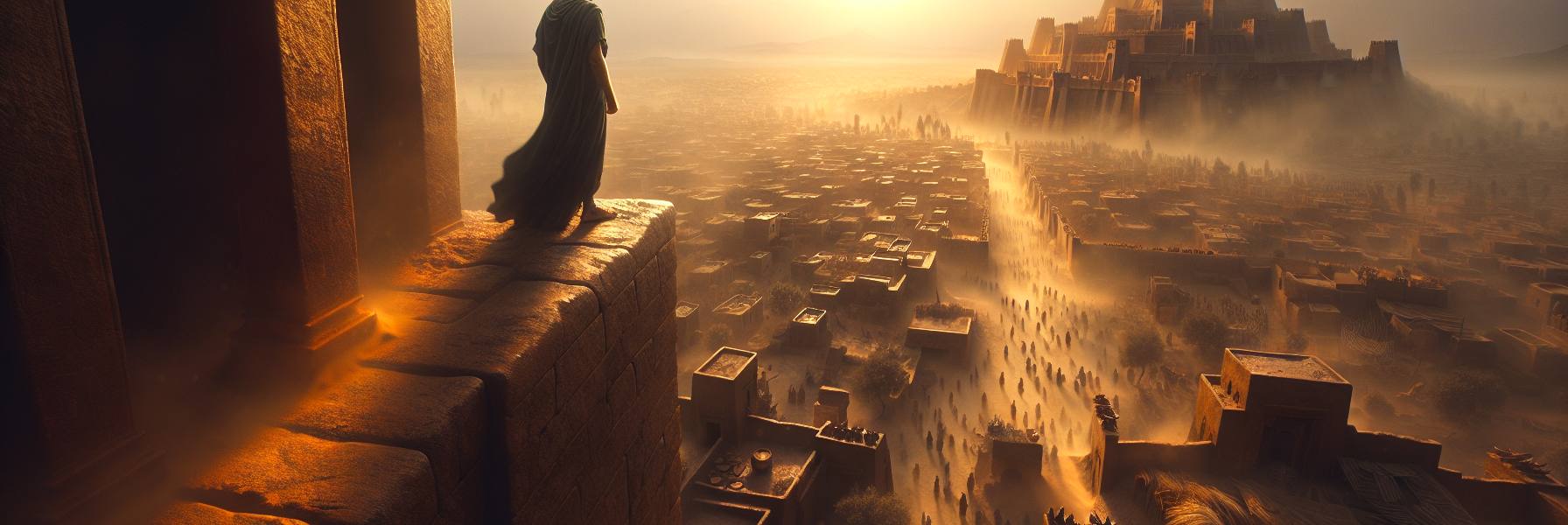

The heat in Mareshah had a weight to it, a dusty, oppressive blanket that settled over the city even in the relative cool of early evening. King Asa of Judah stood on the palace rampart, his hands gripping the sun-warmed stone until his knuckles paled. Below, the city murmured with the uneasy rhythm of a people recently delivered. The victory over Zerah the Cushite and his immense army still echoed in the cheers of weeks prior, but now a different silence was growing—a hollow space where gratitude should have been, filled instead with the mundane worries of harvest and trade. The smell of victory, sharp and metallic, had faded, replaced by the scent of baking bread and donkey dung.
Asa felt a disquiet in his spirit that the peace could not soothe. He had cleansed the land of its foreign altars and the high places, yes. He had even deposed his own grandmother, Maakah, from her position as queen mother for her idolatry. Yet, a sense of incompletion lingered, like a song cut off before the final chord. The people had returned to their fields, but had they returned to their God?
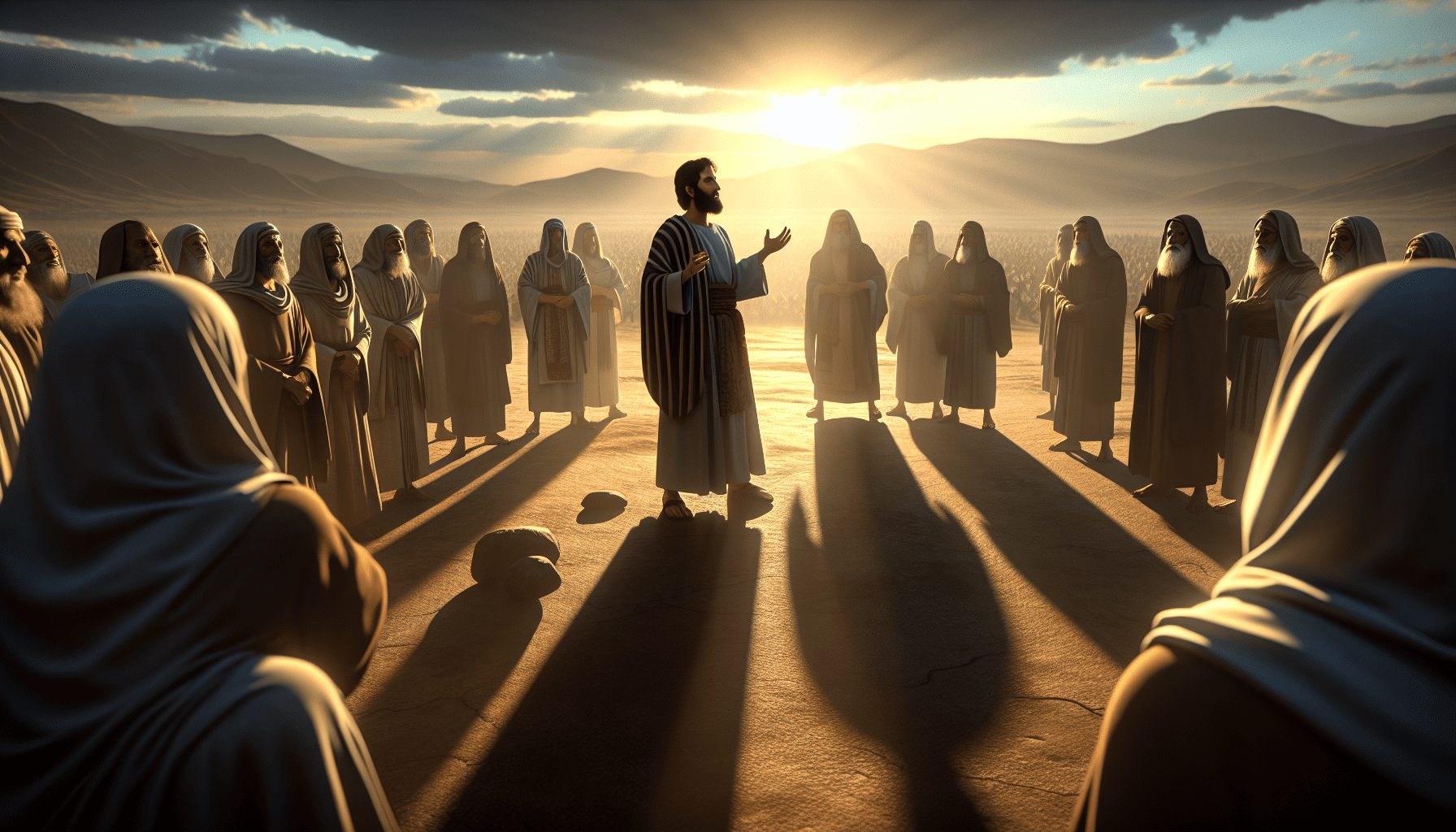
Three days later, a man arrived at the gates. He was not a prince or a general, but a prophet named Azariah, son of Oded. He came without fanfare, his robes travel-stained, his bearing that of a man who carried a message heavier than any pack. He was brought before Asa in the courtyard, where the king was hearing petitions. Azariah did not bow with courtly flourish; he simply stood, his eyes holding the king’s with an unsettling directness.
“Listen to me, Asa, and all Judah and Benjamin,” he began, his voice not loud, but clear, cutting through the murmur of the court. “The Lord is with you while you are with him.”
The simple declaration hung in the air. Azariah’s words unfolded then, not as a fresh revelation, but as a remembrance of a long, painful story. He spoke of the past, of times when Israel was without the true God, without a teaching priest, and without law. He painted pictures of those days with stark, unflinching strokes: the terror that gripped travelers on neglected roads, the clash of nation against nation, city against city, because God had shattered them with every kind of distress. “They were broken in pieces,” Azariah said, the words falling like stones. “No one was safe. It was a time when to step outside your own gate was to gamble with your life.”
The courtyard had grown utterly still. A servant balancing a water jar paused, frozen. A scribe’s stylus hovered above his wax tablet. Asa felt the prophet’s words not as a lecture, but as a diagnosis, naming the very sickness of soul he had felt on the rampart.
“But you,” Azariah continued, his gaze softening almost imperceptibly, “be strong. Do not let your hands grow weak, for your work will be rewarded.”
It was as if a shard of ice lodged in Asa’s heart had finally melted. The disquiet had a name: it was a warning, and a promise. The work was not finished with the breaking of altars; it had to be completed in the turning of hearts.
What happened next was not a royal decree shouted from the heights. It began quietly, in the king himself. The words of Azariah ignited a fire in Asa, a zeal that was fiercer and more purposeful than the military fervor that had defeated the Cushites. He started in the south, in the territories of Judah and Benjamin that he controlled, and then his resolve swept into the hill country of Ephraim—lands that had been part of the northern kingdom of Israel but whose people, weary of the apostasy festering under their own kings, began to drift south when they heard what was happening.
Asa’s reform was thorough, physical, and deeply symbolic. He did not just command; he led. They sought out the detestable idols, not only in public squares but in hidden groves and private shrines. The people, seeing the king’s own hands blackened with soot from pulling down an Asherah pole, joined in. There was a grim, determined rhythm to the work. Stone shattered, wood was hauled for burning, and the gleam of silver and gold from pagan offerings was pried loose. The air in Judah began to smell of cleansing smoke.
The culmination came in the third month, at the great Feast of Weeks in Jerusalem. The city swelled with a multitude such as had not been seen since the days of Solomon. They came from Judah and Benjamin, yes, but also a great number from Ephraim, Manasseh, and Simeon—people who had seen the Lord’s hand upon Asa. The atmosphere was not one of giddy festival, but of solemn, awe-struck purpose.
On a day when the sky was a bowl of pure blue, they assembled in the broad area before the Water Gate. Asa stood before them, not on a high dais, but on a simple platform so his face could be seen. There were no long speeches. Instead, with a voice that carried over the sea of people, he recounted the covenant—the ancient, enduring promise between Yahweh and the descendants of Abraham, Isaac, and Jacob. He spoke of blessings for obedience, and of the desolation Azariah had described for abandonment.
Then came the pledge. It was not coerced. A great roar went up from the crowd, a sound that was less a cheer and more a deep, collective exhalation of commitment. They swore an oath to the Lord, not with a quiet mumbling, but with shouts, with trumpet blasts, and with the piercing cry of rams’ horns. It was a noisy, messy, profoundly human sound of dedication. In that moment, it seemed every heart in Judah was seeking God, and He let them find Him. The scripture says the Lord was found by them, and He gave them rest on every side.
The rejoicing that followed was different from the victory celebration after the battle. It was deeper, laced with relief and a profound sense of homecoming. They had not just won a war; they had, for a time, won back their own souls. From the plunder of the Cushite campaign, they dedicated seven hundred head of cattle and seven thousand sheep. The Temple courts echoed with the lowing and bleating of a grateful kingdom.
And Asa? The king who had been restless on the rampart found a peculiar peace. He removed the final vestiges of his grandmother’s idolatry, cutting down the Asherah pole she had made and burning it in the Kidron Valley. The incense of that fire, mingled with the smoke of the sacrifice, was a sweet scent on the wind. The high places, curiously, remained in Israel to the north—a haunting reminder of a divided people. But in Judah, for now, the heart of the king was undivided. The land was quiet. No war, not a single battle, until the thirty-fifth year of Asa’s reign. It was a generation of breath, a gift of rest earned not by the sword alone, but by a people, for a season, remembering who they were. It was a peace that lived in the quiet between heartbeats, in the safety of the roads, and in the unspoken understanding that their strength was a borrowed thing, held only as long as their hands remained open to the Giver.