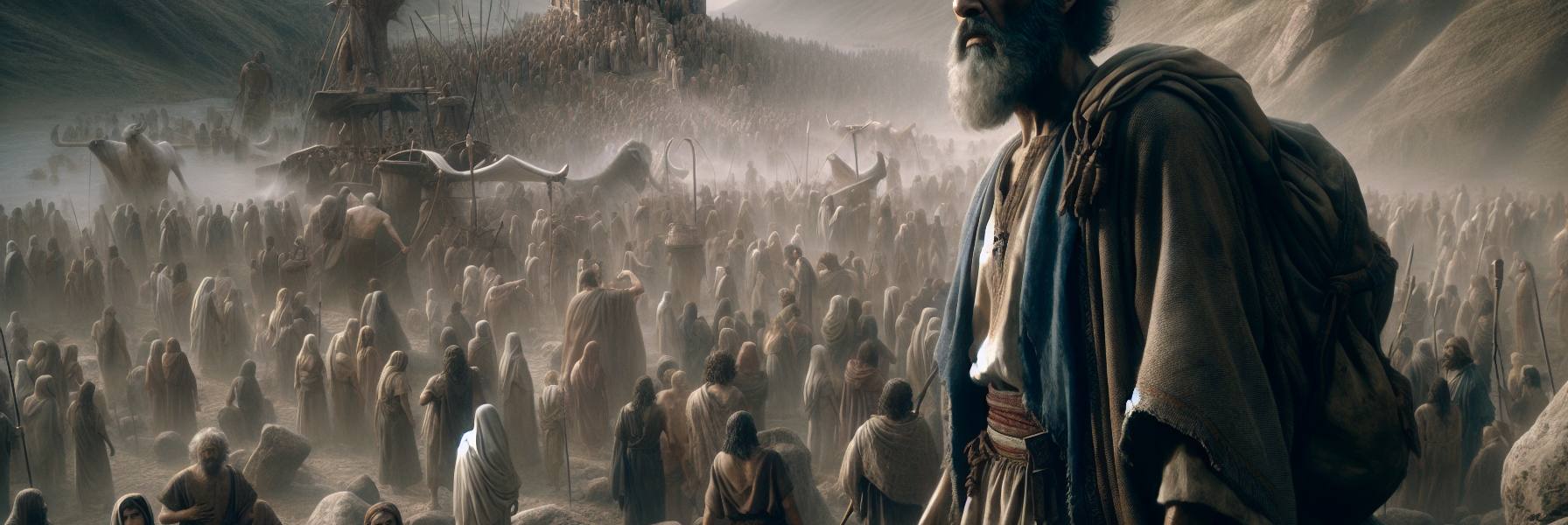

The air over Mizpah was thick, not with humidity, but with a silence that felt like held breath. It was a silence of unease, a collective pause in the long, weary saga of a people who had forgotten their name. For twenty years, the ark had rested in Kiriath-jearim, a sacred relic in a foreign hill, and Israel had languished under the heavy thumb of the Philistines. Their gods, the silent Dagon and his brutish kin, seemed to have won.
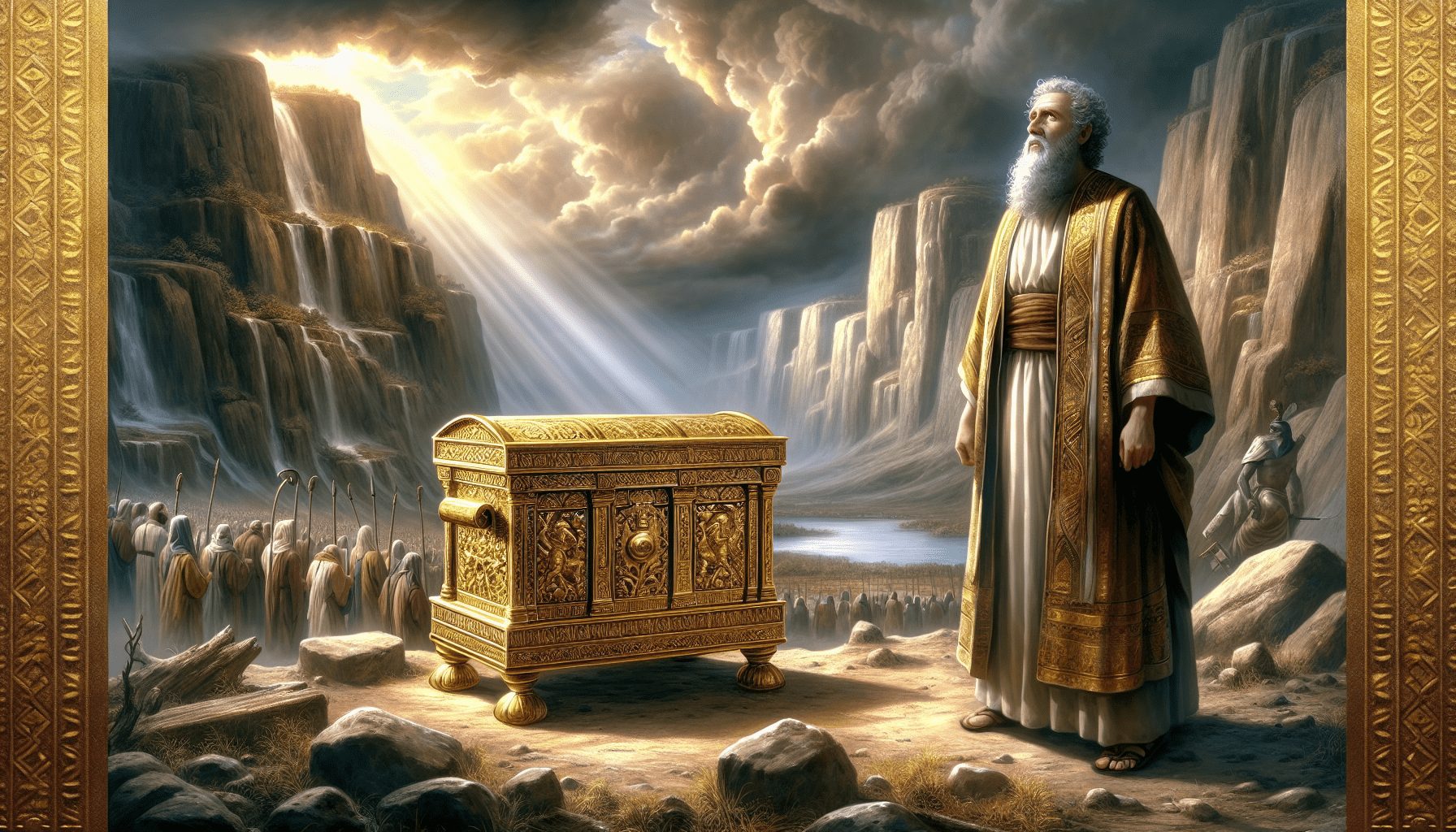
Samuel, now a man whose beard was touched with grey, moved through the gathering tribes. His eyes were the clearest thing in the camp, holding a light that was neither youthful fervor nor old man’s nostalgia. It was the hard, clear light of a single truth. He stood on a rough outcropping of stone, the people a sea of anxious faces and travel-stained clothes below him.
“If you are returning to the Lord with all your hearts,” his voice carried, rough-hewn and steady, “then rid yourselves of the foreign gods and the Ashtoreths. Commit yourselves to the Lord and serve him only.”
It wasn’t a sermon; it was surgery. And it hurt. The silence broke into a murmur, then a rustling, then a sound like the grinding of stone. From tents, from folds of garments, from hidden places in their baggage, they brought them out: the small figurines of Baal, smoothed by desperate fingers; the polished crescent symbols of Ashtoreth; amulets from Egypt, charms from Canaan. They piled them in a growing heap—a mound of discarded hope, a midden of false promises. Samuel oversaw it all, his face impassive. Then they burned them. The smoke was acrid, a foul scent that seemed to cleanse the very air as it dissipated.
“Assemble all Israel at Mizpah,” Samuel had said, “and I will intercede for you.” So they came. They drew water from the well and poured it out before the Lord, a libation of their own emptiness. They fasted that day, not as a ritual, but because the knot of remorse in their stomachs left no room for bread. And they stood, and they said, “We have sinned against the Lord.” The words, once spoken, seemed to make the ground more solid beneath their feet.
Samuel judged them there, his voice a low, constant stream of resolution, untangling disputes, speaking the law into their confusion. He was rebuilding the foundation, stone by stone.
But faith, it seems, is always tested by the sound of approaching thunder. Word reached the Philistine lords that Israel was gathering—not for raid or rebellion, but for this strange, quiet assembly. They misread the silence for strategy. To them, a gathered Israel was a threat to be crushed. The lords of the Philistines marched up toward Mizpah, their force a dark line on the horizon, the rumble of their chariot wheels a familiar herald of dread.
Panic, an old friend, seized the Israelites. The men who had just poured out their hearts now fumbled for swords that felt too light. The fasting that had felt spiritual now felt like weakness. They turned to Samuel, their voices sharp with fear. “Do not stop crying out to the Lord our God for us, that he may rescue us from the hand of the Philistines!”
Samuel didn’t rally them. He didn’t give a war speech. He took a suckling lamb, its bleats pitiful in the tense air, and offered it as a whole burnt offering on a makeshift altar of uncut stones. As the clean, sweet smoke of obedience and surrender rose, he cried out to the Lord. It was a raw sound, a plea that seemed to tear itself from the core of the earth.
And the Lord answered.
It wasn’t with angels. It wasn’t with a pillar of fire. It was with thunder.
Great, rolling peals of thunder, out of a clear sky, shattered the afternoon. But this was no natural storm. It was targeted, chaotic, a divine artillery. The Philistine ranks, so orderly and menacing a moment before, dissolved into a screaming chaos. The thunder crashed among them, breaking formations, spooking horses into a frenzy, turning their advance into a terrified rout. The Israelites, watching from the heights of Mizpah, saw their oppressors fleeing, not from swords, but from the very heavens.
Only then did Samuel speak the command to pursue. They poured out of Mizpah, not as a desperate mob, but as men whose God had gone before them. They drove the Philistines back, past Beth Car, harrying them all the way, reclaiming the towns and villages the enemy had taken. The victory was complete, a stunning reversal wrought not by their strength, but by their surrender.
Afterward, in the quiet that follows great noise, Samuel did something simple. He took a single stone and set it upright between Mizpah and Shen. The rock was rough, unmarked by chisel. He called its name *Ebenezer*, saying, “Thus far the Lord has helped us.”
The words hung in the air, settling into the soil. *Thus far*. Not a promise of endless ease, but a marker, a testimony. A reminder that on this day, at this place, when they had nothing but empty hands and cried-out hearts, help had come. The stone stood, a silent witness in a field, as the Philistines retreated for good, their border raids ceasing for the length of Samuel’s life. And the towns, from Ekron to Gath, were restored to Israel.
It was a peace, hard-won and fragile, built not on a king or an army, but on a returned heart, a pile of ashes, a cried-out prayer, and a stone saying: remember. Remember the help, when there was none.