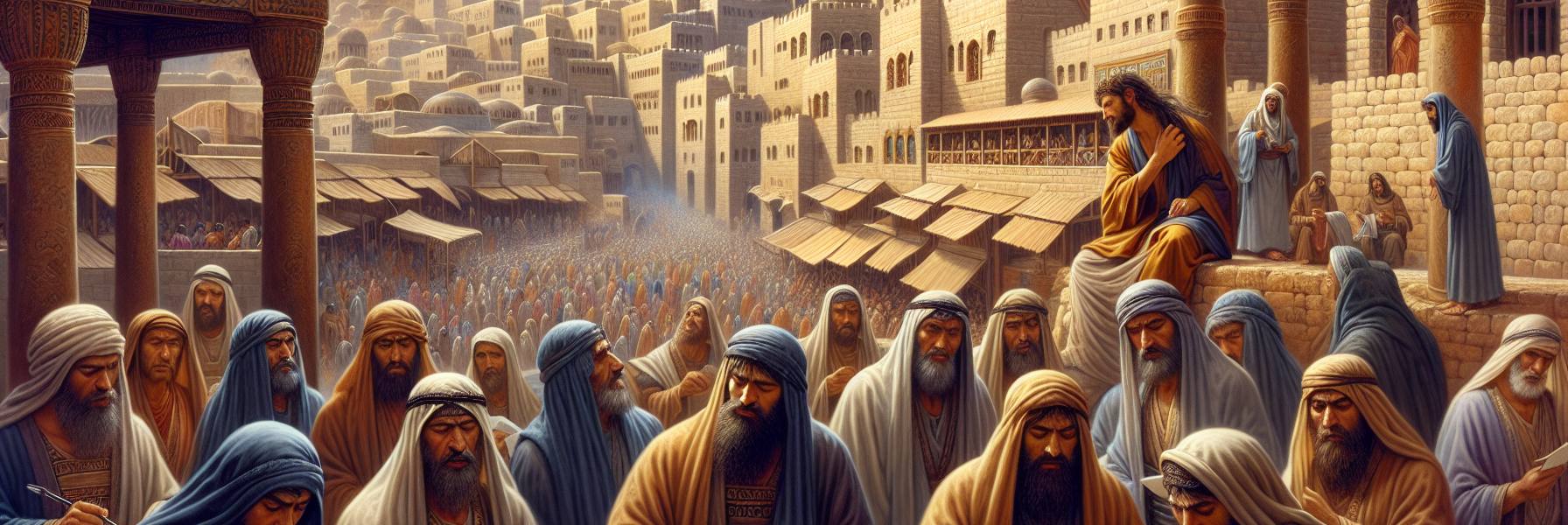

The heat in Jerusalem was a palpable thing that summer, a dry, choking weight that settled in the linen of your tunic and the dust of your throat. It was the heat of fear, we thought, blowing in from the east with the rumours. The Assyrian, the scourge of God, was on the move again. Sennacherib’s generals had already taken the fortified towns of Judah, one after another, like a man plucking figs. Now his envoys stood outside the very walls of Zion, their voices slick with arrogance, their promises of peace as thin as a rusted blade.
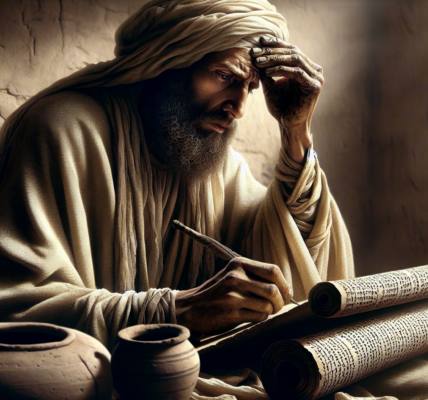
I worked as a junior scribe in the palace, copying correspondence and decrees. My fingers were stained with ink, but my ears were stained with the talk of the courtyards—a low, constant murmur of dread. We had a king, Hezekiah, who tore his clothes and sought the prophet Isaiah. But the people? We were like sheep scenting the wolf. We looked to the walls, but they seemed suddenly frail. We looked to the cisterns, calculating water. We looked to each other, and saw our own terror mirrored.
It was in this atmosphere that the words began to circulate. Not the official proclamations, but another sort of word, passed from the prophet’s disciples to the market vendors, from the water-carriers to the soldiers on the ramparts. Fragments, at first, like shards of pottery, sharp and undeniable.
*A curse on you, destroyer!*
*You yourself have not been destroyed!*
*A curse on you, betrayer!*
*You yourself have not been betrayed!*
People muttered them at the wells. The soldiers whispered them on watch. They were directed at the Assyrian, that sleek, distant terror, but they had a strange, double edge. They seemed to hang in the air over our own city too. When you finish destroying, you will be destroyed. When you finish betraying, you will be betrayed. It was a law, written not on parchment but into the fabric of the world itself. A terrible comfort.
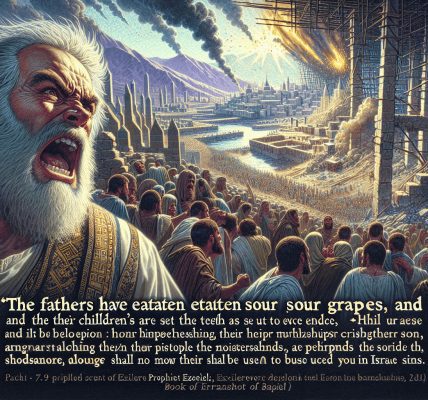
The siege tightened. The Assyrian Rabshakeh, his voice cultured and vile, shouted his threats over the wall. He mocked our king, our God, our hope. He promised us a land of bread and vineyards if we would only surrender. The silence that followed his harangues was worse than any noise—a city holding its breath.
And then, the strange turn. The words from Isaiah’s circle grew fuller, painting a picture not of our enemy, but of us. Of our secret sickness.
*“The sinners in Zion are terrified…”*
That one struck home. You’d see a merchant who’d been hoarding grain glance furtively at the sky. A Levite who’d grown slack in his duties would pale at the trumpet blast. It wasn’t just the Assyrian outside. It was the trembling within. Who among us, the prophet’s words seemed to ask, can live with this all-consuming fire? Who can dwell with these everlasting flames?
The description was terrifying. A people without courage, their tongues stammering, their bodies shaking, their eyes aching from looking for a salvation that wouldn’t come. It was us. It was a perfect portrait of our collective paralysis. We were not just besieged; we were convicted.
But then… a shift. So subtle at first it felt like a trick of the light. The same voice that diagnosed the terror began to prescribe a posture.
*“He who walks righteously and speaks uprightly…”*
It wasn’t a call to arms. Not a strategy for counter-sapping or building higher walls. It was a description of a man. A man who despises unjust gain, who won’t take a bribe, who stops his ears from plots of murder, who shuts his eyes against looking at evil. In the midst of a military catastrophe, the word was about ethics. About the quiet, unheroic business of being decent. This, the prophet said, was the one who would dwell on the heights. His place of defense would be the fortresses of rock. His bread would be given, his water sure.
It felt almost foolish. What good was a clean hand against a battering ram? What use an honest weight against a legion?
Yet, in the suffocating anxiety, it created a space to breathe. A different kind of strength. We began to look, not just at the horizon for dust clouds, but at our own hands, our own transactions, our own words. The siege became not just a physical event, but a spiritual refining fire. And some of us, by some grace, tried to stand a little straighter in the smoke.
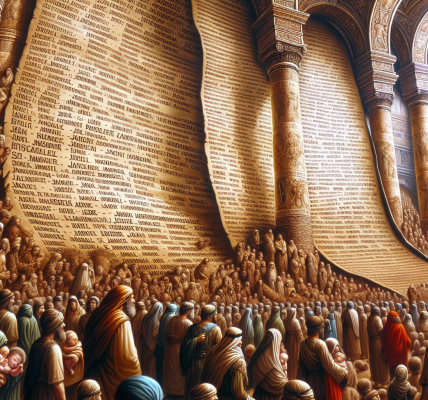
The culmination came with a vision so stark and beautiful it hurt to hold in your mind. The prophet’s message opened like a scroll, revealing not our cramped city, but Zion as she was meant to be.
*“Your eyes will see the king in his beauty…”*
Not King Hezekiah in his troubled splendour, but a greater King. The city, stretched wide, a place of quiet tents, immovable stakes. We would behold a land of far distances. Gone would be the oppressive, calculating heart, the mind obsessed with siege arithmetic. In its place: a mind teeming with stories of God’s mighty deeds.
And the best of it, the most impossible promise: *“No oppressor will pass through again.”* The very gatekeepers, once symbols of our vulnerability, would lift their voices in song. The majesty of Yahweh would be for us a place of broad rivers and streams. No galley with oars, no stately ship would conquer it. For the Lord was our judge, our lawgiver, our king—He would save us.
The Assyrian camp, one morning, was empty. Just like that. A rumour of plague, of angelic terror, of a king recalled to his own troubles. They were gone. The siege was broken.
The celebrations were wild, of course. Wine flowed where water had been rationed. But for some of us, the greater miracle was quieter. The city was the same stones, the same gates. But something *had* passed through. The terror had passed. And the words remained.
We had seen, in our deepest fear, a mirror held up. We had seen the fire we could not dwell with—our own faithlessness. And we had heard, whispered beneath the crash of threats, the description of a life that could. A life anchored not in the strength of mortar, but in the beauty of a righteous King. The Assyrian was gone. But the vision of that broad-rivered, peaceful Zion, where the lame would take abundant spoil, remained. It was a land we had not yet entered, but having glimpsed its distant shores, we could never be fully content with mere, un-besieged earth again. We had learned the hard truth: the destroyer destroys himself. And the salvation of God is a city, eternal, whose foundations are laid in justice.