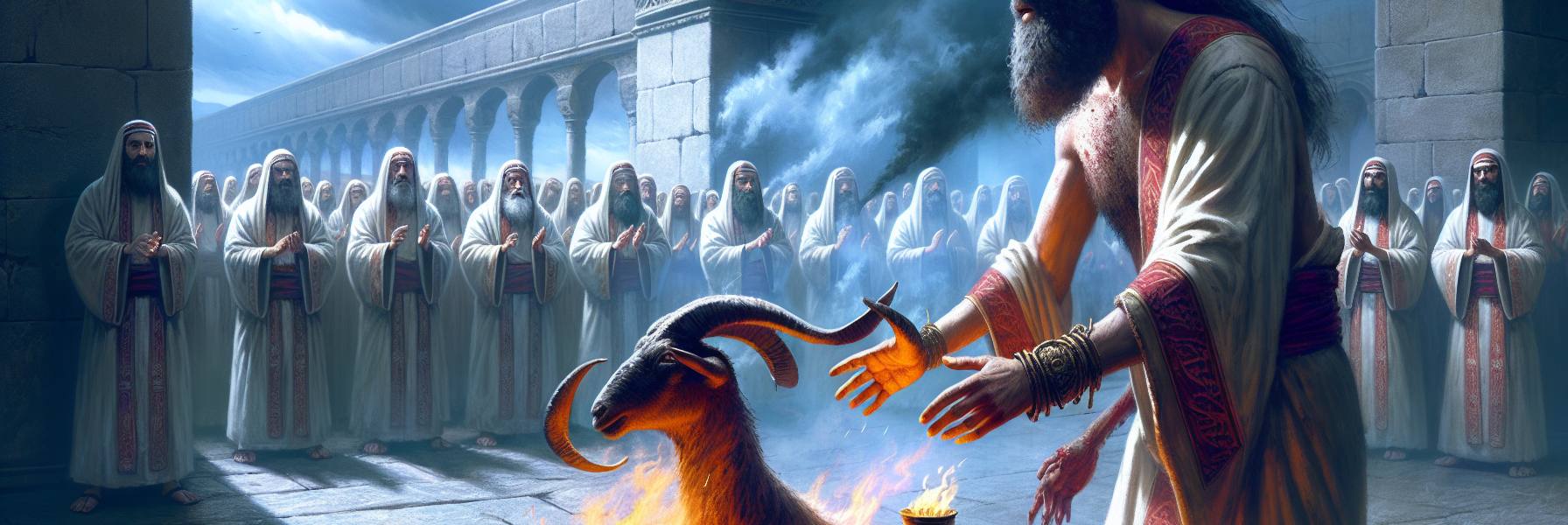

The heat rose in visible waves from the stones of the courtyard, carrying with it the thick, cloying scent of incense and burnt fat. Eliab, a Levite of the second order, wiped his brow with the sleeve of his linen robe, the sweat sticking the fabric to his skin. Before him, the altar fire crackled, consuming the fat of a yearling ram. The offering was flawless, without blemish, purchased just that morning from a herdsman in the valley. The ritual was perfect. The chant of the attending priests was harmonious, rising with the smoke toward a sky of brassy, relentless blue.
Yet as Eliab lifted his hands in the prescribed manner, a cold, hollow feeling settled in his gut, unrelated to the furnace-blast of the altar. His eyes, for a moment, strayed from the sacred flame to the city gate beyond the Temple precinct. From here, he could just see the edge of the lower market, hear the faint, discordant clamor of commerce and complaint. He thought of his brother, Reuben, who that very morning had argued bitterly with a widow over the price of a measure of barley, exploiting her desperation with a slick, practiced smile. He thought of the magistrates who took their seats in the gate, their judgments swayed by the weight of a purse rather than the weight of truth. The smoke of his perfect offering seemed to hit that hard sky and fall back, a greasy pall over a city that hummed with a sickness no ritual could cleanse.
This was the vision given to Isaiah, son of Amoz. Not in the cool of a sanctuary, but in the weary, sun-beaten heart of a nation playing at devotion.
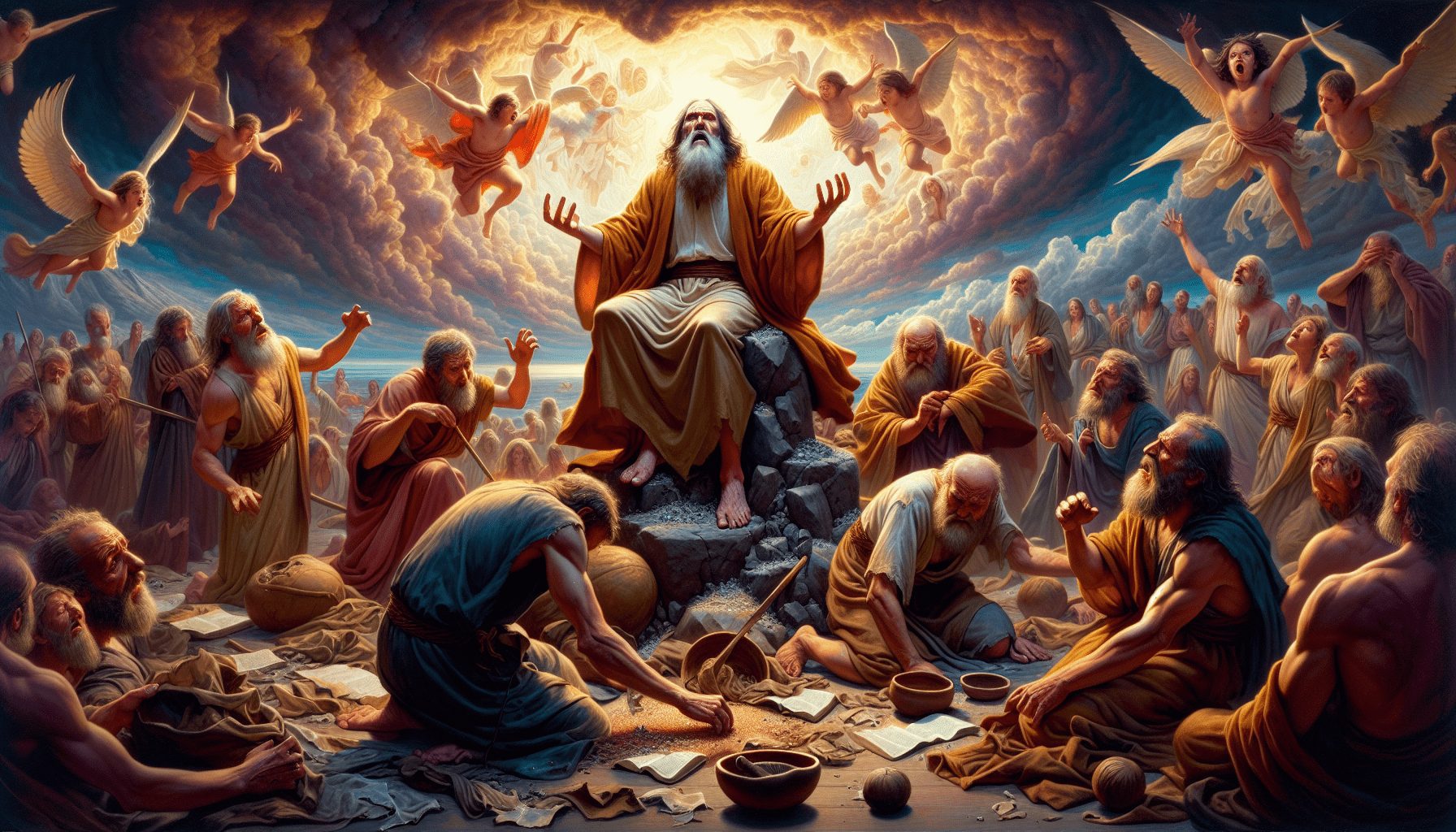
The word came not as a thunderclap, but as a deep, grieving certainty, as if the very stones of Zion had found a voice. *Hear, O heavens, and give ear, O earth.* It was an appeal to the eternal witnesses, for the people themselves had grown deaf. *Children have I reared and brought up, but they have rebelled against me.* The accusation was familial, intimate, layered with the betrayal of a father’s care. A donkey knows its master’s crib, the thought pressed upon Isaiah’s spirit. Israel did not know; his people did not understand.
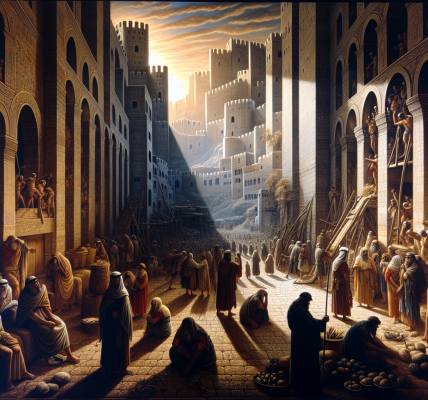
And oh, the understanding was etched in every corner of the land. Walking the streets, Isaiah saw it: a body, once robust, now covered head to foot in festering wounds. A nation that had been struck, yet no one sought to bind its injuries. From the sole of the foot to the head, there was no soundness. Only bruises, sores, raw and untreated. The corruption wasn’t merely in the foreign policy of kings or the grand idolatries in high places. It was in the alleyways, in the field boundaries, in the hardened eyes of men who had long ago stopped seeing their neighbors as brothers.
He watched the pilgrims stream into the city for the New Moon festival, their carts laden with sacrifices. The Temple courts were a bustling, noisy marketplace of piety. The bleating of sheep, the lowing of cattle, the coppery scent of blood—it was a spectacle of devotion. But the grieving voice within him turned the spectacle into a grotesque parody. *What to me is the multitude of your sacrifices?* it whispered, a question that would have frozen the blood of the priests if they could have heard it. *I have had enough of burnt offerings of rams and the fat of well-fed beasts.*
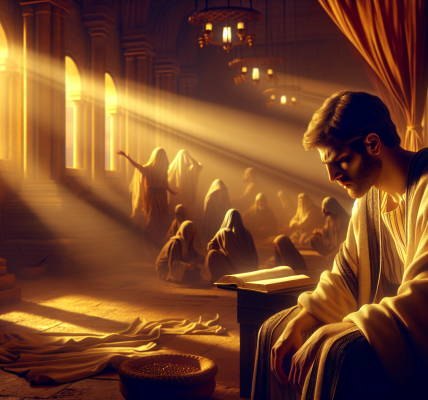
The rituals had become an empty grammar, a language spoken without meaning. They came to appear before God—the very One who filled heaven and earth—as if He could be confined to a schedule of festivals. *I cannot endure iniquity and solemn assembly.* The combination was a stench. The New Moon, the Sabbath, the calling of convocations—they were now a burden to Him, a weariness He would no longer bear. When they spread out their hands in prayer, He would hide His eyes. For those hands were not clean; they were fists clenched around bribes, or stained with the blood of the oppressed.
The prophet’s mind raced with the divine plea that cut through the ritual noise. *Wash yourselves; make yourselves clean; remove the evil of your deeds from before my eyes; cease to do evil, learn to do good.* The prescription was startlingly practical, jarringly earthly. It wasn’t “offer more rams.” It was: *seek justice, correct oppression; bring justice to the fatherless, plead the widow’s cause.*
True worship was not a transaction at the altar, but a disposition of the heart lived out in the dust of the city streets. It was the magistrate refusing a bribe. It was the merchant giving just measure. It was the powerful man remembering the forgotten.
The voice offered a terrifying, gracious logic. *Come now, let us reason together, says the Lord.* It was an invitation to a courtroom, but one of mercy. *Though your sins are like scarlet, they shall be as white as snow; though they are red like crimson, they shall become like wool.* The imagery was visceral, a miracle of cleansing against all natural law. But it was conditional. *If you are willing and obedient, you shall eat the good of the land.* The choice was starkly presented. *But if you refuse and rebel, you shall be eaten by the sword.*
Isaiah looked out from the height of the city. Jerusalem still stood, beautiful and terrible, the “faithful city” that had become a harlot. Where righteousness once lodged, now murderers made their home. Her silver had become dross, her wine mixed with water. The princes were companions of thieves. Every one loved a bribe and chased after gifts.
The final verses of the chapter unfolded in his spirit like a bitter scroll. The Mighty One, the Lord of Hosts, would have His justice. He would purge away the dross, remove the alloy. And He would restore judges as at the first, counselors as at the beginning. But first, Zion would be redeemed by justice, and her repentant ones by righteousness. The rebels and sinners would be broken together. Those who forsake the Lord would be consumed.
The heat of the day began to soften into late afternoon. The smoke from the altar thinned. The pilgrims would soon return to their homes, satisfied with their performed duty. Eliab the Levite finished his rotation, his hollow feeling now a settled dread.
And Isaiah, son of Amoz, turned from the Temple courts, carrying a burden heavier than stone and a word that was both a fire and a balm, a condemnation and the faint, desperate hope of a dawn after a very long night. The conversation between heaven and earth had begun. It would not be a quiet one.