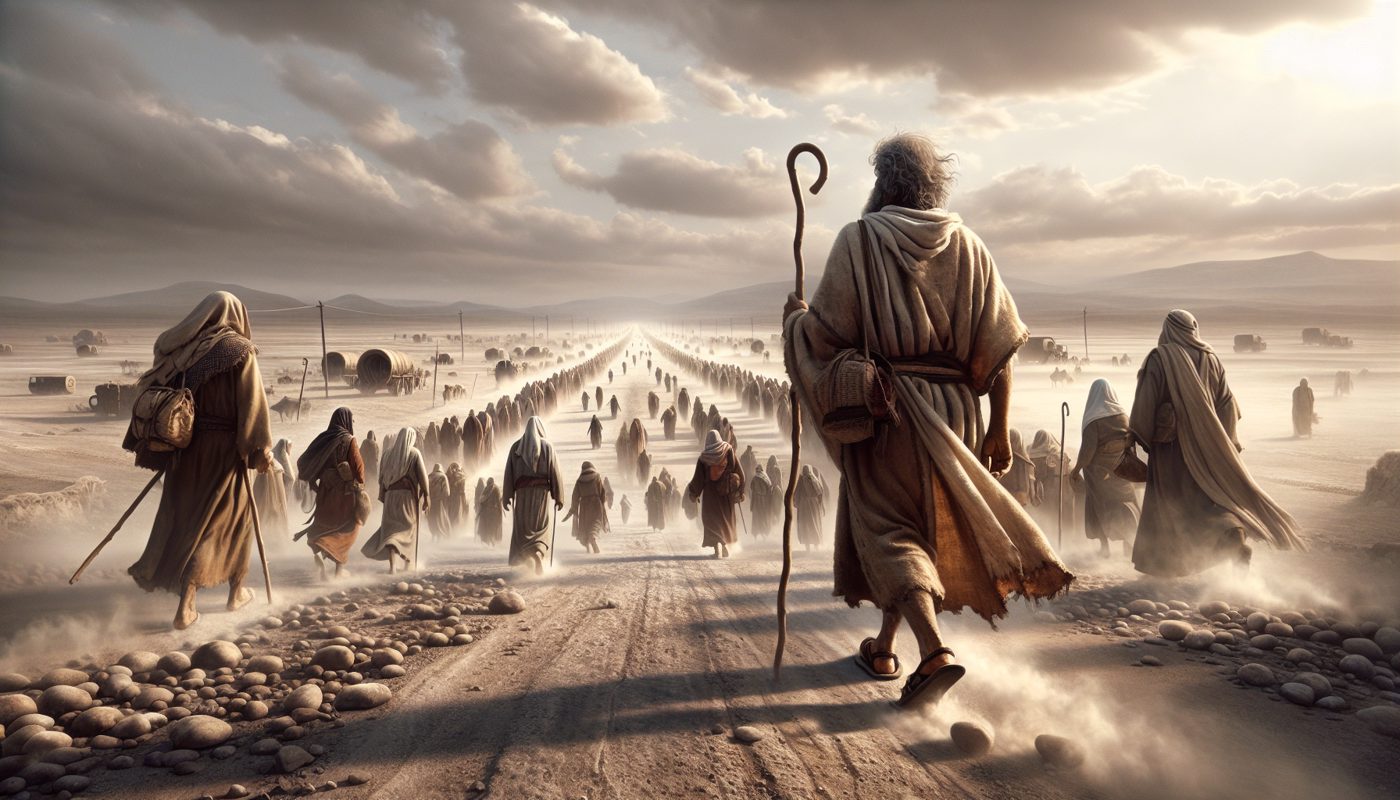
The psalm opens with a raw declaration of longing. The poet does not speak of obligation or routine attendance. He speaks of a soul that faints, a heart and flesh that cry out for the living God. This is not a mild preference for worship. It is a physical ache, a thirst that presses against the ribs. The object of this longing is specific: the courts of the Lord, the tabernacles of Jehovah of hosts. The poet does not describe the architecture. He describes the pull.
The third verse introduces an unexpected image. The sparrow finds a house. The swallow finds a nest where she may lay her young. The poet looks at these small, common birds and sees something he does not yet have. They have found a home at the altars of the Lord. The altars are not just places of sacrifice. They are places of permanence, of belonging, of life continuing. The poet envies the bird not for its freedom but for its settledness.
This is the psalm of a man who is not yet there. He is on the road, traveling toward the courts he longs for. But the road itself becomes part of the blessing. The man whose strength is in the Lord has the highways to Zion written on his heart. The journey is not a burden. It is a map inscribed inside him. Every step toward the sanctuary is already a step into the presence of the Lord.
The poet describes a valley called Weeping. It is a place of sorrow, of low ground, of tears. But those who pass through it do not stay there. They transform it. They make it a place of springs. The early rain covers it with blessings. The psalm does not explain how this happens. It simply states that the people of God turn dry grief into living water. The strength to do this comes from the Lord, not from their own resolve.
The pilgrims go from strength to strength. They do not weaken as they travel. They grow stronger. Every step, every mile, every valley crossed adds to their resolve. And at the end of the road, every one of them appears before God in Zion. The psalm does not mention a single pilgrim by name. It does not need to. The collective movement of the people toward the presence of the Lord is the point.
The poet then turns to prayer. He addresses the Lord God of hosts, the God of Jacob. He asks the Lord to hear his prayer, to give ear. He asks the Lord to look upon the face of his anointed. The anointed is not named. It could be the king. It could be the priest. It could be the poet himself, set apart by longing. The prayer is direct, urgent, and grounded in the relationship established by covenant.
Then comes the great comparison. A single day in the courts of the Lord is better than a thousand elsewhere. The poet does not calculate the math. He states the truth as he knows it. He would rather be a doorkeeper in the house of his God than to dwell in the tents of wickedness. The doorkeeper stands at the threshold, not inside. He is the lowest servant in the sanctuary. But even that proximity to the Lord is worth more than the richest life lived apart from him.
The Lord is a sun and a shield. The sun gives light, warmth, life. The shield gives protection, safety, defense. The Lord gives grace and glory. He withholds no good thing from those who walk uprightly. The psalm does not promise that the upright will have everything they want. It promises that the Lord will give everything that is good. The definition of good belongs to the Lord, not to the one who walks.
The psalm ends where it began. Blessed is the man who trusts in the Lord of hosts. The blessing is not for the one who has arrived. It is for the one who is still trusting, still walking, still longing. The poet does not claim to have reached the courts. He claims to be on the road, his heart set on the altars, his eyes fixed on the God who dwells there. The blessing is in the trust itself.
Comments
Comments 0
Read the discussion and add your voice.
Members only
Sign in to join the conversation
We keep comments tied to real accounts so the discussion stays clean and trustworthy.
No comments yet. Be the first to add one.