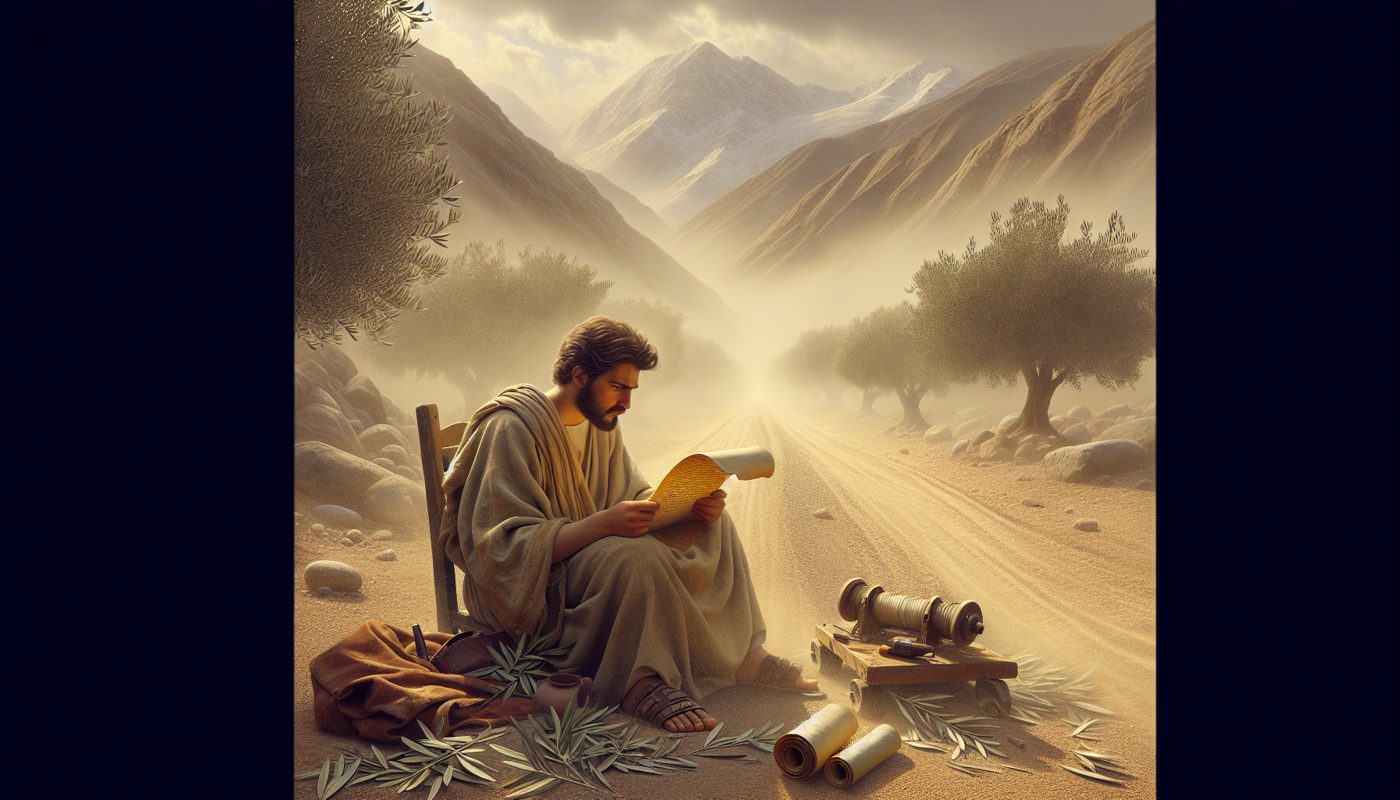
The apostle Paul does not soften his tone in this letter. He has already called the Galatians foolish and bewitched. Now he tells them he is afraid of them, afraid that his labor among them has been wasted. The cause of his fear is not persecution from outside but a quiet drift inside the congregation. They have begun observing days and months and seasons and years. They have turned back to what he calls the weak and beggarly rudiments, as if they wished to be enslaved all over again.
Paul’s argument rests on a single legal image. A child who is the heir of an estate differs nothing from a slave. He owns everything in principle but is under guardians and stewards until the day his father appoints. That is the condition Paul assigns to life under the law. It is not evil. It is childhood. But childhood is not meant to last forever. When the fullness of time came, God sent his Son, born of a woman, born under the law, to redeem those under the law so that they might receive adoption as sons.
The word adoption carries weight in a Roman world where a grown man could be legally transferred into a new family, losing his old debts and gaining a new inheritance. Paul uses that legal reality to say that believers are no longer slaves but sons, and if sons, then heirs through God. He presses the point further. Because they are sons, God has sent the Spirit of his Son into their hearts, crying out Abba, Father. The Spirit does not produce the cringing voice of a slave but the intimate address of a child.
Then Paul shifts into open perplexity. He does not understand how people who have come to know God, or rather been known by God, would want to go back to the old bondage. He reminds them of his first visit, when he preached to them despite a physical infirmity that could have repelled them. They received him as an angel of God, as Christ Jesus himself. They would have plucked out their own eyes and given them to him if they could. Now he asks whether he has become their enemy by telling them the truth.
The troublemakers, Paul says, are zealous for the Galatians, but not in a good way. They want to shut the Galatians out so that the Galatians will seek them instead. Paul calls the Galatians his little children and says he is in the pain of childbirth again until Christ is formed in them. He wishes he could be with them in person and change his tone, because he is perplexed about them.
Then he turns to scripture itself. He addresses those who want to be under the law and asks them if they actually hear what the law says. He points to Abraham, who had two sons. One was born to Hagar the slave woman, and one to Sarah the free woman. The son of the slave woman was born according to the flesh, by natural means. The son of the free woman was born through promise, against all natural expectation.
Paul reads these two women as an allegory. They represent two covenants. Hagar corresponds to Mount Sinai, the mountain where the law was given, and she bears children into bondage. Paul identifies her with the present Jerusalem, the city that still lives under the law and is in slavery with her children. But there is another Jerusalem, the one above, which is free, and she is the mother of all who believe.
Paul quotes Isaiah to support this: Rejoice, O barren woman who bears no children, break forth and cry aloud, you who are not in labor, for the children of the desolate woman will be more than the children of the one who has a husband. The barren woman is Sarah, who waited decades for a child. The desolate woman is the covenant of promise, which looked empty but produced a multitude.
The Galatians, Paul says, are children of promise like Isaac. And just as the son born according to the flesh persecuted the son born according to the Spirit in the old story, the same thing is happening now. The ones who insist on the fleshly mark and the calendar observances are the persecutors, not the persecuted. Paul then quotes the scripture that commands the slave woman and her son to be cast out, because the slave’s son will not inherit with the free woman’s son.
The conclusion is blunt. The Galatians are not children of the slave woman. They are children of the free woman. The allegory does not leave room for negotiation. There is no middle status between Hagar and Sarah, between Sinai and the Jerusalem above, between the son born of flesh and the son born of promise. Paul does not offer a ladder between slavery and sonship. He insists that the cross has already removed the ladder.
Comments
Comments 0
Read the discussion and add your voice.
Members only
Sign in to join the conversation
We keep comments tied to real accounts so the discussion stays clean and trustworthy.
No comments yet. Be the first to add one.