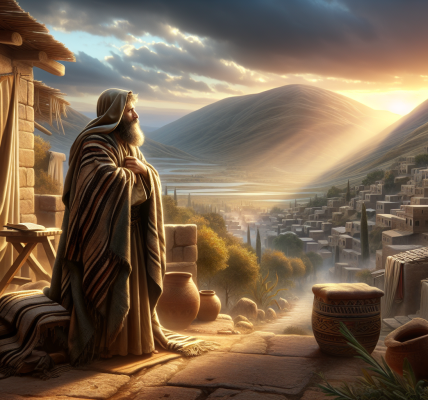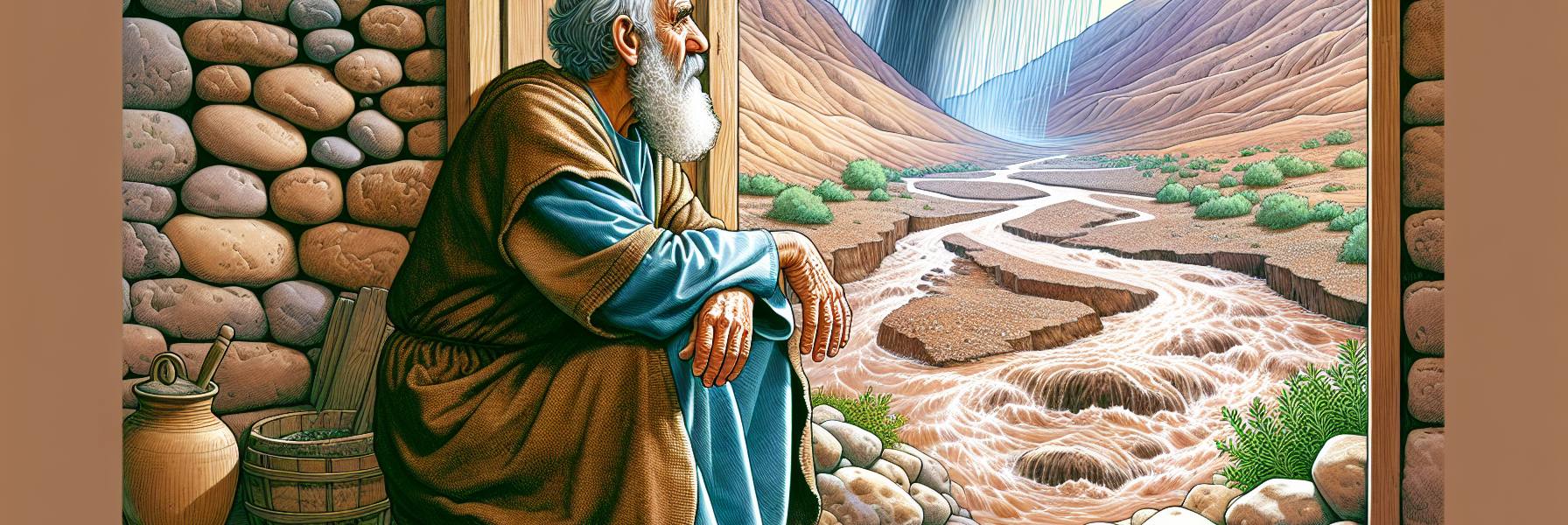

The rain had finally come. It wasn’t the gentle, soaking rain of the north, but the fierce, sudden downpour of the high desert, turning the wadi behind Eliazar’s house into a roaring, brown torrent for a handful of glorious hours. He stood in the doorway of his stone house, the smell of wet dust and crushed thyme sharp in the air. It was the smell of promise.
His hands, resting on the rough doorframe, were a map of the years—calloused from the plough, scarred from stones cleared from this stubborn patch of Judean hillside. But it was the deeper ache, the one behind his ribs, that the rain touched today. It brought back the dream, the one they all carried but seldom spoke of: Zion.
He remembered the dryness. Not just the physical dryness of Babylon, with its ordered, alien canals, but the dryness of the soul. They had hung their harps on the poplar trees, yes, but long before that, the music had died inside them. Their songs had become whispers, their prayers mere routines of breath. They were like the Negev, he thought, watching the last of the runoff trickle through the rocks. A cracked, endless waiting.
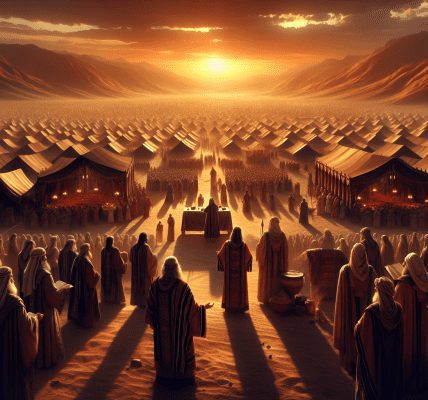
Then came the word. *Return*. It had sounded, at first, like a cruel joke. A rumor flickering through the slave quarters and the market stalls. But when the decree was read, when the reality of it struck them, a sound arose that Eliazar could still hear if he closed his eyes. It wasn’t cheering, not at first. It was a collective gasp, a release of breath held for seventy years. Then came the weeping—great, wrenching sobs that shook grown men. And through the tears, laughter, the kind that hurts the stomach and cleanses the heart. “We are like dreamers,” old Micah had croaked, his face streaming.
The journey was a blur of dust and miracles. The world itself seemed unreal. To walk, as a free man, on the road westward? To see the hills rise and know they were the hills of home? They sang, of course, but the songs were new and broken, mixed with coughs from the road-dust and interruptions from children who had never learned the words. The nations did notice. Even the hard-faced Babylonian merchants at the caravanserais along the way had looked at them with a strange, puzzled wonder. “The Lord has done great things for them,” they’d mutter, not understanding the God who orchestrated such a thing.
Eliazar bent down, his knees protesting, and scooped a handful of damp earth. This was the great thing. Not the grand arrival at the ruined gates, not the weeping at the Temple’s foundation—though those moments were fire in his memory. No, this dirt. The right to own a handful of dirt, to curse its stubbornness and bless its yield, on the land of his fathers.
But the dream, as dreams do, had met the daylight. Zion was a heap of rubble. Jerusalem’s walls were broken teeth against the sky. The harvests failed. The neighbors were hostile, their smiles as thin as a sickle’s edge. The laughter of the return had sometimes faded into the weary silence of survival. They had sown, all right. They had sown their precious seed brought from exile, sown it into rocky soil, under a hostile sun, often with tears of frustration and disappointment cutting tracks through the dust on their cheeks. He remembered planting his first fig tree, watering it from his meager cistern, only to watch it wither in a scorching wind. He’d knelt beside it, not praying, just staring, a hollowed-out feeling where hope had been.
The rain was stopping now. The late afternoon sun broke through, turning the world a brilliant, washed gold. His grandson, little Mattaniah, scampered through the puddles, his shriek of joy echoing off the stones.
“Saba! Look!” The boy pointed to the edge of the field, where the runoff had pooled. A patch of hardy wildflowers, seeds buried and forgotten, had erupted in a shock of blue and yellow.
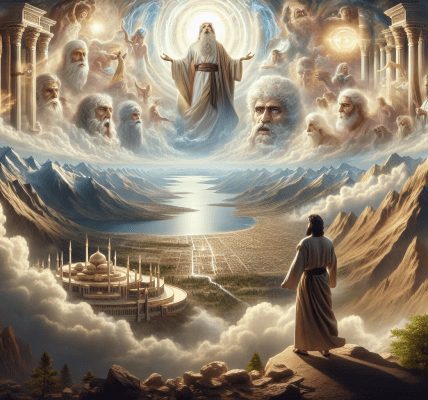
Eliazar felt the prayer then, not as words formed in his mind, but as a surge in his chest, a completion of a circle. *Restore our fortunes, O Lord, like streams in the Negev.*
It wasn’t a demand anymore. It was a recognition. The streams in the Negev weren’t a permanent river. They were sudden, fleeting gifts. They came, they roared, they vanished into the parched earth. But life came from them. The hidden seeds, the deep roots, drank and waited.
They had been given the great dream, the overwhelming gift of return. Now they were living in the faithful in-between. The sowing with tears was not a failure of the dream; it was the necessary work *after* the dream. The harvest of joy was coming. Not perhaps tomorrow, or even in his lifetime, but it was as certain as the fact that this rain, sinking now into his field, would bring a greener growth in a week’s time.
He walked over to his storage jar, lifted the stone lid, and scooped out a measure of the last season’s grain—precious, hard-won seed. He would sow again tomorrow in the softened earth. This time, he would take Mattaniah with him. He would let the boy’s small fingers drop the seeds into the furrows. He wouldn’t tell him not to cry if the work was hard or the sun hot. He would simply tell him the story. The story of the laughter that came from nowhere, of the sound of their freedom ringing in the ears of strangers, of the God who plants dreamers in broken ground and makes streams run in the desert.
The harvest of joy, he knew, was not just a future bounty. It was this moment: the smell of rain, the promise in the dirt, the child’s laughter, and the memory—so vivid it was almost painful—of what it felt like when the dream first became real. They were still dreamers, after all. But now, they were dreamers with calloused hands, sowing in hope, waiting for the song to rise again.