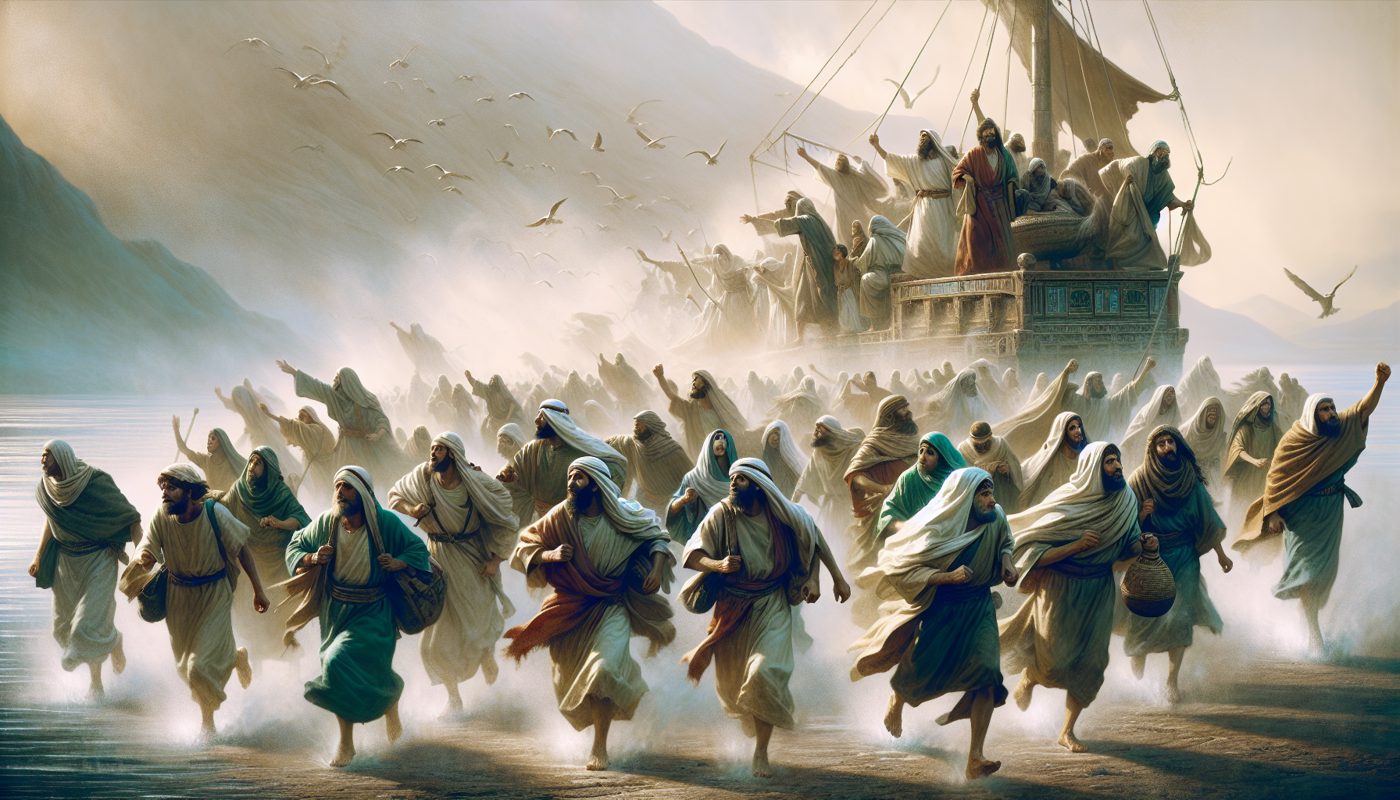
The psalm does not explain. It does not introduce the characters or set the scene. It simply says that when Israel went out of Egypt, the house of Jacob from a people of strange language, then Judah became his sanctuary, Israel his dominion. That is all the background the poem gives. The rest is the reaction of the natural world.
The sea saw it and fled. The psalmist does not say what the sea saw. He does not describe a pillar of fire or an angel or a raised staff. He leaves the vision unnamed. The sea itself recognized something that made it retreat. The Jordan was driven back. The same verb used for the sea applies to the river. Both bodies of water recoiled from the presence of the Lord.
The mountains skipped like rams, the little hills like lambs. The image is deliberately incongruous. Mountains do not skip. They are the most stable, heaviest features of the landscape. But the psalm insists that at the presence of the God of Jacob, the mountains behaved like young animals, leaping and startled. The earth itself trembles.
The poet then addresses the sea and the Jordan directly. What ails you, O sea, that you flee? You Jordan, that you turn back? The question is rhetorical. The sea has no answer. It does not speak. It simply acts. The psalmist presses the question as if demanding an explanation from the water itself. But the water does not explain. It only flees.
The same question is put to the mountains and hills. Why do you skip like rams, like lambs? Again, no answer comes. The mountains do not justify their trembling. The psalm does not need them to. The cause is stated plainly: the presence of the Lord. That presence is sufficient to unsettle the most solid creation.
The poem ends with a single action of the Lord. He turned the rock into a pool of water, the flint into a fountain of waters. This is not a miracle of parting or fleeing. It is a miracle of provision. The same God who makes the sea flee and the mountains skip also brings water from stone. The flint, the hardest of materials, becomes a source of flowing water.
The structure of the psalm is tight. It opens with Israel leaving Egypt. It moves directly to the response of creation. It asks the questions that no one else asks. And it closes with the transformation of rock into water. There is no human hero. No Moses, no Aaron, no Joshua. The only actor is the Lord. The only witnesses are the sea, the river, the mountains, the hills, and the earth itself.
The psalm does not tell the story of the exodus. It assumes the reader already knows that story. Instead, it isolates one element of that story: the terror of creation at the approach of its Maker. The sea does not flee because of wind. The Jordan does not turn back because of a dam. The mountains do not skip because of an earthquake. They all move because of who is coming.
The final verse shifts from movement to sustenance. The rock becomes a pool, the flint a fountain. The same presence that makes the earth tremble also provides water for a thirsty people. The psalm does not explain how that can be. It simply states both facts side by side. The Lord is the one who makes creation flee and also makes it give drink.
The poem leaves the reader with the question it asked the sea. What ails you? But the question now applies to the reader. What ails you that you do not tremble at this presence? The psalm does not answer that question either. It only presents the evidence of creation's fear and creation's gift, and lets the weight of that evidence stand.
Comments
Comments 0
Read the discussion and add your voice.
Members only
Sign in to join the conversation
We keep comments tied to real accounts so the discussion stays clean and trustworthy.
No comments yet. Be the first to add one.