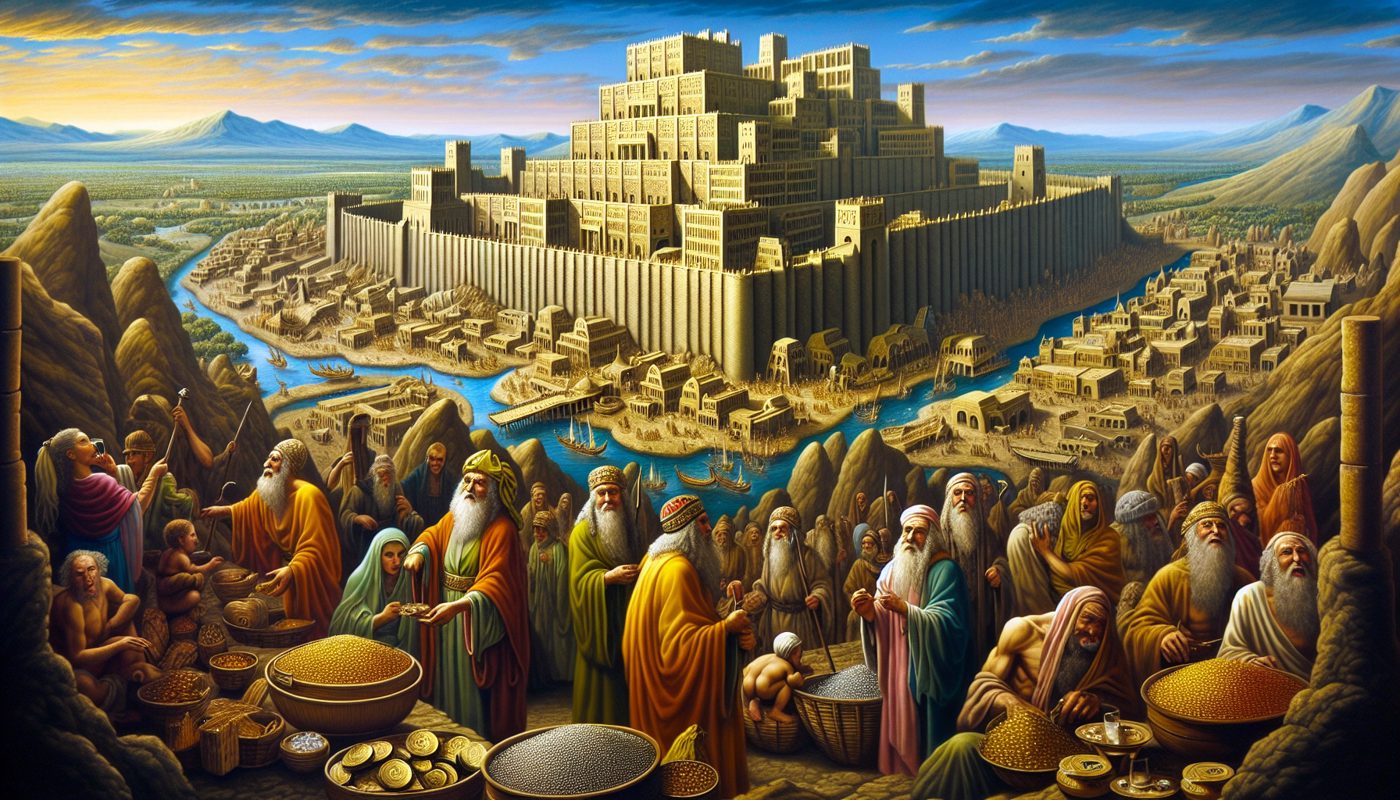
The psalm of Asaph does not begin with a story about a city called Korash. It begins with a command to listen. The poet calls his people to hear his law, to incline their ears to the words of his mouth. He will speak in a parable, utter dark sayings from old—things heard and known, passed down by fathers to children. The entire weight of the chapter rests on this chain of telling, on the duty to make known the Lord’s praises, his strength, and his wondrous works to the generation to come. The psalm is not a free composition; it is a testimony established in Jacob, a law appointed in Israel, commanded to be taught so that children yet unborn might set their hope in God and keep his commandments.
The first concrete failure named is Ephraim. The children of Ephraim, armed and carrying bows, turned back in the day of battle. They did not keep the covenant of God; they refused to walk in his law. They forgot his doings and the wondrous works he had shown their fathers. The psalm then rehearses those works: the Lord clove the sea and caused them to pass through, making the waters stand as a heap. He led them by a cloud by day and a fire by night. He clave rocks in the wilderness and gave them drink abundantly as out of the depths, bringing streams from the rock. These are not metaphors; they are the specific marvels the generation of Ephraim forgot.
Yet even while the water flowed, they sinned against the Most High in the desert. They tempted God in their hearts, asking for food according to their desire. They spoke against God, asking, “Can God prepare a table in the wilderness? He struck the rock so water gushed out, but can he give bread also? Will he provide flesh for his people?” The Lord heard and was wroth. Fire kindled against Jacob; anger went up against Israel because they did not believe in God and did not trust in his salvation.
Nevertheless, the Lord commanded the skies and opened the doors of heaven. He rained down manna for them to eat, giving them the bread of the mighty. He caused the east wind to blow and guided the south wind; he rained flesh upon them like dust, winged birds like the sand of the seas. He let it fall in the midst of their camp, round about their habitations. They ate and were well filled; he gave them their own desire. But while the food was still in their mouths, the anger of God went up against them and slew the fattest of them, smiting down the young men of Israel.
Even after this, they sinned still and did not believe in his wondrous works. So the Lord consumed their days in vanity and their years in terror. When he slew them, they inquired after him and returned to seek God earnestly. They remembered that God was their rock and the Most High their redeemer. But they flattered him with their mouths and lied to him with their tongues; their heart was not right with him, and they were not faithful in his covenant.
Yet the Lord, being merciful, forgave their iniquity and did not destroy them. Many a time he turned his anger away and did not stir up all his wrath. He remembered that they were but flesh, a wind that passes away and does not come again. The psalm asks, “How often did they rebel against him in the wilderness and grieve him in the desert?” They turned again and tempted God, provoking the Holy One of Israel. They did not remember his hand, nor the day he redeemed them from the adversary—how he set his signs in Egypt, turned their rivers into blood, sent swarms of flies and frogs, gave their increase to the caterpillar and their labor to the locust, destroyed their vines with hail and their sycamore trees with frost, gave over their cattle to the hail and their flocks to hot thunderbolts. He cast upon them the fierceness of his anger, wrath, indignation, and trouble, a band of angels of evil. He spared not their soul from death but gave their life over to the pestilence, smiting all the firstborn in Egypt, the chief of their strength in the tents of Ham.
Then the psalm turns. The Lord led forth his own people like sheep and guided them in the wilderness like a flock. He led them safely so that they did not fear; the sea overwhelmed their enemies. He brought them to the border of his sanctuary, to the mountain his right hand had gotten. He drove out nations before them, allotted them an inheritance by line, and made the tribes of Israel dwell in their tents. Yet they tempted and rebelled against the Most High God, kept not his testimonies, turned back and dealt treacherously like their fathers, turned aside like a deceitful bow. They provoked him to anger with their high places and moved him to jealousy with their graven images.
When God heard this, he was wroth and greatly abhorred Israel. He forsook the tabernacle of Shiloh, the tent he placed among men. He delivered his strength into captivity and his glory into the adversary’s hand. He gave his people over to the sword and was wroth with his inheritance. Fire devoured their young men; their virgins had no marriage song. Their priests fell by the sword; their widows made no lamentation.
Then the Lord awaked as one out of sleep, like a mighty man that shouts because of wine. He smote his adversaries backward and put them to perpetual reproach. He refused the tent of Joseph and chose not the tribe of Ephraim. Instead, he chose the tribe of Judah, Mount Zion which he loved. He built his sanctuary like the heights, like the earth which he has established forever. He chose David his servant and took him from the sheepfolds, from following the ewes that have their young, to be the shepherd of Jacob his people and Israel his inheritance. So David shepherded them according to the integrity of his heart and guided them by the skilfulness of his hands.
Comments
Comments 0
Read the discussion and add your voice.
Members only
Sign in to join the conversation
We keep comments tied to real accounts so the discussion stays clean and trustworthy.
No comments yet. Be the first to add one.