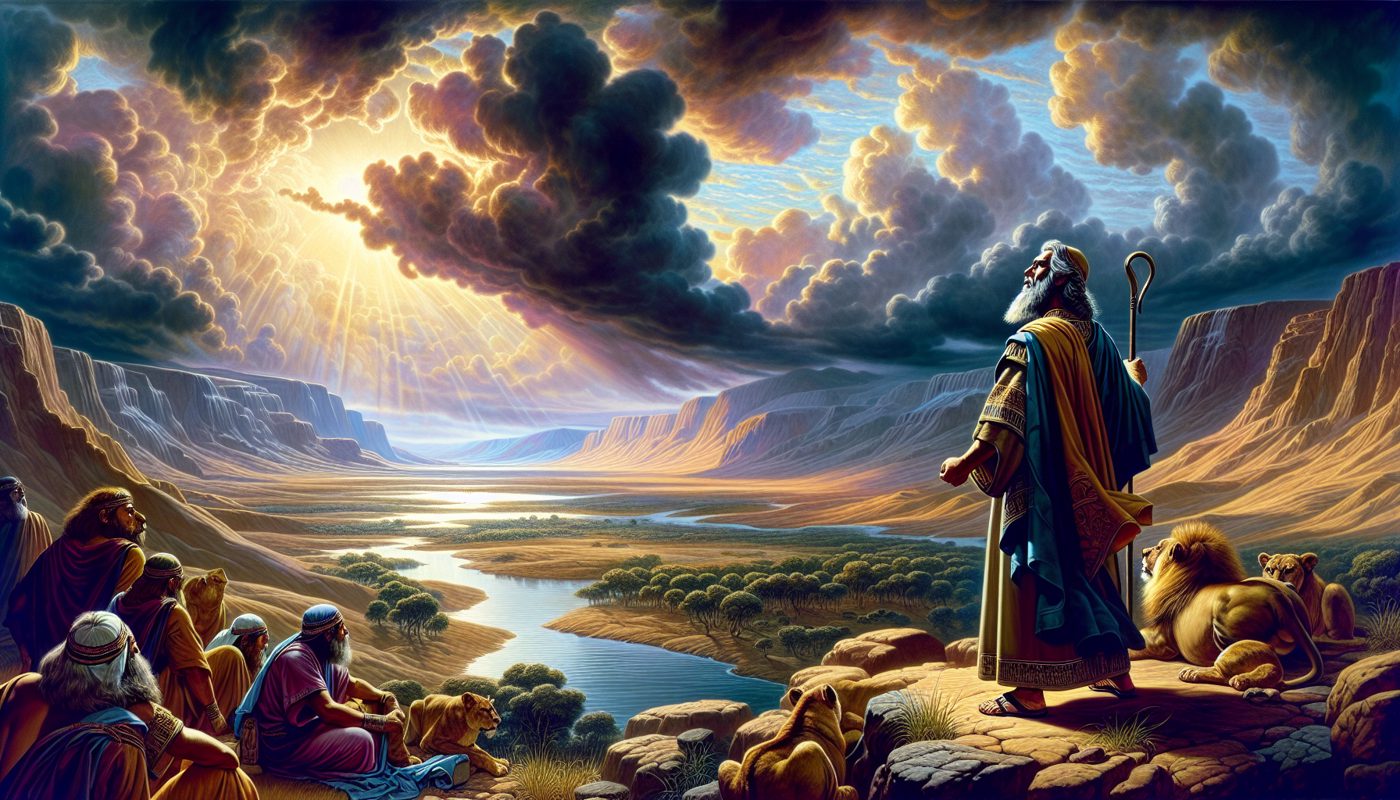
The word of the Lord came to Ezekiel in the eleventh year, on the seventh day of the first month, with a specific image: the arm of Pharaoh king of Egypt had been broken, and no one had bound it up or put a bandage on it to make it strong enough to hold a sword. This was not a metaphor for political decline. It was a surgical announcement that Egypt’s power to fight had already collapsed, and the Lord was not going to let it heal.
The chapter opens with a command for Ezekiel to wail over the day that is near—the day of the Lord, a day of clouds, a time of doom for the nations. That day begins with a sword coming against Egypt. The sword does not stop at Egypt’s borders. Anguish spreads to Ethiopia, and the slain fall in Egypt while her multitude is taken away and her foundations broken down. The Lord names the allies who fall with her: Ethiopia, Put, Lud, all the mingled people, Cub, and the children of the land that is in league. No one who stands with Egypt escapes the blade.
The Lord declares that those who uphold Egypt will fall, and the pride of her power will come down. From the tower of Syene they will fall by the sword. The cities of Egypt will become desolate in the midst of desolate countries, wasted in the midst of wasted cities. The purpose is stated plainly: they will know that the Lord is Jehovah when he sets a fire in Egypt and all her helpers are destroyed.
Messengers go forth from before the Lord in ships to make the careless Ethiopians afraid. Anguish comes upon them as in the day of Egypt, because the judgment is not a distant threat—it is already coming. The Lord specifies the instrument: Nebuchadrezzar king of Babylon. He and his people, described as the terrible of the nations, will be brought in to destroy the land. They will draw their swords against Egypt and fill the land with the slain.
The Lord will make the rivers dry and sell the land into the hand of evil men. Strangers will make the land desolate, and everything in it will be laid waste. The Lord has spoken it. He will destroy the idols and cause the images to cease from Memphis. There will be no more a prince from the land of Egypt. Fear will be put in the land.
Pathros will be made desolate. Fire will be set in Zoan. Judgments will be executed upon No. Wrath will be poured upon Sin, the stronghold of Egypt. The multitude of No will be cut off. Fire will be set in Egypt, and Sin will be in great anguish. No will be broken up. Memphis will have adversaries in the daytime. The young men of Aven and Pi-beseth will fall by the sword, and those cities will go into captivity.
At Tehaphnehes the day itself will withdraw. The Lord will break the yokes of Egypt there, and the pride of her power will cease. A cloud will cover her, and her daughters will go into captivity. The Lord executes judgments upon Egypt so that they will know that he is Jehovah.
The chapter returns to the broken arm. The Lord declares that he is against Pharaoh king of Egypt and will break both his arms—the strong one and the one that was already broken. He will cause the sword to fall out of Pharaoh’s hand. The Egyptians will be scattered among the nations and dispersed through the countries. Meanwhile, the Lord will strengthen the arms of the king of Babylon and put his own sword into that king’s hand. Pharaoh will groan before him like a deadly wounded man. When the king of Babylon stretches out his sword upon the land of Egypt, they will know that the Lord is Jehovah.
The judgment is not a warning. It is a description of what is already set in motion. The Lord breaks what he chooses to break, and he gives the sword to whom he chooses to give it. Egypt’s power is not merely diminished; it is dismantled. The arm that once held the sword will fall, and the arm that wields the sword of the Lord will hold it steady.
Comments
Comments 0
Read the discussion and add your voice.
Members only
Sign in to join the conversation
We keep comments tied to real accounts so the discussion stays clean and trustworthy.
No comments yet. Be the first to add one.