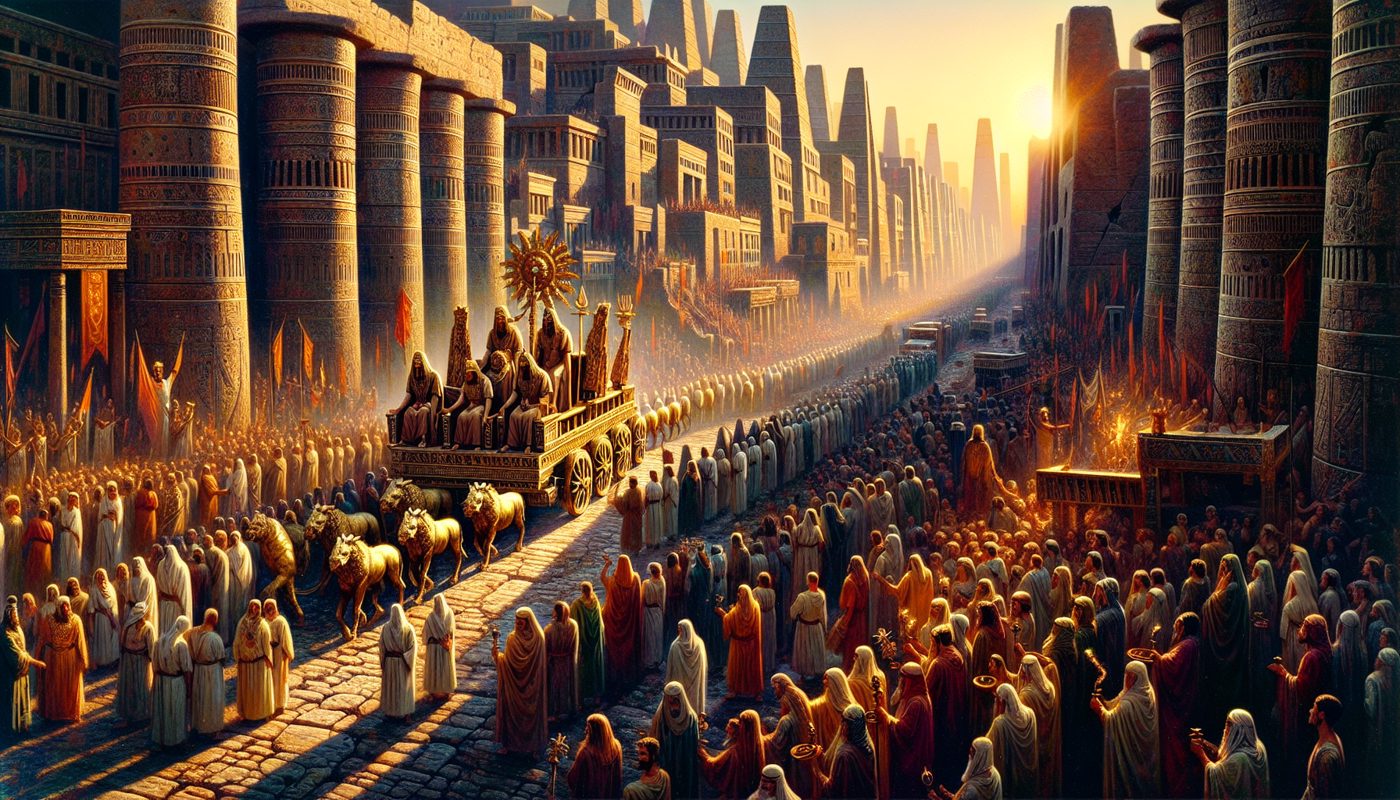
The chapter opens with a scene of collapse. Bel bows down. Nebo stoops. These are not verbs of worship but of failure. The idols of Babylon, carried in procession on the backs of beasts and cattle, have become nothing more than a load—a burden that exhausts the animals that bear them. The gods cannot save themselves. They stoop, they bow down together, and they go into captivity. The chapter does not describe a theological debate. It describes a spectacle of impotence.
Then the Lord speaks directly to the house of Jacob, to the remnant of the house of Israel. And He does not begin with a command. He begins with a claim about who He has been to them from the start. He has borne them from their birth. He has carried them from the womb. The language is physical, maternal, unbroken. The Lord does not need to be lifted onto a cart. He is the one who does the lifting.
The contrast is deliberate and severe. The idols of Babylon are carried. The Lord carries. And He extends that promise to the full span of a human life: even to old age, even to hoar hairs, He will carry. He made them. He will bear them. He will carry and deliver. The verbs pile up with no room for doubt. The Lord does not delegate the work of carrying His people to priests, beasts, or gilded litters.
Then the Lord turns to a courtroom question: To whom will you liken Me? To whom will you make Me equal? The question is not open for debate. It is a declaration that no comparison holds. The chapter then describes how a god is manufactured. A man lavishes gold out of a bag. He weighs silver in a balance. He hires a goldsmith, who makes it into a god. Then the man falls down and worships what his own money and hired hands produced.
The absurdity is pressed further. The worshiper bears the idol on his shoulder. He carries it. He sets it in its place. There it stands, unable to move. If a man cries to it for help, it cannot answer. It cannot save him out of his trouble. The god is carried, set down, and silent. The Lord, by contrast, carries His people from the womb to the grave and answers when they call.
The Lord commands His people to remember. He says, Remember this, and show yourselves men. Bring it again to mind, O you transgressors. The word transgressors is not softened. The audience is not a neutral classroom. They are people who have turned away, who have forgotten who carries them. The command to remember is a call to wake up, to stop acting like the idols they are tempted to envy.
What are they to remember? The former things of old. That the Lord is God and there is none else. That He declares the end from the beginning, and from ancient times things that are not yet done. His counsel stands. He will do all His pleasure. The chapter does not treat this as abstract theology. It is the ground for trust in a specific, coming event.
The Lord names that event with strange precision. He says He is calling a ravenous bird from the east, the man of His counsel from a far country. The bird is Cyrus, the Persian king, though the chapter does not name him. The point is that the Lord can summon a conqueror from a distant land to execute His purpose. He has spoken. He will bring it to pass. He has purposed. He will do it.
The chapter closes with a final summons to the stout-hearted, those who are far from righteousness. The Lord does not abandon them to their distance. He says He brings near His righteousness. It shall not be far off. His salvation shall not tarry. And He will place salvation in Zion for Israel His glory. The end of the chapter is not a threat but a promise that the carrying God will also save.
The idols of Babylon are carried into captivity. The Lord carries His people from birth to old age and then delivers them. The chapter does not ask for a sentimental response. It asks for a clear-eyed choice between a god that must be carried and a God who carries.
Comments
Comments 0
Read the discussion and add your voice.
Members only
Sign in to join the conversation
We keep comments tied to real accounts so the discussion stays clean and trustworthy.
No comments yet. Be the first to add one.