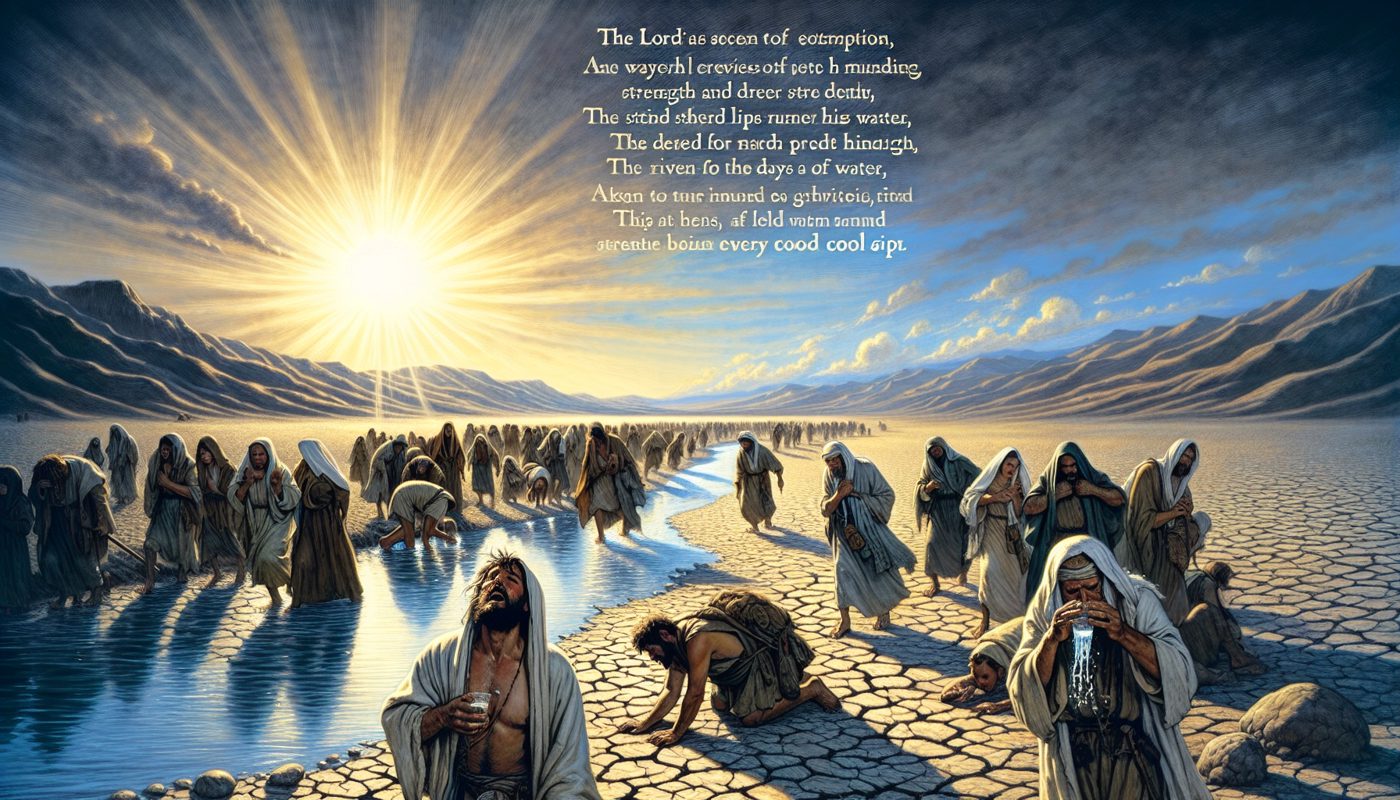
The psalm opens with a command to give thanks, but it does not float in the air. It anchors immediately in a specific group: the redeemed of the Lord, gathered from east and west, north and south. The psalm names four kinds of trouble, and in each case the pattern is the same—people cry out, and the Lord delivers them. The psalmist is not describing abstract mercy. He is building a case from the ground up, using the geography of human desperation.
The first scene is a wilderness. Wanderers find no city, no water, no food. Their souls faint inside them. The text does not explain why they are there. It simply records that they cried out, and the Lord led them by a straight road to a city where they could live. The psalmist then breaks the narrative to address the reader directly: let men praise the Lord for his lovingkindness and his wonderful works. He satisfies the longing soul and fills the hungry with good. The pattern is complete before the next scene begins.
The second group sits in darkness and the shadow of death, bound with affliction and iron. The psalm gives the reason: they rebelled against the words of God and despised the counsel of the Most High. So the Lord brought down their hearts with labor, and they fell with no one to help. But when they cried out, he saved them. He brought them out of darkness and broke their bonds. The gates of brass and the bars of iron are shattered. Again the refrain follows: let them praise the Lord for his lovingkindness.
The third group is called fools. Their own transgression and iniquity have afflicted them. They loathe all food and draw near to the gates of death. They cry out, and the Lord saves them. He sends his word and heals them. He delivers them from their destructions. The refrain returns a third time, and this time the psalmist adds a specific instruction: let them offer sacrifices of thanksgiving and declare his works with singing. The pattern is not merely observed; it is meant to be enacted.
The fourth scene moves to the sea. Men go down to the sea in ships and do business in great waters. They see the works of the Lord and his wonders in the deep. He commands the stormy wind, and the waves lift up. The sailors mount to the heavens and plunge to the depths. Their souls melt away. They reel and stagger like drunk men. They are at their wits' end. Then they cry out, and the Lord brings them out of their distresses. He makes the storm a calm, and the waves are still. They are glad because the sea is quiet, and he brings them to their desired haven. The refrain sounds a fourth time, and the psalmist adds that they should exalt the Lord in the assembly of the people and praise him in the seat of the elders.
After the four scenes, the psalm shifts. The Lord turns rivers into wilderness and fruitful land into salt desert because of the wickedness of those who live there. But he also turns wilderness into pools of water and dry land into springs. There he makes the hungry dwell, and they prepare a city, sow fields, plant vineyards, and harvest fruit. He blesses them, and they multiply. Their cattle do not decrease. Then the pattern reverses again: they are diminished and bowed down through oppression, trouble, and sorrow. The Lord pours contempt on princes and makes them wander in a waste where there is no way. But he sets the needy on high from affliction and makes them families like a flock.
The upright see this and are glad. Iniquity stops its mouth. The psalm closes with a direct appeal: whoever is wise will give heed to these things and will consider the lovingkindnesses of the Lord. The psalm has not offered a theory of suffering. It has shown four concrete shapes of trouble and one constant response. The wise reader is not asked to admire the poetry. He is asked to watch the pattern and recognize the same hand at work in his own life.
Comments
Comments 0
Read the discussion and add your voice.
Members only
Sign in to join the conversation
We keep comments tied to real accounts so the discussion stays clean and trustworthy.
No comments yet. Be the first to add one.