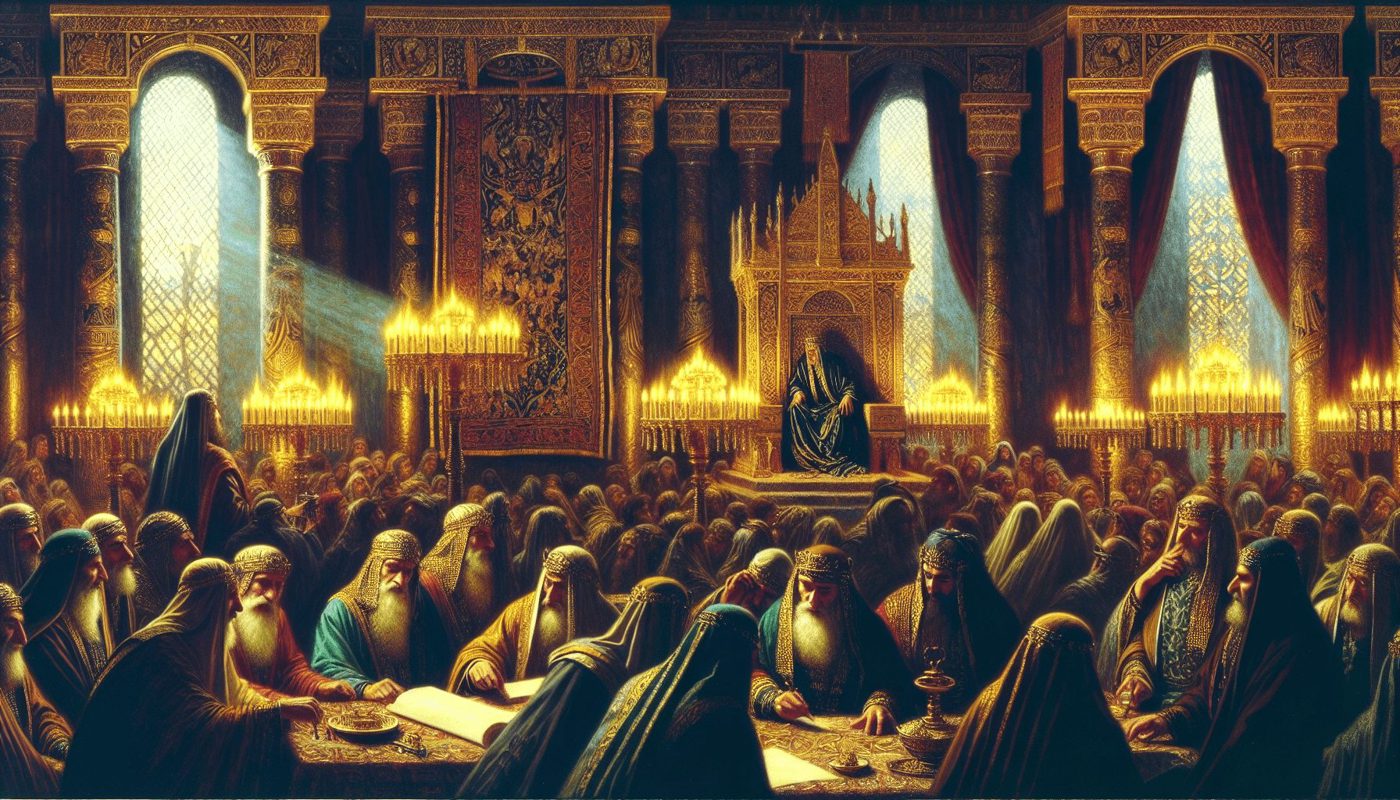
The psalm does not name the enemy. It does not say whether they are court officials, military rivals, or foreign agents. What it gives is their method: they whet the tongue like a sword and aim bitter words like arrows. The weapon is speech, and the attack is secret. The psalmist asks to be hidden from the secret counsel of evil-doers and from the tumult of the workers of iniquity. The pressure is not open battle but whispered conspiracy.
These men encourage themselves in an evil purpose. They lay snares privately and say, Who will see them? They believe their plans are invisible. They search out iniquities with a diligent search, as though they are conducting a careful investigation. And they conclude that the inward thought and the heart of every one is deep—meaning they think no one can penetrate their own hidden motives. They have confidence in their secrecy and their cunning.
The psalmist does not answer their logic. He does not argue that God sees everything or that righteousness will be vindicated by human courts. Instead, he shifts the action to God. But God will shoot at them. With an arrow suddenly shall they be wounded. The same weapon they used—the arrow—turns back on them. The secret shooters become the targets. And the arrow is sudden, just as theirs was meant to be.
Then the reversal deepens. They shall be made to stumble, their own tongue being against them. The weapon they trusted becomes the instrument of their fall. Their words, which they sharpened like swords, now cut them down. All who see them shall wag the head—a gesture of scorn or mockery. The ones who thought no one would see now become a public spectacle.
And all men shall fear. The fear that the psalmist asked to be preserved from now falls on the observers. But it is not the same fear. It is the fear that leads to declaring the work of God and wisely considering his doing. The conspiracy does not end in silence or cover-up. It ends in public recognition that God has acted.
The righteous shall be glad in the Lord and take refuge in him. All the upright in heart shall glory. The psalm does not say the righteous escape trouble. It says they take refuge. The gladness is not based on the absence of enemies but on the Lord himself. The glory is not in their own victory but in his doing.
The structure of the psalm is tight. The first six verses describe the enemy’s plot, their words, their confidence. The last four verses describe God’s response and the outcome. There is no petition for vengeance, no curse on the enemy. The psalmist asks only to be heard and hidden. Then he states what God will do, as though it is already certain.
The title calls it a psalm of David. The chapter gives no further historical setting. But the language fits a king who has faced conspiracies from within his own court or from neighboring rulers. The secrecy of the plot and the public nature of the reversal match the pattern of David’s life as recorded elsewhere. Yet the psalm does not depend on that history. It works as a general statement about the fate of those who trust in hidden schemes and the safety of those who trust in the Lord.
The final line is not a moral lesson. It is a declaration: the upright in heart shall glory. That glory is not self-congratulation. It is the recognition that the Lord has done what they could not do. The arrows of the wicked miss their mark. The arrow of God does not.
Comments
Comments 0
Read the discussion and add your voice.
Members only
Sign in to join the conversation
We keep comments tied to real accounts so the discussion stays clean and trustworthy.
No comments yet. Be the first to add one.