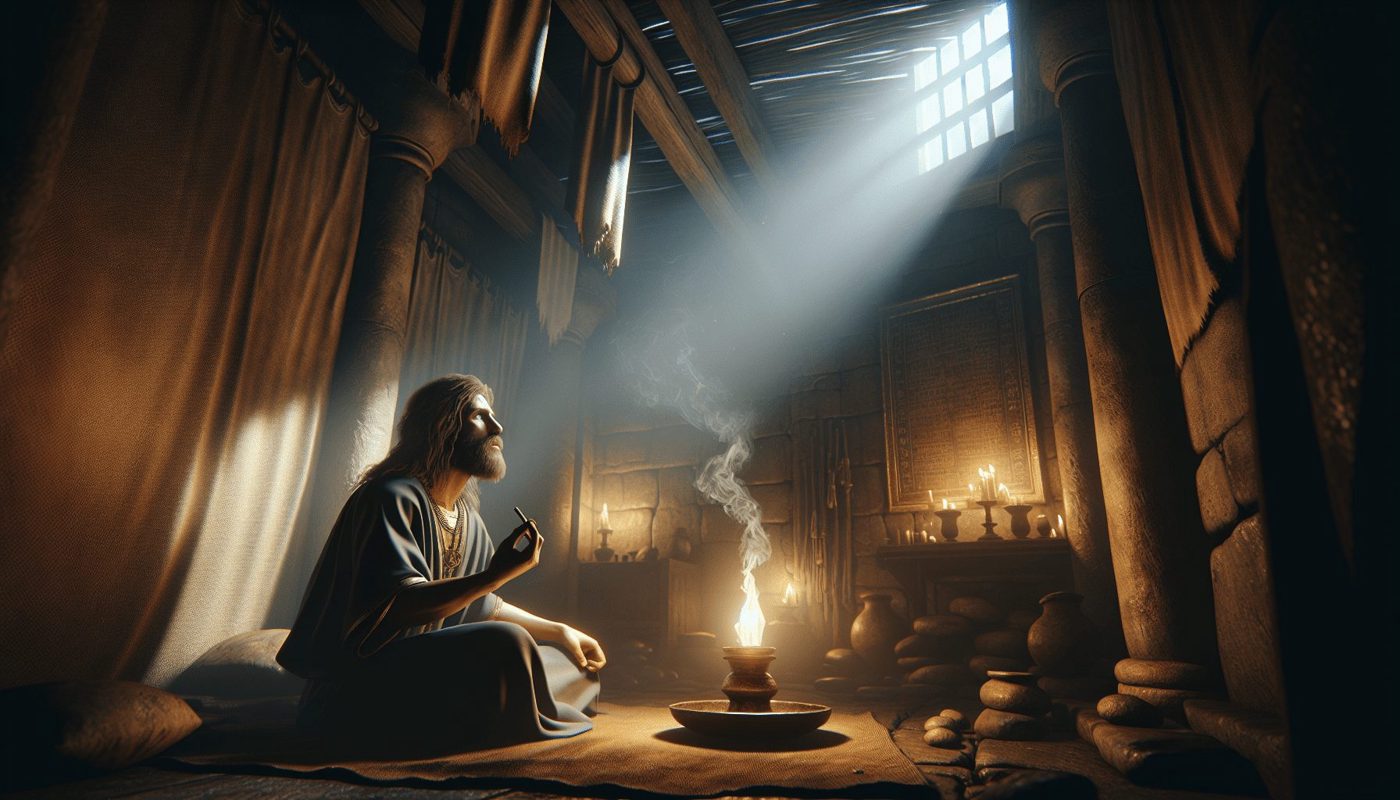
The chapter opens with a burden, a heavy pronouncement, and it comes from a wilderness near the sea, sweeping in like a whirlwind from the south, out of a terrible land. The prophet does not describe a peaceful vision. He declares a grievous vision, one that involves treachery and destruction. The Lord commands Elam to go up and Media to besiege, and the result is that all the sighing of the oppressed is made to cease. The fall of Babylon is not presented as a distant event but as a direct, violent act of judgment.
Isaiah’s own body reacts to the vision with physical anguish. His loins are filled with pain, pangs take hold of him like a woman in labor, and he is so dismayed that he cannot hear or see properly. His heart flutters, and horror affrights him. The twilight he once desired becomes a time of trembling. This is not a calm prophet observing from a distance; he is inside the terror of what he sees.
The scene shifts abruptly to a banquet. They prepare the table, set the watch, eat, and drink. Then the command comes: rise up, you princes, and anoint the shield. The feast is interrupted by war. The Lord tells Isaiah to set a watchman, to let him declare what he sees. The watchman looks for a troop of horsemen in pairs, a troop of asses, a troop of camels, and he is to listen with great care.
The watchman cries out like a lion, saying that he stands continually on the watchtower day and night. Then he sees the troop of men, horsemen in pairs, and he answers with a declaration: fallen, fallen is Babylon. All the graven images of her gods are broken to the ground. The fall is announced not as a future possibility but as a present reality seen by the watchman.
Isaiah then addresses his people directly, calling them his threshing and the grain of his floor. He declares that what he has heard from the Lord of hosts, the God of Israel, he has told them plainly. There is no softening of the message, no added comfort. The vision is declared as received.
The burden shifts to Dumah. A voice calls out from Seir, asking the watchman, what of the night? The question is repeated with urgency. The watchman answers that the morning comes, and also the night. He tells the inquirer to keep asking, to turn, and to come. The answer is not a simple prediction of dawn; it holds both morning and night together.
The burden then turns to Arabia. The caravans of Dedanites are told they will lodge in the forest in Arabia. The inhabitants of Tema bring water to the thirsty and meet the fugitives with bread. These are people fleeing from swords, from drawn swords, from bent bows, and from the grievousness of war. The flight is real, and the hospitality is given to those escaping destruction.
The Lord declares to Isaiah that within one year, measured like the years of a hireling, all the glory of Kedar will fail. The residue of the archers, the mighty men of Kedar, will be few. The Lord, the God of Israel, has spoken it. The chapter ends with a series of judgments that are specific, timed, and irreversible.
Comments
Comments 0
Read the discussion and add your voice.
Members only
Sign in to join the conversation
We keep comments tied to real accounts so the discussion stays clean and trustworthy.
No comments yet. Be the first to add one.