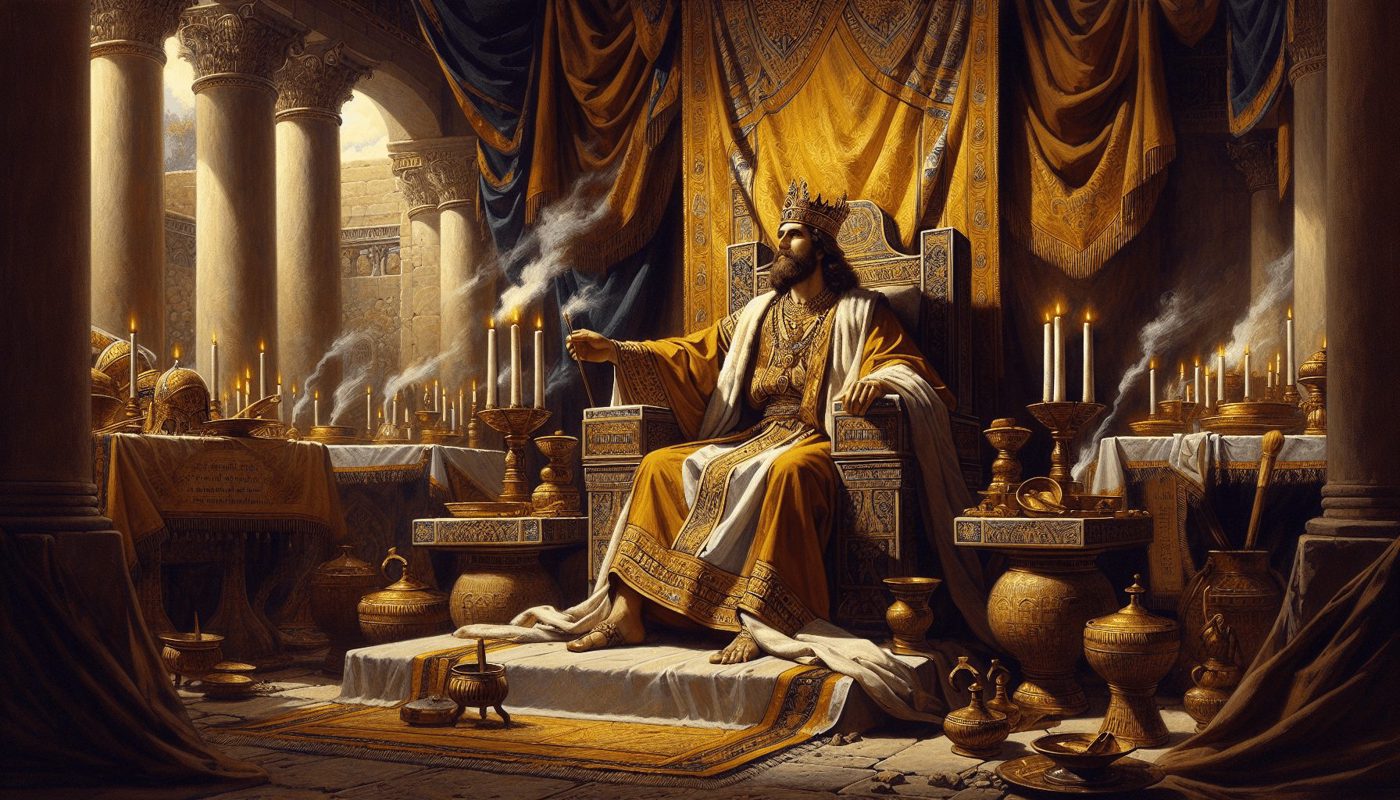
Psalm 72 is not a story about Solomon sitting on a throne in Jerusalem. It is a prayer, placed at the end of the second book of the Psalms, that asks God to give the king and the king's son the divine tools of judgment and righteousness. The text itself is titled as belonging to Solomon, but the content reads as a petition for a ruler who will act as God's agent on earth. The opening line sets the entire psalm in motion: Give the king your judgments, O God, and your righteousness to the royal son.
The psalm does not describe a specific historical event. Instead, it lays out a vision of what a righteous reign should look like. The king is expected to judge the people with righteousness and the poor with justice. The mountains themselves are said to bring peace, and the hills bring righteousness, as if the land itself responds to the character of the ruler. The poor and the needy are the central concern of this king. He will save the children of the needy and break the oppressor into pieces.
The scope of this reign is not limited to Israel. The psalm envisions dominion from sea to sea, from the River to the ends of the earth. The kings of Tarshish and the islands bring tribute. The kings of Sheba and Seba offer gifts. All kings fall down before him, and all nations serve him. This is not a local chieftain or a tribal judge. This is a ruler whose authority reaches the wilderness dwellers and forces his enemies to lick the dust.
Yet the basis for this universal dominion is not military conquest. The psalm grounds the king's power in his care for the helpless. He delivers the needy when they cry out, and the poor who have no helper. He has pity on the poor and needy, and he saves their souls. He redeems them from oppression and violence, and their blood is precious in his sight. The king's strength is measured by his protection of the vulnerable.
The natural world mirrors the king's rule. He comes down like rain on mown grass, like showers that water the earth. In his days the righteous flourish, and there is abundance of peace until the moon is no more. The imagery is agricultural and gentle, not violent or abrupt. The reign is marked by fertility and stability, not by upheaval.
The psalm also speaks of material abundance. There will be abundance of grain on the top of the mountains, and the fruit will shake like the forests of Lebanon. The city dwellers will flourish like grass of the earth. The king's name endures forever, continued as long as the sun. Men are blessed in him, and all nations call him happy. The vision is comprehensive: spiritual, political, and economic well-being all flow from the king's righteousness.
The final verses shift from the king to the Lord. The psalmist blesses the Lord God, the God of Israel, who alone does wondrous things. The glorious name of God is blessed forever, and the prayer is that the whole earth be filled with his glory. The double Amen closes the psalm with a firm affirmation. Then, almost as a footnote, the text reads: The prayers of David the son of Jesse are ended. This marks the close of the second book of the Psalms, tying the entire collection back to David.
Psalm 72 does not narrate a story about Solomon's wisdom or his judgment between two women. It does not describe the building of the temple or the visit of the Queen of Sheba. It is a prayer for a king who will embody God's justice, protect the poor, and extend his rule to the ends of the earth. The psalm holds up a standard that no earthly king fully met, and it points forward to a reign that the text itself cannot fully describe.
Comments
Comments 0
Read the discussion and add your voice.
Members only
Sign in to join the conversation
We keep comments tied to real accounts so the discussion stays clean and trustworthy.
No comments yet. Be the first to add one.