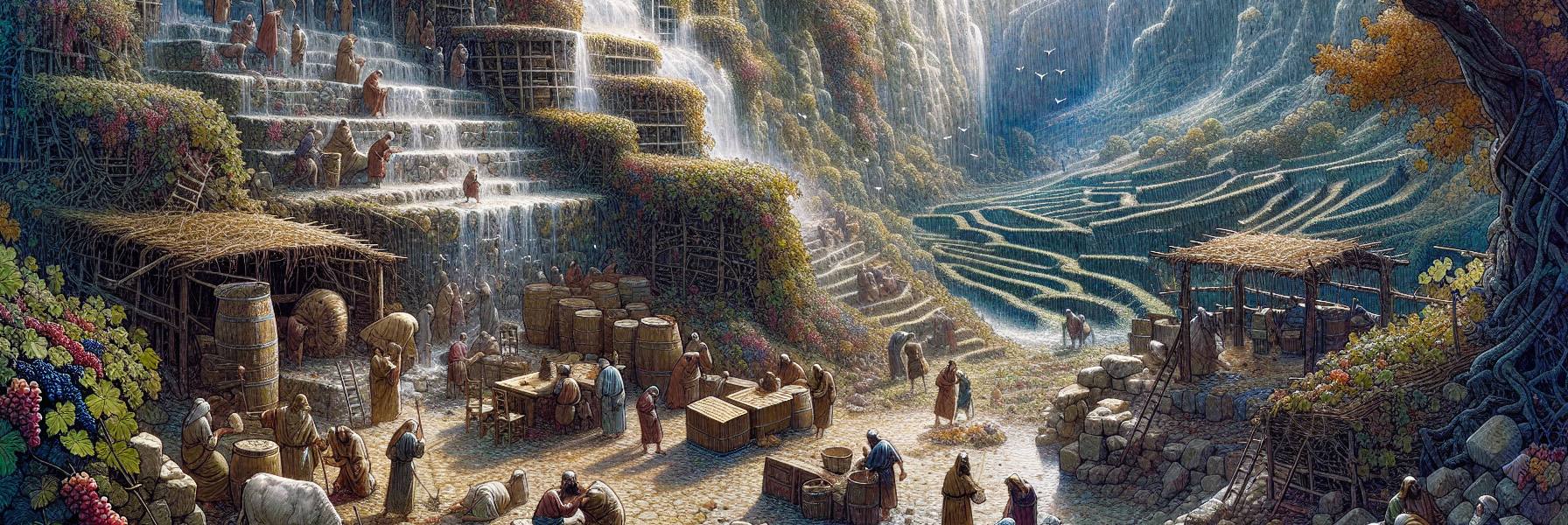

The rain had finally come, but it fell on broken ground. Ephraim watched it from the doorway of his storage shed, the smell of wet earth and old straw thick in the air. His vineyard, once the pride of the hill, was a tangle of wild shoots and stone. The terraces were slipping. All that careful work, the walls his grandfather built, now just heaps of limestone bleeding mud in the downpour.
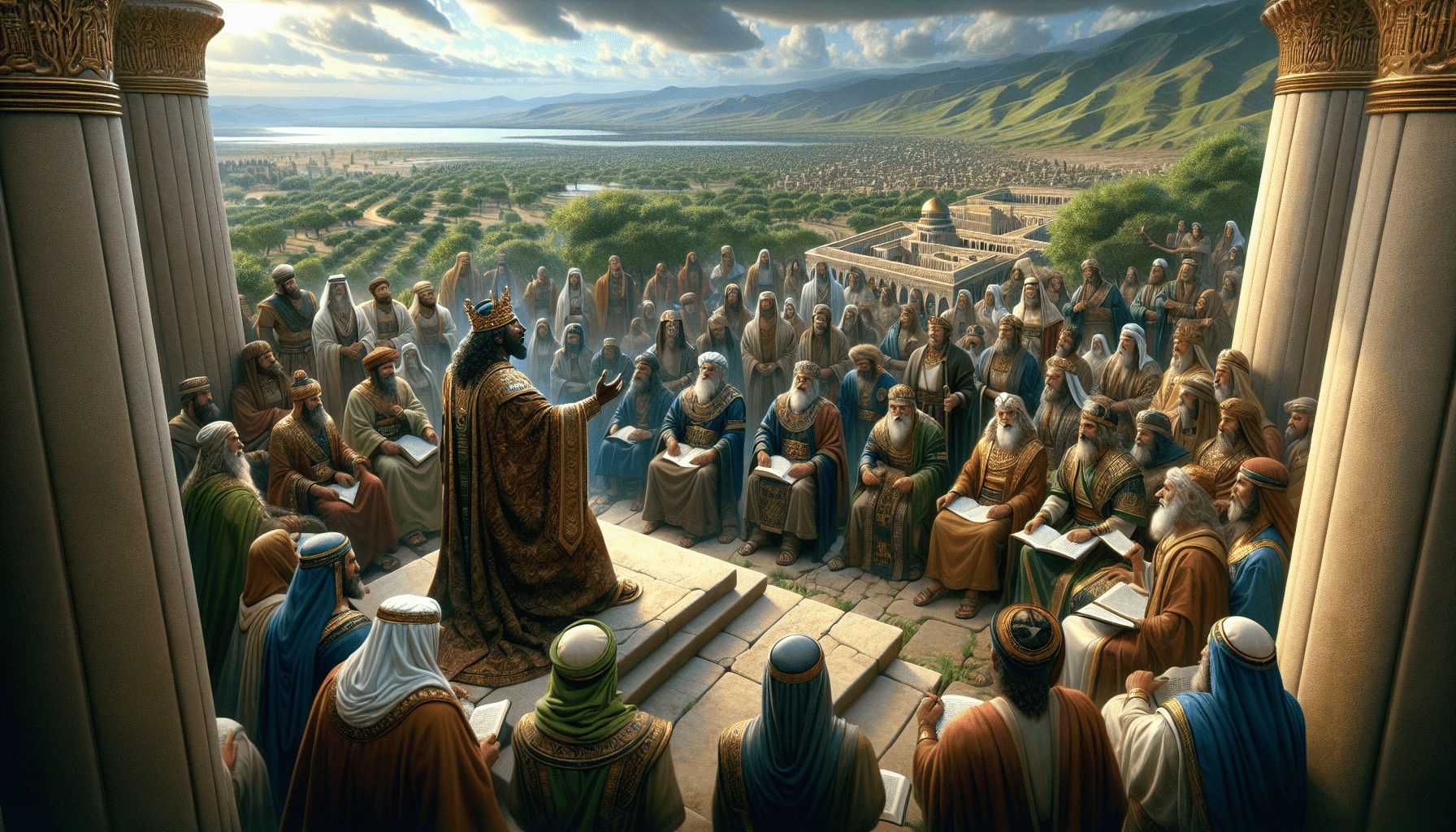
They used to call this slope “The Lord’s Bounty.” He remembered the harvest festivals at Bethel, the whole valley smelling of crushed grapes and woodsmoke. The altar there was busy then. They’d bring the first and finest clusters, say the words, feel for a moment that clean satisfaction of a debt paid. Then they’d go to the other altar, the newer one, the one with the calf. That was for the other business. For the treaties with Assyria, for the assurance of full barns and strong borders. You couldn’t put all your eggs in one basket. A man needed to be practical. The calf was solid. You could see it. Its gold leaf caught the sun in a way the unseen God of their fathers did not.
Ephraim kicked at a clump of dirt. That was the thinking, anyway. Now the treaties were a chain around their neck, the tribute to Assyria bleeding them white. The king in Samaria was a frightened man, clinging to a throne that shook with every rumour from the east. And the altars? Bethel was a place of hurried, fearful sacrifice now. The priests’ voices had a tinny, desperate edge. The calf’s gold was peeling.
His wife, Tirzah, came up behind him, wiping her hands on her apron. “It’s washing the topsoil right off,” she said, her voice flat. “Like it’s rinsing us clean away.”
He nodded, not turning. The prophecy of that wandering preacher, Hosea, came back to him, unwanted. Words spoken in the square, harsh as a desert wind. *Israel is a luxuriant vine that yields its fruit. The more his fruit increased, the more altars he built; as his country improved, he improved his pillars.*
Improved. Ephraim looked at his ruined terraces. They had improved everything. Better idols, better politics, better alliances. They had taken the simple, fierce love of the Lord and split it like a log, using the splinters to light fires for every passing whim. Their heart was false; now they must bear their guilt. The words echoed. *They shall say to the mountains, Cover us, and to the hills, Fall on us.*
Tirzah spoke again, softer. “They took the ox from Abner’s field yesterday. The king’s men. For the levy.”
A cold knot tightened in Ephraim’s gut. The ox was the heart of a small farm. Taking it was a death sentence. Abner’s children would go hungry by winter.
*From the days of Gibeah, you have sinned, O Israel.* That’s what Hosea had cried. The old, shameful story. They had stood there, stubborn as their fathers, repeating the same old sins like a man retracing steps in a muddy track, deepening the rut each time. They loved the fruit of the lie—the fleeting security, the pomp of kings they had demanded from the prophet Samuel long ago. Now that kingly power was a weed, choking them.
The rain slackened to a drizzle. A sickly light broke through the clouds. In the distance, on the high place, he could see the outline of the altar at Bethel. They called it *Aven* now, “Nothingness.” Hosea’s doing. A bitter joke that stuck. The altar that was their pride would become a thing of terror. The glory of its dwelling would fly away like a bird.
He walked out into the sodden field, his sandals sinking. He bent and picked up a clod of earth. It was rich, still good. But it was heart-sick. The land itself was mourning under their feet, under the weight of their dishonesty. They had plowed wickedness, reaped injustice, eaten the fruit of lies. Because they trusted in their own way, in the multitude of their warriors, the tumult of war would rise against them. All their fortified cities would be like a farmer’s pile of stones, swept away when the wall is breached.
He let the mud fall from his hand. The silence after the rain was profound. It wasn’t a peaceful silence. It was the silence of a held breath, of a sentence passed but not yet executed.
He knew, then, what would happen. Not in vague prophetic terms, but in the plain, brutal language of the world. The threshing floor of judgment was prepared. Assyria was that ox, patient and immense, treading out the nations. Israel was not a thresher, but the grain itself. They had sown the wind. Now, in the terrible mercy of things, they would reap the whirlwind.
Ephraim turned back to the shed, to Tirzah’s worried face. There was nothing to say. The vine was uprooted. The branch was dried up. The thing they had cultivated—their clever, divided worship, their pragmatic faith—had broken them like a farmer’s rod breaks the clods of earth. It was over. All that was left was to wait for the sound of marching feet, and to understand, too late, that the only true shelter had always been the very Love they had bargained away.