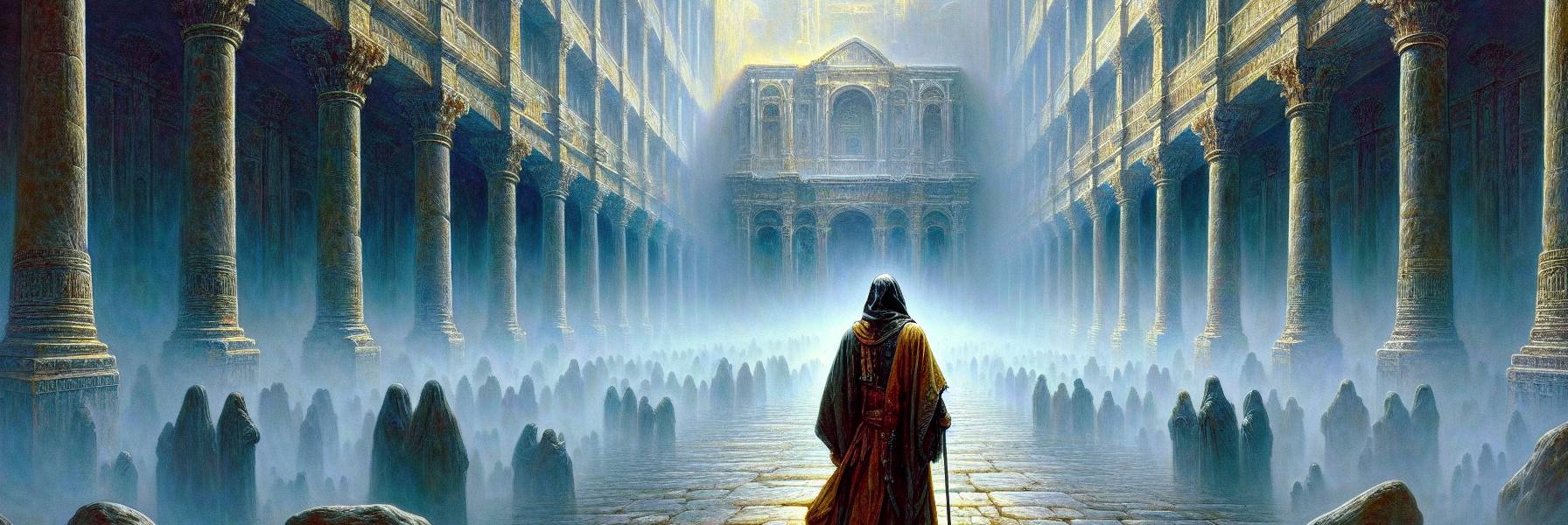

The stone floor of the vision was cold, a chill that seeped through the soles of Joshua’s sandals and climbed his bones. It wasn’t the remembered cold of the Jerusalem dawn, but something else, a clarity that felt like standing at the edge of a deep, still well. Around him, the contours of a court resolved from the haze—not the ruined husk of the temple he ministered in, but its echo in heaven, all sharp lines and shadowless light.
He stood in the center, and he knew why. The high priestly garments he wore, the ones he’d carefully donned that morning from the meager, salvaged chest, were not right. They were defiled. He could feel it as a tangible weight, a grime that was more than journey-dust from Babylon, more than the soot of a broken altar. It was the stain of a people, his people, carried on his shoulders and woven into the very threads of the ephod. He was the concentrated essence of their failure, their fractured covenant. He did not dare look up.
Then *he* was there. The Adversary. Not a monster from a fable, but a presence like a tightening of the air, a whisper that condensed into a form at Joshua’s right hand. No features were clear, only a posture of cold, relentless accusation. The word wasn’t spoken aloud; it simply *was*, ringing in the judicial silence: *Guilty*. Look at him. Look at the filth. Look at the failure. How can this one stand in the Holy Place? The accusation was precise, legal, and utterly, devastatingly true.
Before the terror could fully paralyze him, another was present. The Angel of the LORD. Joshua knew Him, a knowing that bypassed sight. The atmosphere shifted from courtroom to throne room. And the Angel did not address the Accuser first. He spoke to the satan, and His voice was like a low stone rolling.
“The LORD rebuke you, O Satan. The LORD who has chosen Jerusalem rebuke you. Is not this man a brand plucked from the fire?”
The words hung, not as a question but as a declaration of ownership. A brand plucked from the fire. Joshua’s mind flashed—not to a memory, but to a sensation: the searing heat of the siege, the choking smoke of the city’s burning, and then the violent, gracious wrenching away. Survival as a act of sheer, unmerited salvage.
Then, movement. The Angel turned to those who stood attending in the vision. “Remove the filthy garments from him.” Hands, gentle but firm, were on Joshua’s shoulders, peeling away the heavy, stained vestments. He felt a shame so profound it was a kind of death, a nakedness before heaven. The discarded robes lay on the flawless floor, a heap of failure.
But the Angel was speaking again, now to him. “See, I have taken your iniquity away from you. I will clothe you with pure vestments.”
From nowhere, and yet from the very heart of the vision, came clean linen, white and fine. They dressed him in it, the fabric cool and weightless against his skin. It was more than cleanliness. It was purity bestowed, a righteousness not his own, wrapping him from shoulders to feet. The relentless, silent accusation at his right hand seemed to dim, pushed back by the palpable reality of this gift.
He thought it was over. Justification. Cleansing. It was more than he had ever dared to dream in his years of tending the fragile, rebuilding community. But the Angel was not finished.
“Let them put a clean turban on his head.” The command was quiet. A hand placed the twisted linen upon his brow, the final seal of his restored office. It was then, with the clean clothes and the clean turban, that Joshua found the courage, or perhaps it was simply granted to him, to lift his eyes to the Angel of the LORD.
What he saw was not an end, but a beginning. The Angel stood, as if waiting for the full attention of the now-cleansed priest. And He began to speak promises that stretched out like roads into a future Joshua could barely fathom.
“If you will walk in my ways and keep my charge, then you shall rule my house and have charge of my courts, and I will give you the right of access among those who are standing here.” The covenant was renewed, but it was personal, intimate. A walking, a keeping. The courts he would keep were not of stone and cedar, but of something eternal.
Then the Angel gestured, as if to the very air around them, which shimmered with listening presences. “Hear now, O Joshua the high priest, you and your friends who sit before you, for they are men who are a sign.” A sign. His very life, his cleansed state, was now a parable. “Behold, I will bring my servant the Branch.” The word landed with the weight of old prophecies, of Isaiah’s stump and Jeremiah’s righteous shoot. A person. A coming one.
The promises unfolded further, a stone with seven eyes, engraving, a removal of iniquity in a single day. The language was dense, symbolic, a tapestry of meaning that Joshua knew would take lifetimes to unpack. It spoke of a foundation stone, of a perfect, all-seeing vigilance, of a grace so potent it would accomplish in one day what centuries of sacrifice had only pointed toward. It spoke of a security so profound that men would invite each other to sit in peace under their own vines and fig trees. The vision was no longer just about his personal vindication; it was about the vindication of all things, the healing of the land, the restoration of a shalom that reached from the high priest to the furthest farmer.
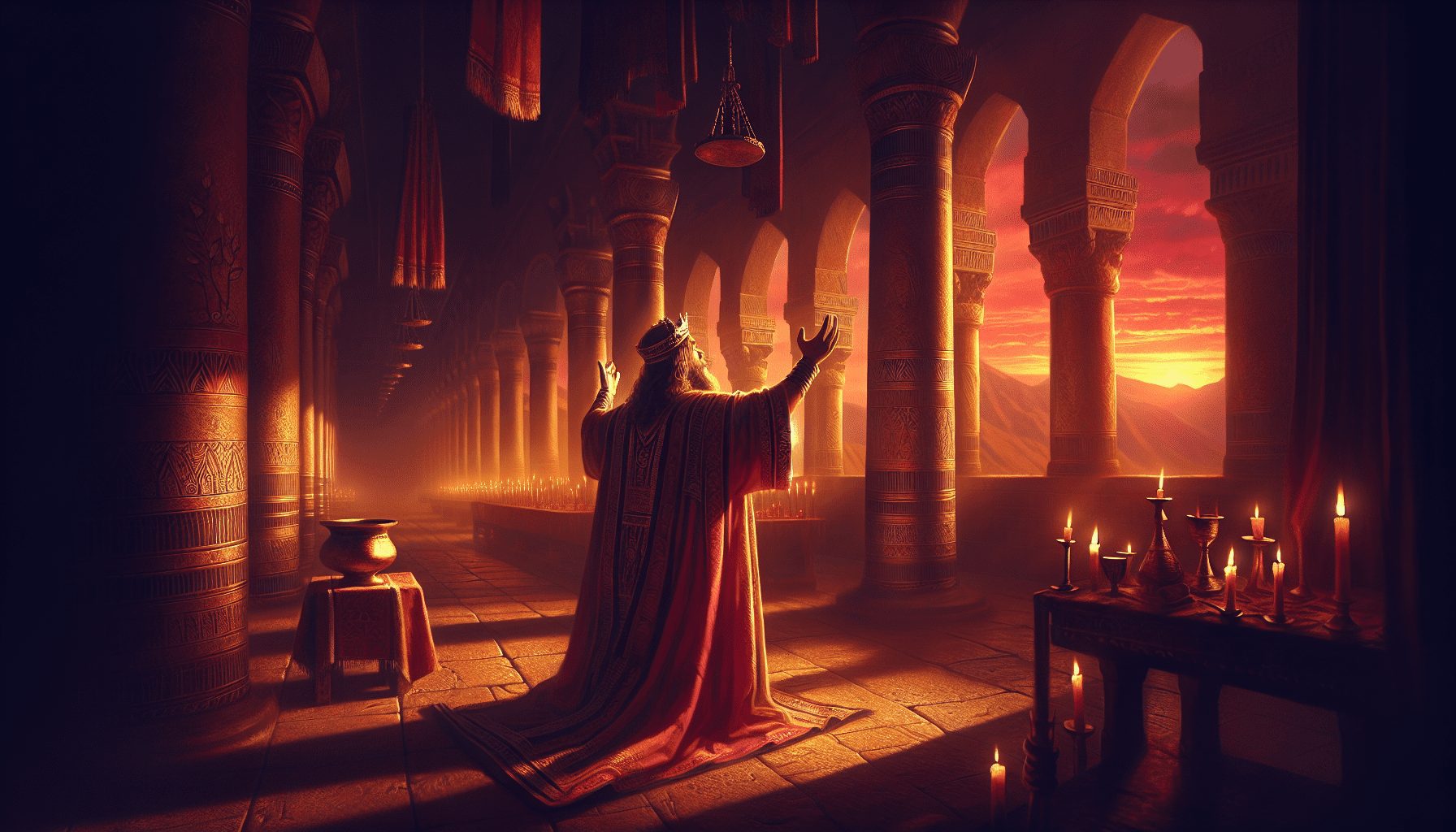
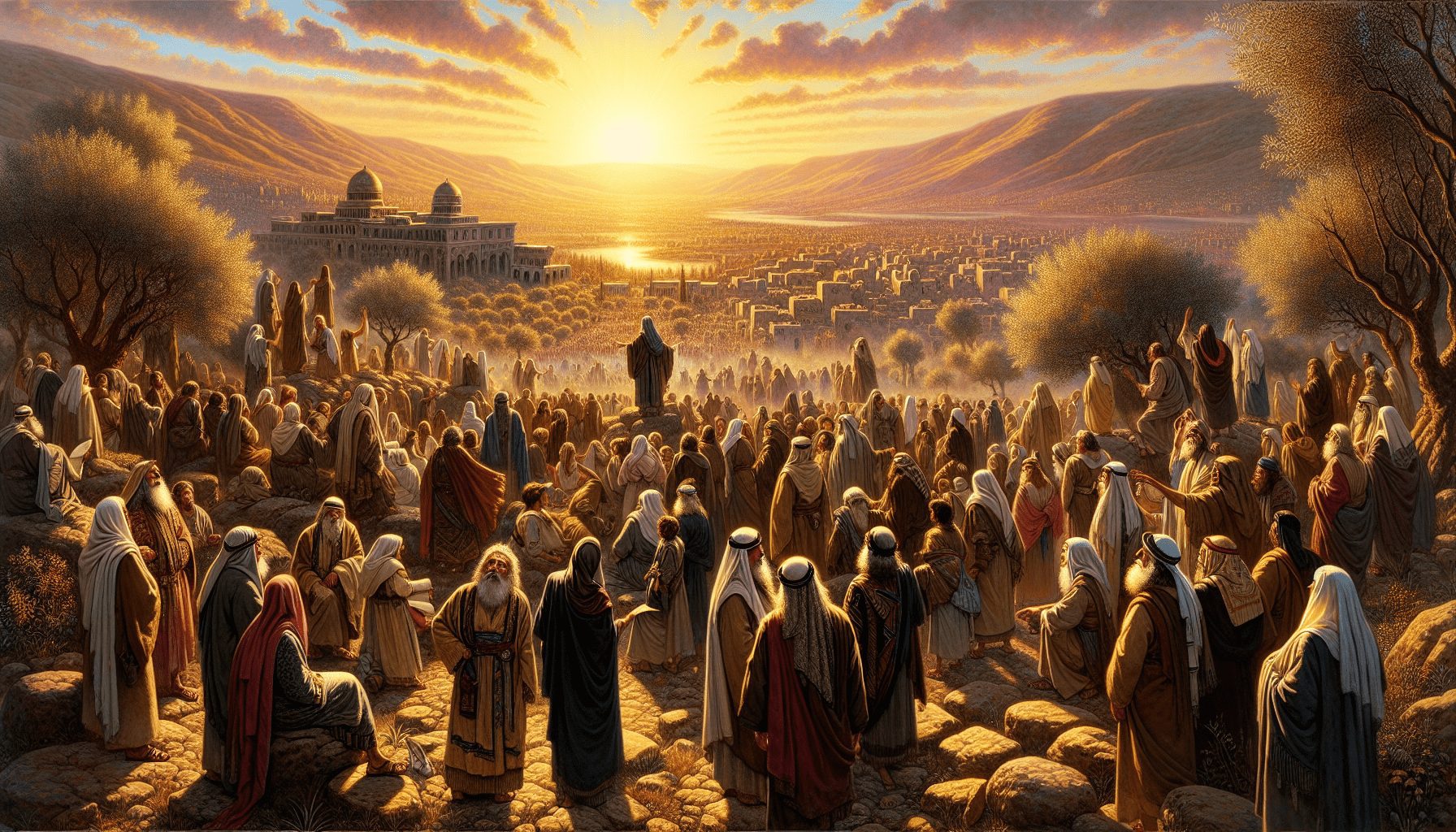
And then, the vision dissolved. Not with a flash, but like a mist thinning under a morning sun. Joshua found himself on his knees in the small, dusty room he used for prayer, the ordinary sounds of a rebuilding Jerusalem filtering through the window—the chip of stone, the call of a mason, the bleat of a sheep. The cold of the heavenly floor was gone, replaced by the familiar grit of earth.
He looked down at his hands. They were just his hands, lined and worn. But in his mind’s eye, for a fleeting instant, he saw them clad in white. He took a slow, shuddering breath. The weight of the accusation was gone. In its place was a different weight—the weight of a promise, a hope so colossal it was terrifying, and a calling so clean it felt like a new skin. He did not get up immediately. He sat in the silence, a brand plucked, now clothed, waiting for the Branch to spring up. And for the first time in a long time, the waiting felt not like exile, but like the first watch of a coming dawn.