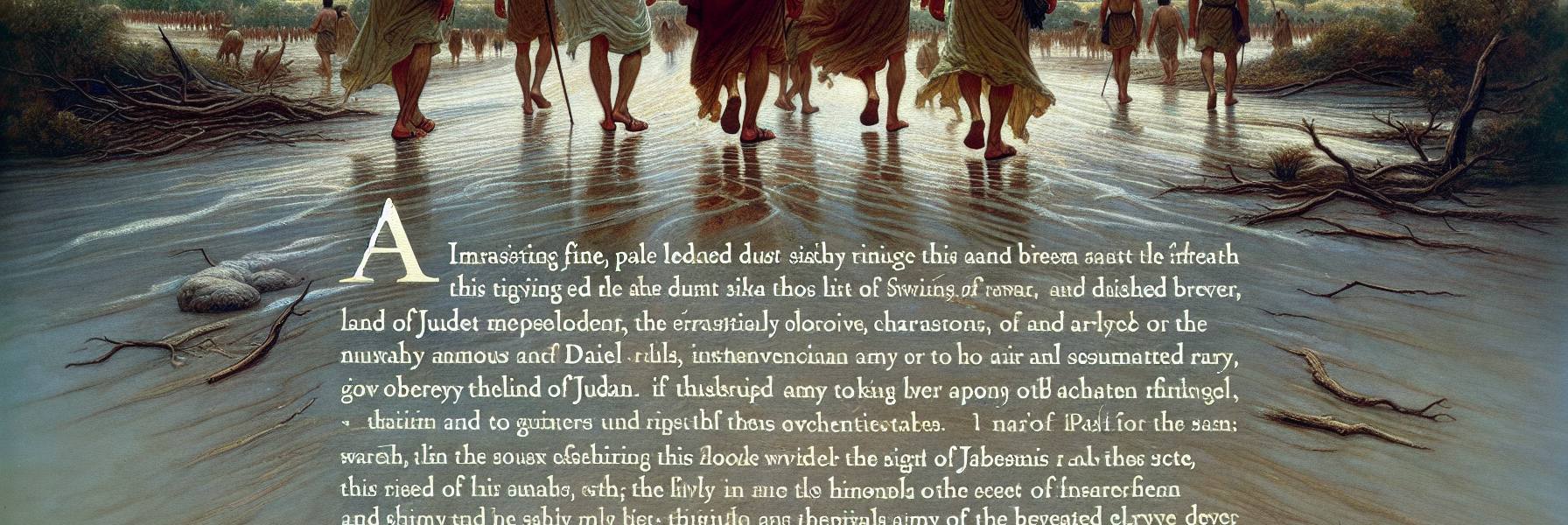

The dust of Judah was a particular kind of dust. It was fine and pale, and it clung to the sandals, the robes, and the despair of those walking the road north. For Daniel, son of a noble house in Jerusalem, it was the dust of a broken world. It coated his throat as the Babylonian column marched, a relentless river of polished bronze and confident noise, carrying him and the other young men like driftwood in its current. The journey was a blur of exhaustion and alien landscapes—flat, green fields fed by great rivers, nothing like the Judean hills. The air grew thick and wet, smelling of mud and strange spices.
Babylon, when they finally saw it, was not a city; it was a mountain range built by human hands. The walls soared, impossibly high and broad, glinting with blue-glazed brick in the relentless sun. The Ishtar Gate was a shock of color—vibrant bulls and dragons made of enameled tile, a spectacle of power meant to crush the spirit. Daniel felt small, a speck swallowed by the empire’s grinning maw.
He was brought, with Hananiah, Mishael, and Azariah, to the palace precincts. A tall, shaven-headed official named Ashpenaz, whose voice carried the dry rustle of parchment, assessed them with eyes that missed nothing. “You are now wards of the king’s household,” he intoned. “You will learn the language and literature of the Chaldeans. You will be fed from the king’s table. In three years, you will stand before Nebuchadnezzar. Your past is clay. We will remake you.”
Their Hebrew names were taken. Daniel became Belteshazzar. Hananiah, Shadrach. Mishael, Meshach. Azariah, Abednego. The names were invocations of Babylonian gods, a daily reminder that their identity was to be dissolved, digested by the empire. They were given quarters that were cool and spacious, a luxury that felt like a trap. The goal was clear: to create perfect imperial servants, men who thought in Babylonian, dreamed in Babylonian, whose very bodies were nourished by Babylonian bounty.
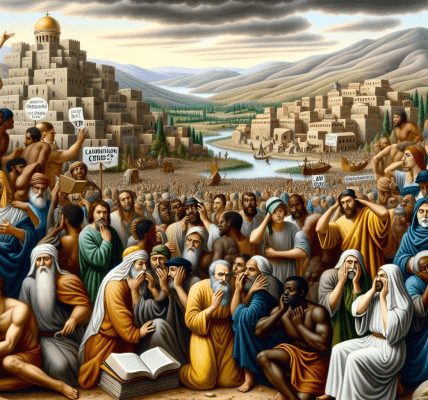
The king’s food arrived on the first evening. It was a staggering display: platters of roasted meats, likely offered first to the idols of Bel and Marduk; rich stews glistening with fat; fruits preserved in honeyed wine; loaves of fine white bread. The aroma was heavy, cloying. To the other youths from conquered lands, it was a bewildering, terrifying privilege. To Daniel, it was a crisis.
It wasn’t about taste or health, not really. It was about covenant. That food was sacrament to a different kingdom. To eat it was to enter into communion with a system that declared Nebuchadnezzar, not Yahweh, as the ultimate provider. It was a silent, daily pledge of allegiance. He felt a resolve harden in his gut, a small, quiet stone of resistance.
He sought out Ashpenaz the next day. The official was reviewing a scroll, his stylus poised. Daniel’s voice was respectful but firm. “Please, test your servants for ten days. Let us be given vegetables to eat and water to drink. Then compare our appearance with that of the young men who eat the royal food.”
Ashpenaz looked up, not with anger, but with weary concern. He was a practical man. His head, not just his neck, was on the line. “I fear my lord the king,” he said, his voice low. “He has assigned your food and drink. If he sees you looking worse than the others, you will endanger my life.”
Daniel saw the fear, the bureaucratic peril. He thought quickly. “Then let it be with your steward, the one directly over us. Put us to the test with him. The judgment will fall on us, not you.”
A silent bargain was struck. Ashpenaz, perhaps moved by something in Daniel’s eyes that was neither defiance nor fear, but a profound steadiness, agreed. He brought Melzar, the attending steward, into the plan. For ten days, the four Hebrew boys ate only legumes, grains, and greens—simple, plain food—and drank water from the cistern, not the spiced royal wine.
The palace kitchens were a world of steam and sweat. Melzar watched them closely, his own anxiety a knot in his shoulders. He brought the rich meats and wines each day, and each day they politely, impossibly, refused. He expected them to grow sallow, listless. Instead, something else happened.
After ten days, Melzar had them stand in the same light that fell across the other youths. He walked around them, his eyes narrowing. Their faces were not gaunt, but clear. Their eyes held a disconcerting brightness. There was a vitality to them, a leanness that spoke of strength, not deprivation. When he compared them to the others, who had grown softer, their complexions slightly florid from the rich diet, the difference was undeniable. The four looked *better*.
It was a quiet miracle, a subversion of the empire’s economy of grace. The king’s lavish provision was meant to confer strength and beauty, the visible blessings of his gods. Yet here, strength and beauty flowed from a different source, from a discipline rooted in a stubborn, unseen loyalty.
Melzar reported to Ashpenaz. From that day, the royal food and wine were set aside for them. They ate their simple meals, and God gave them knowledge and skill in all learning and wisdom. But to Daniel, He gave something else—an understanding, a capacity to see the shape of things beneath the surface. He could listen to the Chaldean astrologers recite their star-lore and sense the true architecture of time that lay behind it. He mastered their complex mathematics, their omens, their vast literature, not as a convert, but as a scholar from a distant, higher country, learning the local dialects.
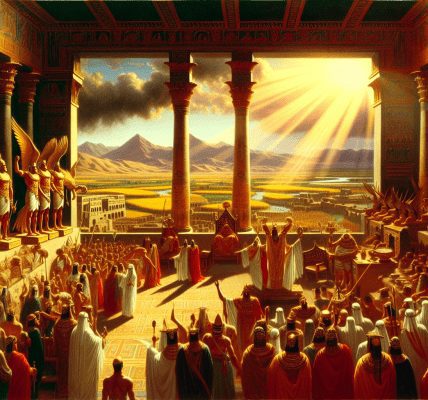
At the end of three years, Ashpenaz presented them to Nebuchadnezzar. The throne room was a cavern of gold and intimidation. The king, in his robes and terror, questioned them. He found none equal. In every matter of wisdom and understanding, they outperformed all the magicians and enchanters in his entire realm. They stood before him, bearing Babylonian names, fluent in Babylonian wisdom, yet nourished by a different stream entirely.
And Daniel remained there, in the heart of the beast, a man who knew the taste of lentils and water in a way that had redefined power. The dust of Judah was still in his memory, but it was no longer the dust of defeat. It was the soil from which a different kind of seed had been carried, one that could take root even here, in the shadow of the glazed brick towers, and grow in silence, against all expectation.