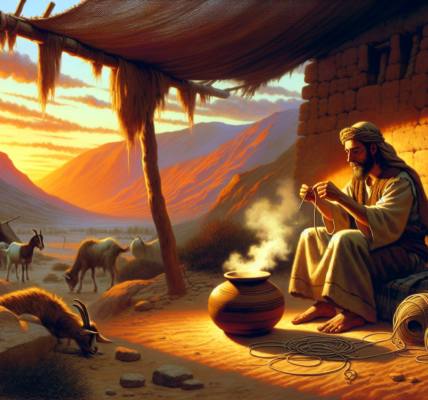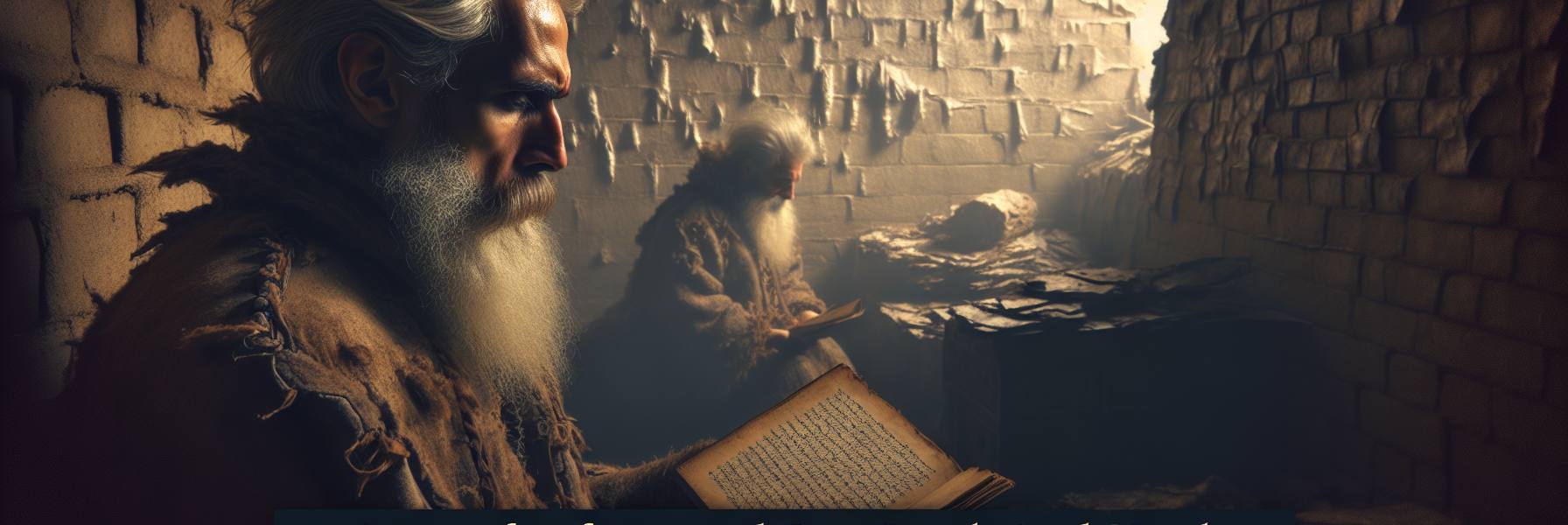

The air in the chamber was still and thick, smelling of old parchment and the faint, metallic scent of the river beyond the clay-brick walls. Ezekiel’s bones ached, a deep-set weariness from years of carrying a weight not his own. The visions never came when he sought them; they arrived like a desert storm, sudden and overwhelming.
This one began not with fire, but with a pressure, a change in the quality of the silence. It was the silence of held breath. Then, the word, not a sound but a knowing etched into his spirit:
*Son of man, set your face toward Gog, of the land of Magog, the chief prince of Meshech and Tubal.*
The names were old, dusty things, echoes from a table of nations scribed long ago. They spoke of a far north, a place of cold fogs and vast, trackless forests beyond the Black Sea—a realm of rumor to his sun-baked Judah. But in the vision, geography was not a map but a sensation. He felt the cold. He saw the man.
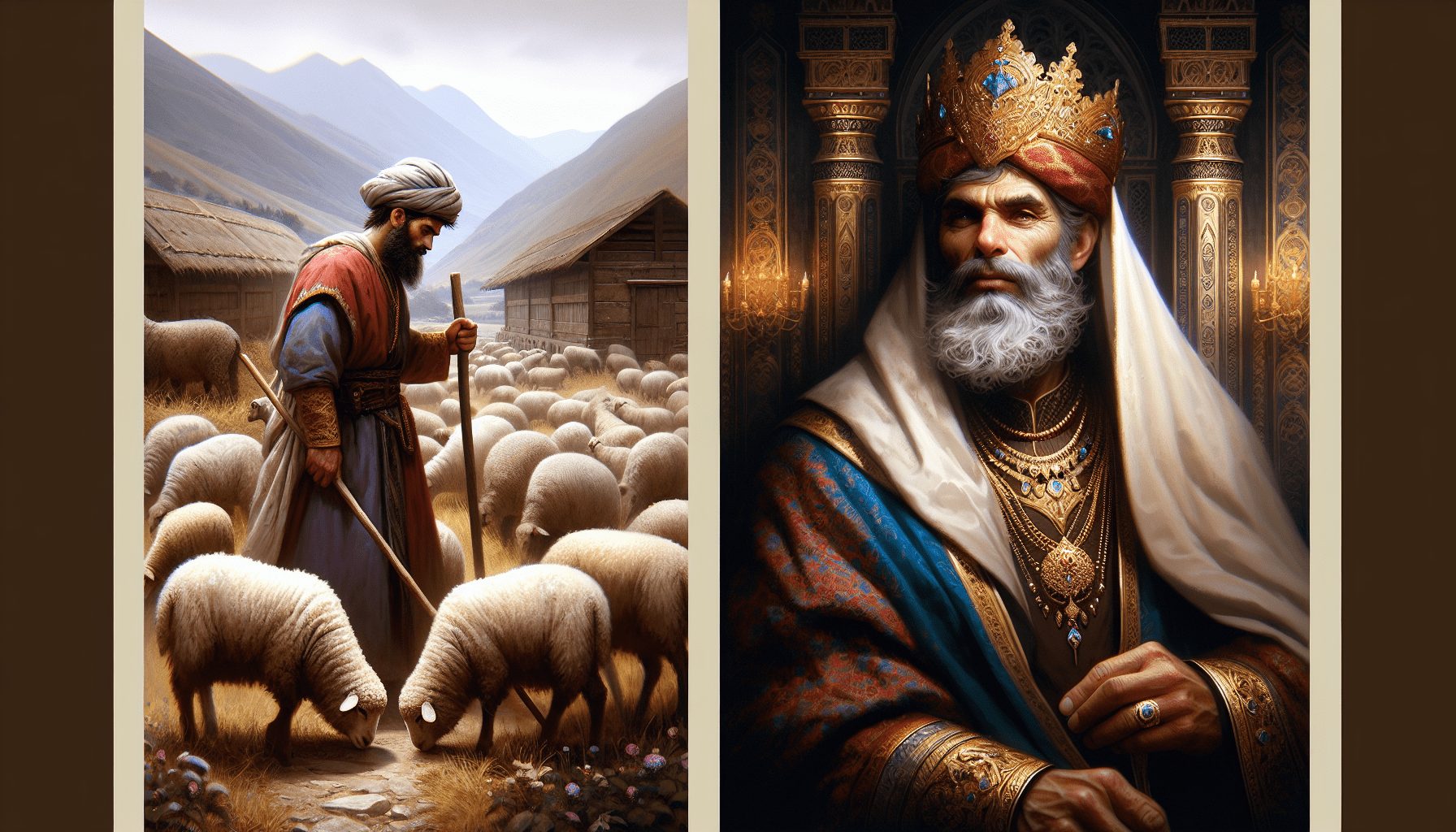
Gog was not a giant, but his presence filled the high, dark hall of his own imagining. He wore authority like a second skin, a practical, ruthless kind. His eyes were the grey of winter seas, calculating, forever measuring horizons. He ruled from a high place of timber and rough-hewn stone, surrounded by the chieftains of allied hordes: Gomer with his wild-haired horsemen, Beth-togarmah from the distant mountains with their unbreakable shields. They were a confederacy of the periphery, peoples who lived by the strength of arm and the sharpness of steel, for whom the cultivated lands of the south were a perpetual legend, a whispered temptation of wealth unguarded.
And the voice showed Ezekiel the hook in Gog’s jaw. It was an idea, a whispering thought that grew into an irresistible compulsion: *Go now. The world is shifting. Those people, restored to their hills, they dwell securely, unsuspecting. Their villages have no walls, their fields no fortification. They have forgotten the art of war. It will be a taking, not a battle. A gathering of spoils from a world grown soft.*
Ezekiel saw the vision of Gog’s own mind: silver and gold, livestock and goods, a great plunder. It was not just greed; it was a worldview, a belief that security was an illusion, and power the only true reality. The restored Israel, living in a fragile peace, trusting in a covenant their neighbors did not acknowledge, was the perfect prey.
The scene shifted with the dizzying lurch of prophecy. Ezekiel felt the ground tremble, not in Judah, but in the north. He saw the mobilization—not as a clean, ordered parade, but as a chaotic, mighty stirring. Like a beast rousing from a long sleep, the land of Magog groaned with activity. The clang of the smithy was a constant din. Swords were whetted, shields strapped, chariots fitted with iron scythes. An immense cloud of dust, tinged with the soot of forges, rose into the northern sky, blotting out the sun. It was a “great assembly,” a “horde,” a noise of preparation that shook the very foundations of the earth.
They would come, the voice declared, like a storm covering the land. Gog would be the dark cloud, his allies like a tempest around him. Persia to the east would lend its arrows, Cush and Put to the south its swords. Many peoples were with him, a coalition of the willing, drawn by the magnetism of plunder and the old, old story of the strong dominating the seemingly weak.
And then, the perspective wrenched to the hills of Israel. Ezekiel saw his own people—not the exiled, broken ones he knew, but a people returned, rebuilding. They tilled terraced fields, pruned vineyards, herded flocks on slopes long left empty. There was laughter from doorways, children playing in streets without gates. Their security was palpable, a quiet trust. They were, in the eyes of the watching world, hopelessly vulnerable. They had no king but an invisible one, no army but a memory.
The two visions collided. The dark, metallic tide from the north swept down through the passes, through the corridors of nations, toward the peaceful highlands. The fury of Gog, his thoughts of mastery and possession, rose like a stench to the heavens.
And then, the voice of the Lord, not in a whisper, but in a tremor of terrible wrath that shook Ezekiel’s vision to its core:
*“On that day, when Gog sets foot on the soil of Israel—my fury will rise in my face.”*
It was not Israel’s army that stirred. It was the very order of creation. The scene broke into cataclysm. The sky over Gog’s horde did not darken with rain, but with the frown of divine displeasure. The earth itself became an enemy. Ezekiel saw great quakes split the valleys where the armies marched. He heard a sound more terrifying than any war-horn: the panicked screams of men and animals as the ground betrayed them. Mountains were thrown down, cliffs crumbled. Every sword, it was said, would be turned against his brother in the chaos and the terror.
Then came the torrents: rain, hail, fire, and burning sulfur. Not as natural weather, but as targeted judgment, a storm of cosmic law upon the lawless ambition. The rain flooded the passes, turning them into death-traps of mud and rock. The hail, each stone a weight of divine verdict, pounded the polished shields and helmets into useless, dented ruin. The fire fell not randomly, but *upon* the horde, and upon the distant coastlands that had watched with approval.
In his vision, Ezekiel fell to his knees, not in the chamber, but on a bloody, smoke-choked field. The stench of sulfur and death was overwhelming. The mighty assembly, the great cloud, was no more. It was a field of broken tools, of silent ambition. The birds of the air and the beasts of the field were summoned, not by him, but by a Voice greater than his, to a gruesome feast.
And the purpose, the terrible, holy purpose, echoed through the devastation: *“Then they shall know that I am the Lord.”* The nations would know. Israel would know. Gog, in whatever shattered remnant of understanding remained, would know. It was a revelation written not in stone, but in the consequences of a pride that sought to violate the sacred, hidden security of God’s people.
The vision drained away, leaving Ezekiel cold and sweating on the floor of his humble dwelling. The silence returned, but it was different now. It was the silence after a deafening shout, ringing with truth. He slowly reached for his stylus and a fresh clay tablet. His hand trembled, not with age, but with the awful weight of what he had to record. He began to scratch out the words, not as a polished tale, but as a solemn, terrifying testimony: “The word of the Lord came to me…” The story of Gog was not a battle report of the future. It was a revelation of a fundamental tension in the world, and the terrifying, holy fire that guards the center where God dwells with his people.