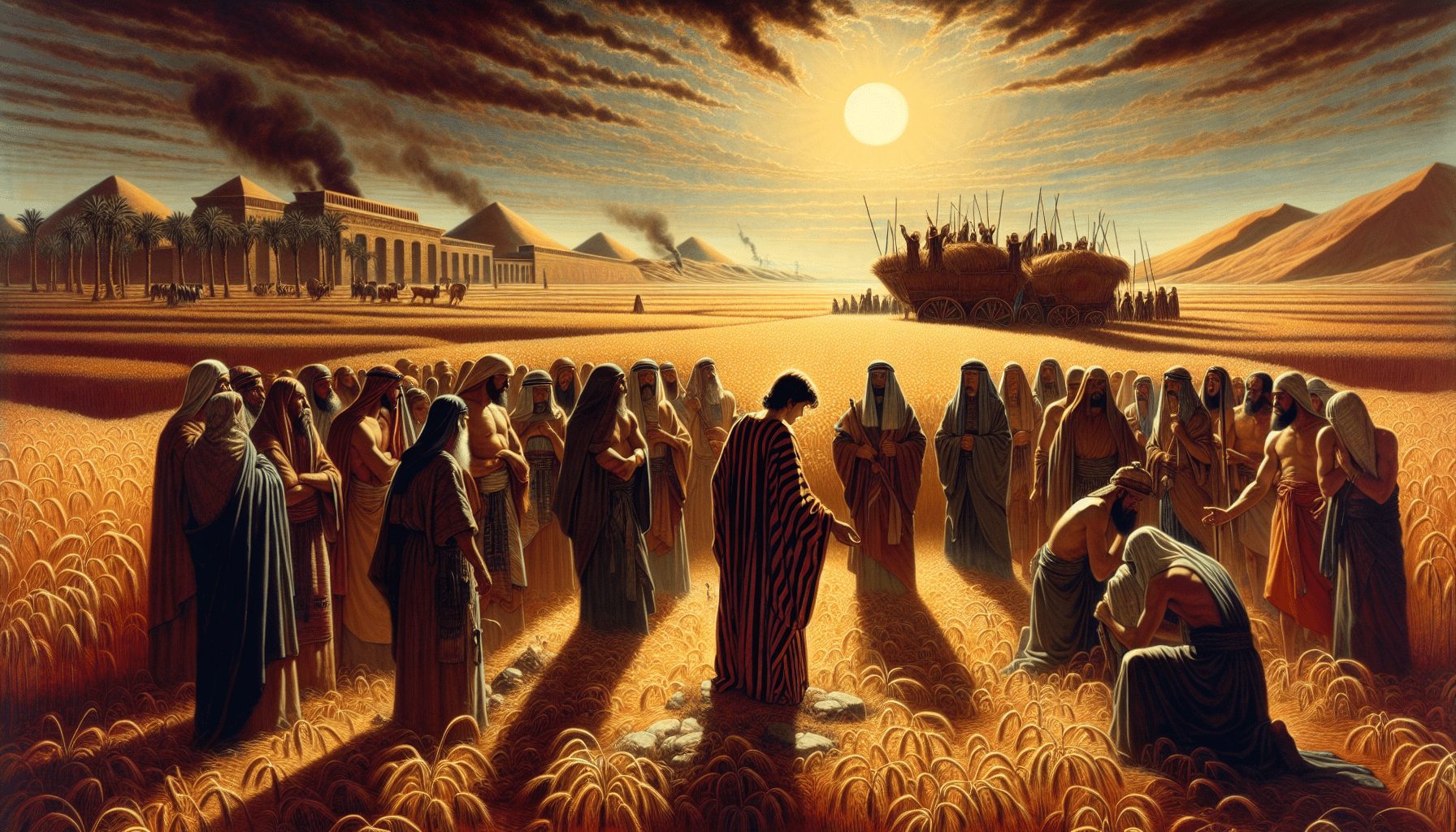

The voice would not leave him. It came on the wind that scoured the valley, a dry whisper that settled in the bones. Ezekiel sat among the exiles, the dust of Babylon fine on his skin, but his eyes were fixed on another dust, an older dust, clinging to stones a thousand miles away.
He began to speak, and his words were not his own. They were a story, a terrible and intimate story, and it was about her.
“You were born in the land of the Canaanites,” he said, the words low and scraping. “Your father was an Amorite, your mother a Hittite.” It was an unflinching beginning, a rooting in the mud of pagan origins. No glorious exodus here. Not yet.
He described the day of her birth, and it was a thing of visceral neglect. “No one cut your umbilical cord. You weren’t washed with water to clean you, or rubbed with salt, or wrapped in cloths. No eye looked on you with pity.” He made them see it: a newborn, slick and mewling, discarded in an open field, kicked by the indifferent passage of beasts, left to the first sharp cold of night. *You were thrown out, loathing your own life.*
A silence heavier than the heat hung over his listeners. Then came the pivot, the moment that changed everything.
“I passed by you and saw you squirming in your blood.” The pronoun shifted—*I*. It was the Divine voice, personal, direct. “I said to you, ‘Live!’” Not a command to a nation, but to a dying infant. “I made you thrive like a plant in the field.”
The story unfolded with a lover’s painful recollection. She grew, entered puberty, but was naked and bare. The Lord passed by again. “Your time had come.” It was the language of betrothal. He spread the corner of his garment over her, covering her nakedness, and swore an oath. “You became mine.”
Then came the lavish, almost overwhelming tenderness. The washing, the anointing with oil. The clothing: embroidered linen, fine leather sandals. The jewelry: bracelets, a necklace, a ring in her nose, earrings, a crown. She was adorned as a queen. She ate the finest flour, honey, and olive oil. She grew exquisite, renowned. “Your beauty was perfect, because of the splendor I had given you.”
The prophet’s voice tightened. The remembering turned sour. “But you trusted in your beauty. You used your fame to become a prostitute.” The metaphor, shocking in its physicality, unfolded. She took the very jewelry—the gold and silver, the fine clothes He had given—and made male idols with them. She adorned these idols and offered them His oil and incense. She took the children she bore Him and sacrificed them, feeding them to the idols.
The list of her lovers was a damning indictment: Assyrians, Babylonians, traders. It was political adultery, the desperate alliances of Judah, seeking strength in every power but the One who made her. “You were unlike other prostitutes. You paid your lovers instead of being paid.” She had inverted the order, spending her wealth, her substance, her very soul, to buy betrayal.
Ezekiel’s tone became one of raw, judicial fury. Therefore, he declared, her lovers would be gathered against her, the very nations she courted. They would strip her, take her beautiful things, leave her naked and bare. They would burn her houses, execute judgment before many women. “I will put a stop to your prostitution. You will no longer pay your lovers.”
The judgment escalated into a harrowing recitation of her sins, framed now not as infidelity but as something worse than her pagan neighbors, Samaria and Sodom. They had fallen, yes, but she had made their sins seem small by comparison. Her deeds made them appear righteous.
Yet, in the very throat of wrath, the thread of the covenant remained, unbroken. “I will remember the covenant I made with you in your youth.” Not for her sake, but for His own. He would establish an everlasting covenant. “Then you will remember your ways and be ashamed.”
The prophet fell silent. The sun was lower now, casting long, deformed shadows across the faces of the exiles. The story hung in the air—a story of foundling grace, breathtaking betrayal, and a justice so severe it could only be born of a wounded love. It was not a tidy parable. It offered no easy comfort. It was a mirror held up to a people in exile, showing them not just what they had done, but who they were: the rescued child who had spurned the rescuer, the bride who had broken her vows, the city that had forgotten its foundation.
The wind picked up again, but the voice in it was quiet. The story was told. The understanding, and the dreadful, hopeful weight of it, was now theirs to carry.