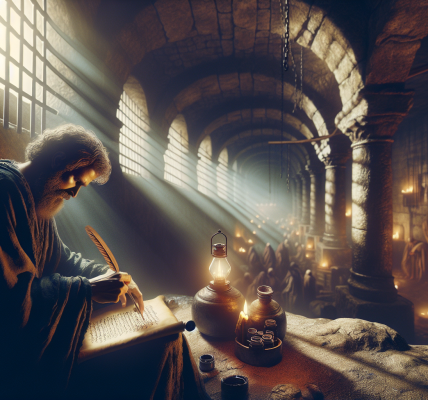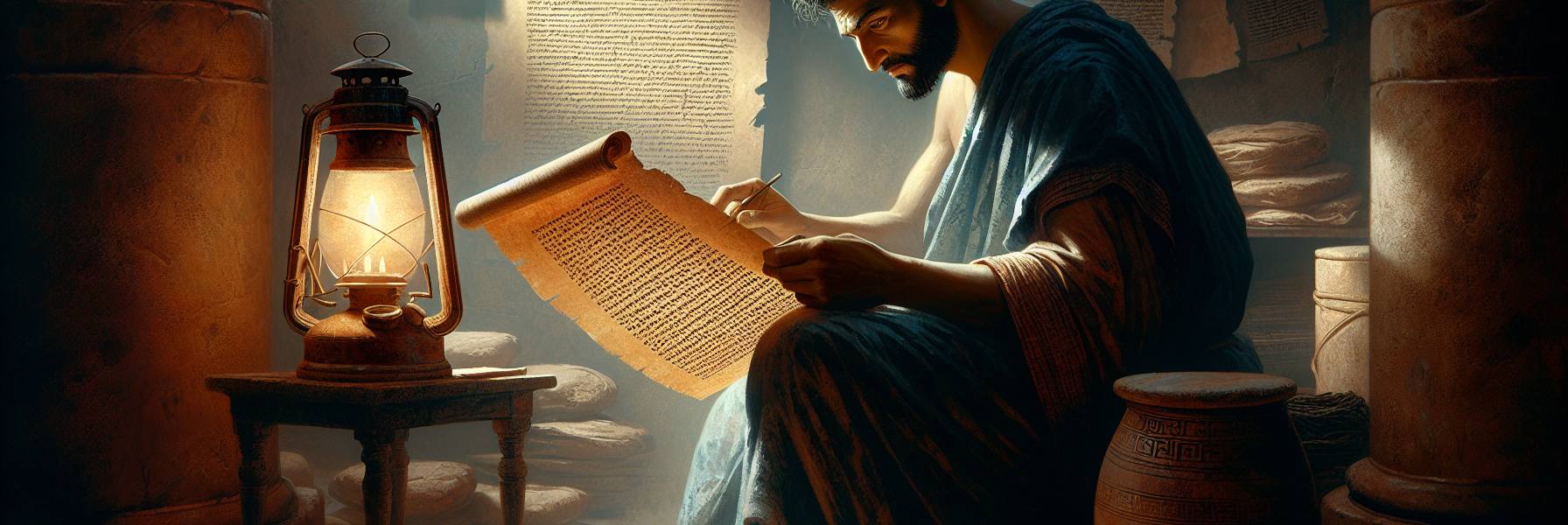

The smell of ink was faint, almost lost beneath the heavier scents of papyrus and dust. Marcus held the sheet carefully, the words still feeling foreign to his hands. It was a copy, of course, a letter from Paul to the assembly here in Rome, passed from one believer to another. He’d read it before, in pieces. But tonight, in the low, guttering light of the oil lamp, the sixth chapter caught him like a hook in the chest.
*What shall we say then? Shall we continue in sin that grace may abound?*
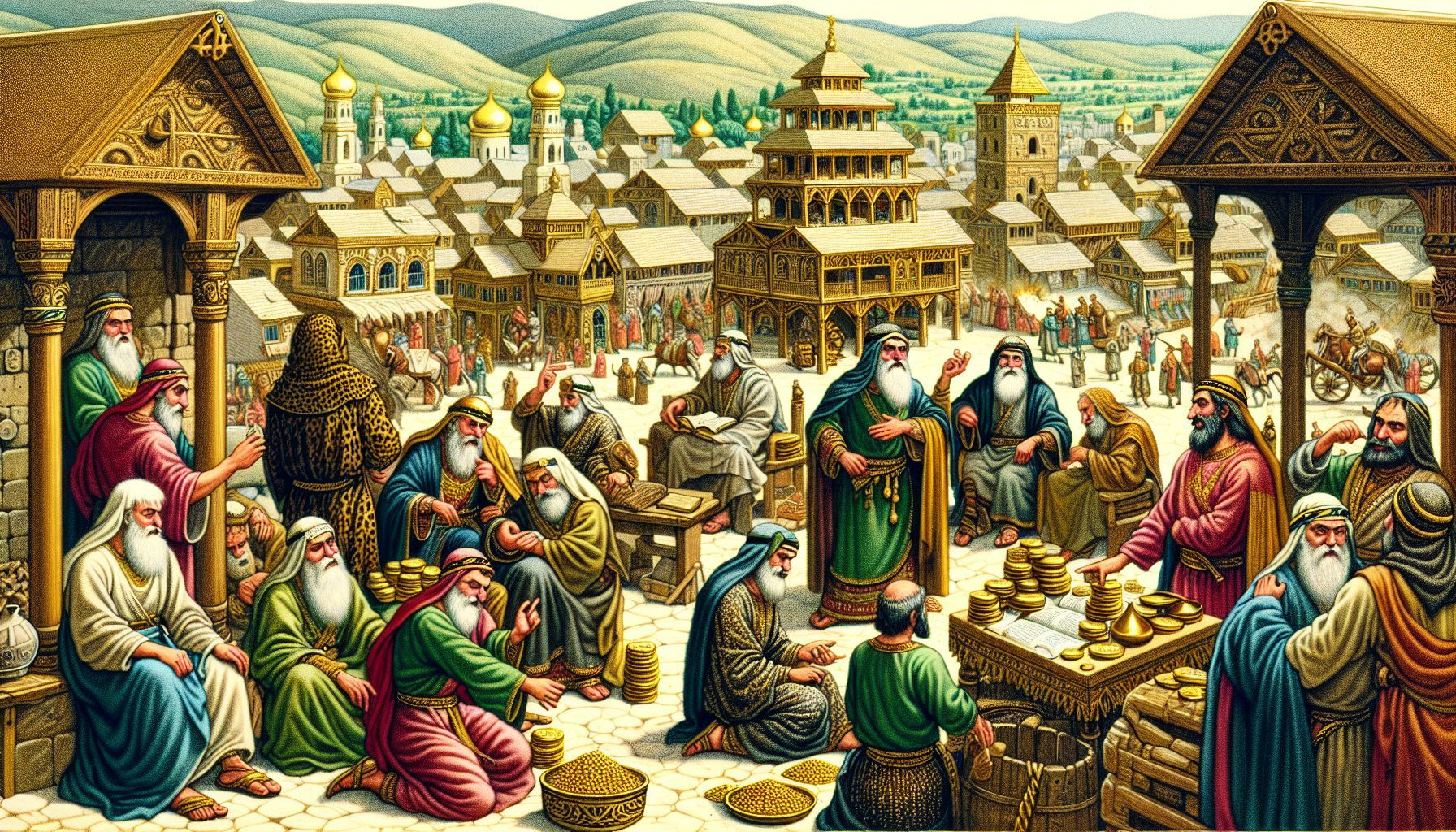
A dry, practical question. Marcus almost smiled. It was the kind of thing his friend Lucius would ask, a man who saw the world in transactions and balances. If God’s grace grows larger where sin increases, then isn’t sin, in a twisted way, doing a service? His eyes scanned the familiar Greek letters, but his mind was in the Subura district earlier that day, hearing the raucous laughter from a tavern, feeling the old, familiar pull towards the dice game in the shadowed corner. He had walked on, but not without a glance. Not without the memory of the feel of the knucklebones in his palm. That was sin, he supposed. The old pull. The old way.
The letter’s answer was blunt, almost violent. *By no means!*
He read on, the lamp’s flame weaving shadows across the text. *How shall we who died to sin still live in it?* Marcus leaned back on his stool, the wood creaking. Died. A final word. He’d seen death. Soldiers in the gutters after a riot. His own mother, breath fading to nothing. It was an ending. A complete severance. To die to sin? He felt very much alive to it. Its whispers were as real as the chill of the night air seeping under his door.
Then came the water.
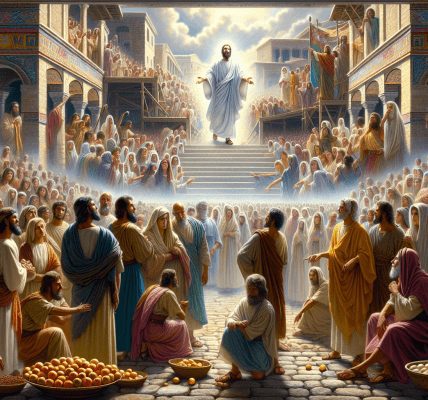
*Do you not know that all of us who have been baptized into Christ Jesus were baptized into his death?* His own baptism came back to him—not as a theological idea, but as a physical memory. The cold shock of the Tiber, the rough hands of the brethren, the gasp as he was plunged under, the world going silent and dark for a heart-stopping moment, and the bursting, ragged intake of air as he was raised. He had thought of it as a washing. A cleansing. But Paul called it a burial. They’d lowered him into a liquid grave.
“We were buried therefore with him by baptism into death,” he whispered into the quiet room. It wasn’t just a ritual. It was a funeral. His own.
The logic of it began to unfold, not as a dry argument, but as a terrifying and beautiful story. If the baptism was a planting into the likeness of his death, then the raising from the water was the likeness of his resurrection. Christ, raised from the dead by the glory of the Father. Him, Marcus, hauled dripping from the river to walk in a new kind of day. *We too might walk in newness of life.*
Newness. The word felt thin compared to the weight of ‘death’. His life didn’t feel new. It felt like the same old life with a new set of rules he kept stumbling over. But Paul was relentless. *For if we have been united with him in a death like his, we shall certainly be united with him in a resurrection like his.*
United. Grafted. Like a branch bound to a vine. Christ’s death was his death. Christ’s resurrection was his—already, and not yet. The old self, the man who was a slave to the glance toward the tavern, to the surge of bitterness when cheated in the marketplace, to the cold fear in the pit of his stomach at the thought of imperial persecution… that man was crucified. Nailed up. Done. *So that the body of sin might be brought to nothing, and we would no longer be enslaved to sin.*
Enslaved. That was the word that finally broke the shell. Sin wasn’t just a list of misdeeds. It was a slave-master. He thought of his old pull toward the dice not as a choice, but as a compulsion. A chain he’d worn so long he forgot its weight until he tried to walk away. The master’s voice was loud. But Paul said the slave was dead. A dead man hears no master.
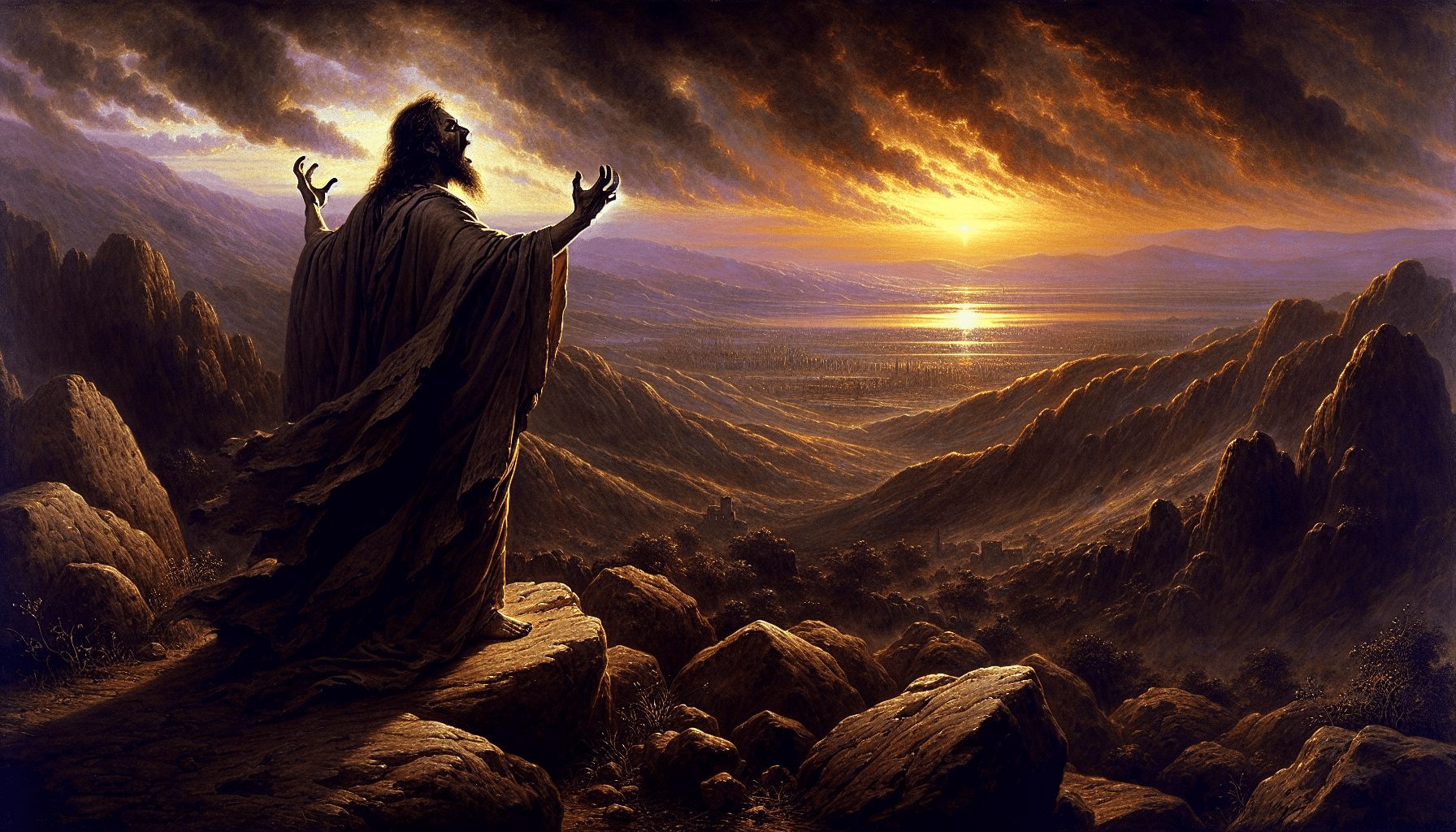
He stood up, pacing the small floor. *So you also must consider yourselves dead to sin and alive to God in Christ Jesus.* Consider. Reckon. Account it to be true. It was an act of the will, based on a fact. The fact was the crucifixion. The act was to stand there, in his dim room, and say to the whispering memory of the dice: *You are speaking to a dead man.* And to say to the God he could not see: *I am alive to You.*
The letter’s conclusion was a charge, sharp and clear. *Do not let sin reign in your mortal body, to make you obey its passions. Do not present your members to sin as instruments for unrighteousness…*
Instruments. Tools. His hands could clutch dice or lift a neighbor’s burden. His feet could carry him to a tavern or to a sick brother’s home. His tongue could spread gossip or speak a blessing. They were instruments, waiting for a musician.
He paused at the window, looking out at the sleeping city, a sea of rooftarks silvered by a half-moon. The old language of transaction whispered again: *You are not under law but under grace, so what does it matter?* But he understood now. Grace wasn’t permission. It was the power of a different country. It was the air the resurrected breathed. To go back to the old slavery wasn’t freedom; it was a corpse trying to climb back into its coffin.
*But thanks be to God,* the letter ended, *that you who were once slaves of sin have become obedient from the heart… and, having been set free from sin, have become slaves of righteousness.*
Free to serve. It made no sense to the world. It made perfect sense here, in the quiet. The slave-master Sin paid in death. The new Master, God, paid in gift, and led you into life.
Marcus blew out the lamp. The darkness was total. But he was not the same man who had lit it. He was, according to the solemn, joyful logic of grace, a man coming out of a tomb, squinting into the dawn, learning how to walk.