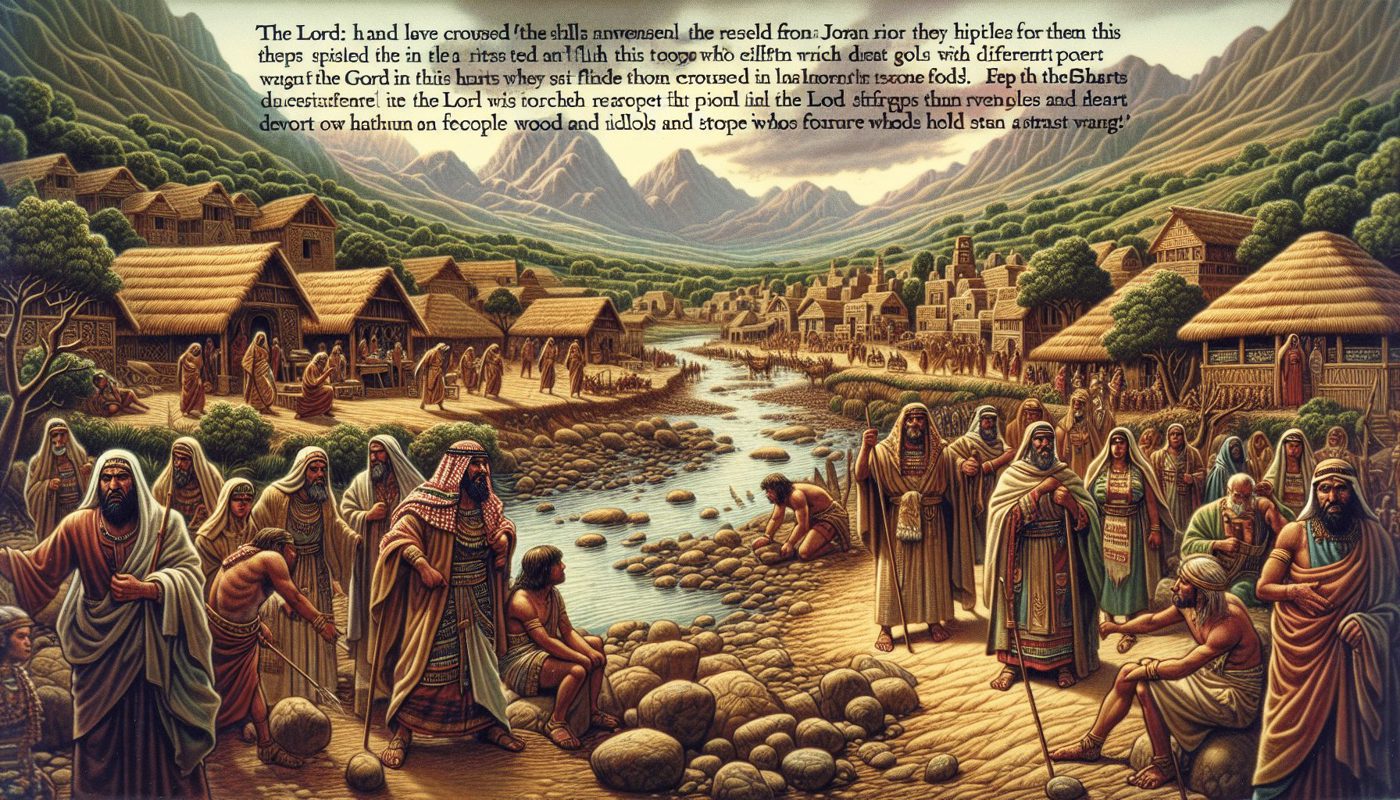
Deuteronomy 13 does not open with a gentle warning. It opens with a prophet or a dreamer who arrives with a sign, and the sign comes true. That is the pressure of the chapter: the miracle is real, but the message is rebellion. The Lord permits the sign to stand as a test, not a proof. The test is whether Israel will love the Lord with the whole heart and soul, or whether a visible wonder will pull them toward gods they have not known.
The chapter names three concentric rings of temptation. The first is the prophet or dreamer, a public figure whose credentials include actual supernatural confirmation. The Lord states plainly that such a figure is a test, and the response is not to investigate his sign further but to refuse his words. The penalty is death, not for the sign but for the rebellion spoken against the Lord who brought Israel out of Egypt and out of the house of bondage. The language is deliberate: the prophet has spoken to draw the people aside from the way the Lord commanded. The evil is to be put away from the midst of Israel.
The second ring is closer. It is the brother, the son of the mother, the son, the daughter, the wife of the bosom, the friend who is as your own soul. This person entices secretly, not in the public square but in the private space where trust lives. The gods proposed are the gods of the peoples round about, near or far, from one end of the earth to the other. The command is absolute: do not consent, do not listen, do not let your eye pity, do not spare, do not conceal. The hand of the person who is tempted must be the first to strike, and then the hand of all the people. The method is stoning, and the reason is the same: the enticer sought to draw you away from the Lord your God, who brought you out of Egypt, out of the house of bondage.
The third ring is the city. If a report reaches Israel that certain base fellows have gone out from among them and drawn away the inhabitants of their own city to serve other gods, the response is not immediate destruction. The chapter commands inquiry, search, and diligent questioning. Only if the thing is confirmed as truth and certain does the judgment fall. Then the city is to be smitten with the edge of the sword, utterly destroyed, including the cattle. The spoil is gathered into the street, and the whole city is burned with fire as a whole burnt offering to the Lord. It becomes a heap forever, never to be rebuilt.
The severity of the judgment is tied directly to the nature of the covenant. The Lord redeemed Israel out of bondage, and the worship of other gods is not merely a different opinion but a rebellion against that redemption. The chapter does not treat idolatry as a private preference or a cultural adaptation. It treats it as a contagion that must be removed entirely, because the alternative is that the whole people will be drawn aside from the way the Lord commanded.
The chapter also contains a note about mercy. The command to leave nothing of the devoted thing in the hand is followed by the promise that the Lord may turn from the fierceness of his anger and show mercy, compassion, and multiplication, as he swore to the fathers. The destruction is not an end in itself. It is the condition under which the Lord's anger is turned away and his covenant promises continue.
The chapter closes with the call to hearken to the voice of the Lord and keep all his commandments, doing what is right in his eyes. The entire structure of Deuteronomy 13 rests on the assumption that the people of Israel are capable of being seduced, that the seduction can come through miracle, intimacy, or community, and that the only adequate response is a refusal that costs everything. The chapter does not offer a moderate path. It does not allow for tolerance of the enticer or the city. It demands a purity that is willing to execute judgment on the closest relationship and the largest settlement.
There is no invented village, no named elder, no traveling merchant in the chapter itself. The chapter is a legal instruction, not a narrative. Its force comes from the cold precision of its categories: the prophet with the real sign, the brother who whispers in the dark, the city that has gone after other gods. Each case is handled with the same principle: the evil must be put away from the midst of Israel so that the whole people may hear, fear, and do no more such wickedness.
The chapter does not explain how to distinguish a true prophet from a false one by the content of the prophecy alone, because the sign itself is not the test. The test is whether the people will obey the Lord's voice or follow the sign. The chapter does not explain how to reconcile the command to kill a brother or a friend with the command to love one's neighbor, because the covenant loyalty to the Lord overrides every other bond. The chapter does not explain how a city that has been utterly destroyed and burned with fire can ever be restored, because the point is that it cannot be restored. It is a heap forever.
Deuteronomy 13 is not a chapter about the cost of disobedience in a general sense. It is a chapter about the specific, surgical removal of rebellion from the community that the Lord redeemed. The test is real, the temptation is close, and the judgment is total. The chapter leaves no room for the reader to imagine a softer outcome.
Comments
Comments 0
Read the discussion and add your voice.
Members only
Sign in to join the conversation
We keep comments tied to real accounts so the discussion stays clean and trustworthy.
No comments yet. Be the first to add one.